

5 Unconventional Materials You Can Use To DIY Your Own Durable Swimming Pool
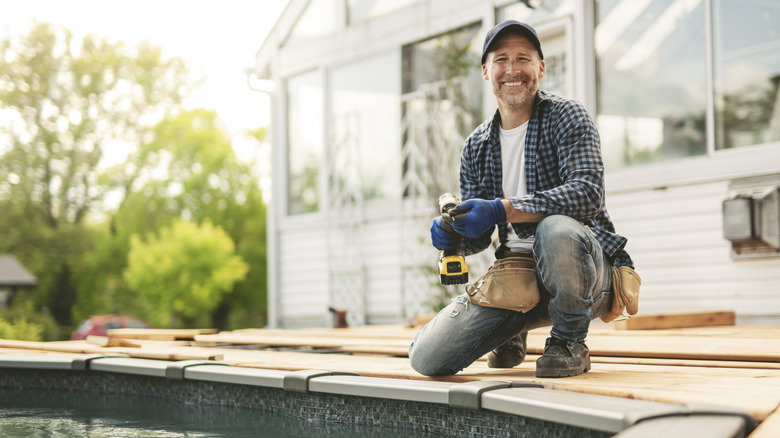
Pools are a big hit during the summer, letting you enjoy the sun and heat that the season brings. DIYing one for your yard may feel rewarding, but getting started and figuring out what materials you may need isn't always easy. Thankfully, a pool is not much more than a strong, waterproof container, allowing you to get pretty creative. For example, unconventional materials you may have lying around or can easily access for a DIY swimming pool project include earthbags, tires, concrete blocks, bottles, and even foam. These products can help you create the foundation so you can get the shape and framework properly installed.
The nice thing about DIYing your own is that you can pick and choose the modern backyard trends that'll upgrade your pool area to fit your dream and make it more comfortable. However, with any of these pools, you'll also need to plan for proper filtration and water circulation, which may involve pumps and skimmers. After all, even DIY wood pallet pools can make a splash or be a waste of time, depending on whether or not you planned for a way to filter and clean everything. Additionally, water is incredibly heavy, so you'll need a properly designed structure that can withstand the pressure, along with a suitable waterproof layer. This means you will probably also need items such as concrete, rebar, and a pool liner or sealant.
Before attempting any of these projects, check local pool construction requirements and have the design evaluated by a qualified professional. Even a relatively shallow pool holds a tremendous amount of water, and an improperly supported wall can fail under the pressure.
Dirt bags made for a hefty, easy-to-maneuver pool base
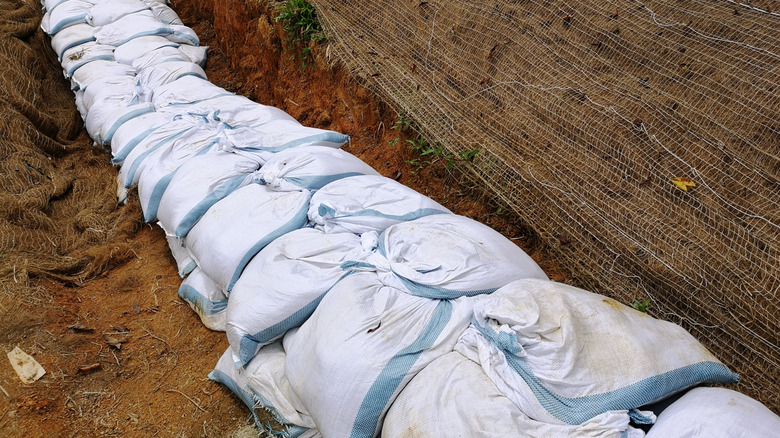
Dirt bags, also called earthbags, are a durable and sustainable material you can use to create the foundation for your above-ground pool. The bags themselves are often made from polypropylene, and can be filled with suitable soil or sand from around your yard. Be careful not to pick up rocks or sticks, as the sharp objects can pierce the bag or make for a strange shape. Measuring or weighing the amount of dirt in each bag can help maintain a more level design.
As you fill up the bags, stack them together until you have the rough shape and height you want. This gives you the basic foundation for your pool. Unfortunately, these bags, even as heavy as they are, can still shift. To keep them in place, you can create a frame from rebar and chicken wire. This also helps with extra support for your concrete layer. For extra security, you can even hammer the rebar through the bags. Cover up any gaps and smooth it out so when you add the waterproof liner on top, you don't have to worry about weak spots or possible areas where it could get damaged. Don't be afraid to play around with how full they are and their shape to create something that's not so blocky, and has a more natural-looking layout.
Old tires can be used in several ways to make a pool
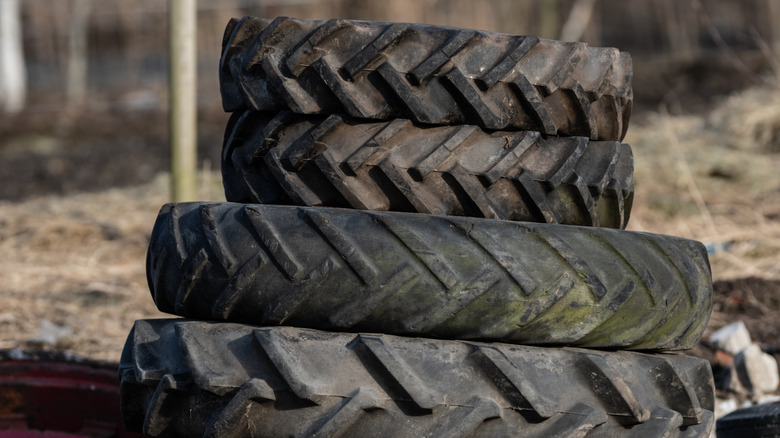
Another durable and unconventional material that can make for a long-lasting pool is old tires. They are perfect for creating small soaking pools for you, your kids, and your pets, depending on the size. If you want space for one or two people, you'd need something large, like a tractor tire. It won't be one you can swim around in, but it's a great way to make the compact pool style that saves yard space – a cocktail pool.
Tires require a bit of work before you can start cooling off. To keep your lines straight, consider creating an outline of where you need to cut with chalk first. Then, you should cut the sidewall, so you have a larger opening to sit in. You may also want to cut a small hole on the side so you can still include a pump and filter. Using a reciprocating saw or a jigsaw, you can cut through, going slowly to avoid hurting yourself if you cut into the supporting metal wires.
Then, you need to seal it. Tires can release chemicals, so the finished pool would need a suitable barrier that prevents direct contact between the tire and the water or bathers. To keep your pool safe, and strengthen the sides, coat the tire in cement. Then, add a liner on top, so the water stays in and provides an extra layer of protection.
Concrete blocks are perfect for creating simple pools
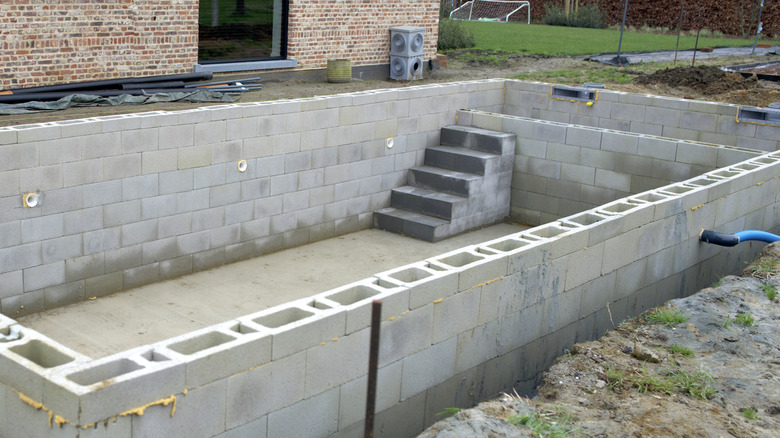
Concrete blocks can be used to build a durable swimming pool, provided the structure is properly designed and reinforced. As Jeff the Cat on YouTube shows, the process is pretty easy. You want to start by creating the layout. If you have software to do this online, perfect, but you can also draw it out. Take time to measure so you get the size you need, but remember that you'll lose some space as you add structure to the walls. Create a cement slab for the bottom, and wait for it to cure.
Then, start building the wall. The block walls require appropriate reinforcement and grouting, with rebar spacing determined by the pool's design and structural requirements. Adding horizontal wiring for extra support between layers isn't a bad idea, either. You also want to set up your pool in a way so you have space for the filters.
Once you are happy with the layout, the walls need to be properly finished and cured before an appropriate pool waterproofing system is applied. If you like the way it looks, you can add a membrane, which usually involves a spray or roll-on material coating all of the pool to prevent any leaks or drainage issues. A simpler solution is to use a liner, but it may not look as clean.
Foam padding can help to protect your pool liner from damage
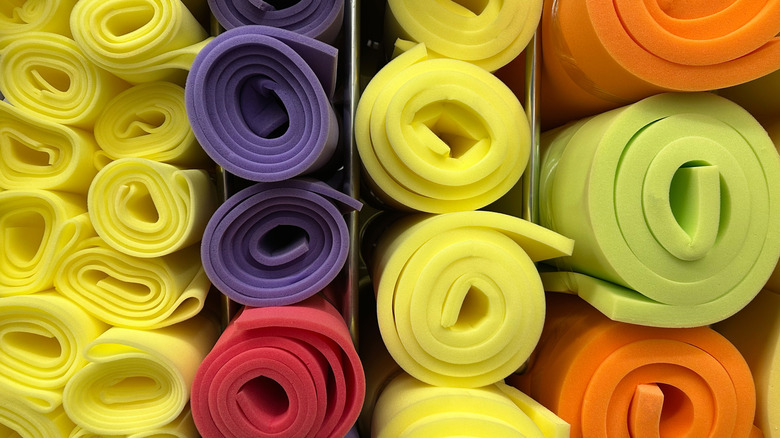
When making your own pool, you get to fix problems you have with other designs. For example, whether it's metal or concrete, the frame is hard. When you have children who like to roughhouse or play a little wild in the water, it's not uncommon for them to hurt themselves or others by running into the sides or scraping against the bottom. Inflatable pools help with this problem, but don't look as nice. Thankfully, you can add a little padding when you DIY your own.
In a video from Do It Wrong Yourself on YouTube, they create their own pool from wood and pool noodles. Then, before adding the lining, they add a thin layer of foam. While this is an option, additional padding may provide more comfort and help protect the liner from the hard surfaces underneath.
If you aren't creating your own solid bottom in the pool, sand is usually placed underneath to help fill in uneven areas and protect the liner. Foam can actually be better for this, as it creates a more level bottom without as much worry about shifting like sand. Additionally, it adds a little extra protection underneath and around the sides to help prevent rubbing and damage to the liner.
Glass bottles can add a decorative touch to concrete pools
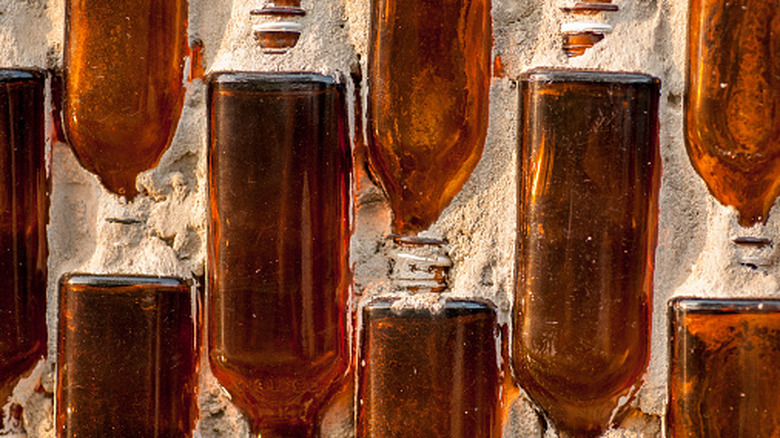
It's simple enough to transform bottles and concrete into a cheaper plunge pool, and it works similarly to building one out of blocks. You want to start with a solid concrete slab. Then, you will need cement for your structure. For it to be the most effective, it should be about the texture of stiff peanut butter, where it can hold its shape, but doesn't crumble. Add a thin layer onto the ground, and place your glass bottles on top. Like with the concrete blocks, it's a good idea to add vertical rebar every 8 inches or so, and to add a bit of framing.
Unless you want a very small pool, or you have hundreds of glass bottles around, you probably won't be able to make it completely out of this material. Some designs incorporate bricks or blocks between the rows of bottles, as Deep's CRAFT demonstrates in a YouTube video, but the finished walls still need to be structurally sound. Then, coat in cement. To add some whimsy, leave it so the ends of the bottles are visible on the outside of your pool. Recycled glass can also be incorporated into specially formulated decorative concrete finishes for a more colorful look, similar to the way you create a gorgeous countertop with recycled glass bottles. Finally, coat with a rubber layer or liner on the inside to hold the water.