

Gardener Transforms Cinder Blocks And String Into A Functional Trellis
Gardening is a year-round activity, which is why we all love hacks that can make the work a little bit easier and more cost-effective. For example, you can easily install garden trellis structures that'll upgrade your gardening game right away. However, in a YouTube tutorial, Beamish DIY demonstrates how to make a simple DIY trellis using materials you may already have at home. The creator planted seedlings in the holes of three cinder blocks, wedged between two tall wooden beams. Then, he strung twine horizontally between the posts, giving the seedlings something to grab as they grow.
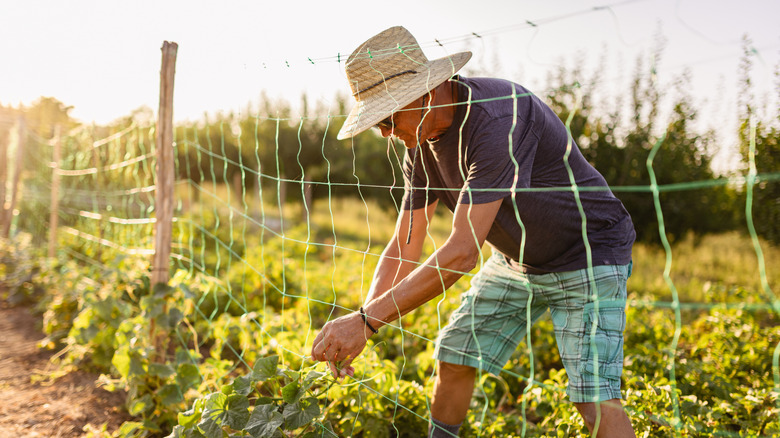
If you've never used a trellis before, it's ideal for vining plants, including flowering plants and vegetables. Giving these plants space to climb keeps their fruit off the soil, where it stays cleaner and isn't as accessible to pests. If the strings or wires of a trellis are appropriately spaced, some vines will automatically figure out where they need to go. Other times, gardeners may need to guide the vines, helping them find where they can latch on and keeping them separated from neighboring plants.
To create your own trellis, you'll need several cinder blocks, depending on how wide of a trellis you'd like. Concrete blocks also work (and if you're wondering, yes, there is a difference between cinder and concrete blocks), as long as the block you're using has holes in it. You'll also need twine and two wooden posts that are thick enough to support the weight of climbing plants.
What to consider with a DIY cinder block trellis
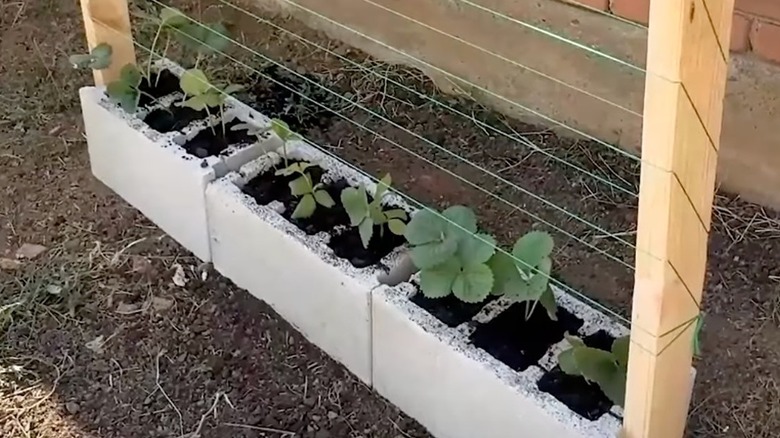
Start by laying the blocks end to end, then pound the posts into the ground on each end of the row of blocks. For optimal stability, dig a hole that's at least one-third the height of the post with a shovel or a post hole digger. Tie twine horizontally between the beams, spacing each row about 6 inches apart. You can also use untreated sisal, cotton, or hemp twine, which can be composted at the end of the season. Next, add a screw or nail below each row to keep the lines from slipping as the plants grow.
Planting your seedlings in cinder blocks requires some additional considerations. For example, you'll need to think about whether they will have enough space. Cinder blocks come in various sizes, with widths ranging from 4 to 12 inches, a standard height of 8 inches, and a length of 16 inches. The dimensions of the holes vary, depending on the overall block measurements, but at most, they are around 5 inches by 7 inches.
Cinder blocks can also get hot, and the soil will heat up quickly, especially if the trellis gets full sun. That said, be vigilant with watering or place the trellis within reach of a sprinkler system. Opt for heat-tolerant, drought-tolerant vegetables like malabar spinach (basella alba), tomatillos (physalix ixocarpa), or Chinese long beans (vigna sesquipedalis). If the plants you choose have roots that need to dive deep, build the trellis over healthy soil so the roots have space to grow.