

Why Do Professional Painters Add Water To Paint?
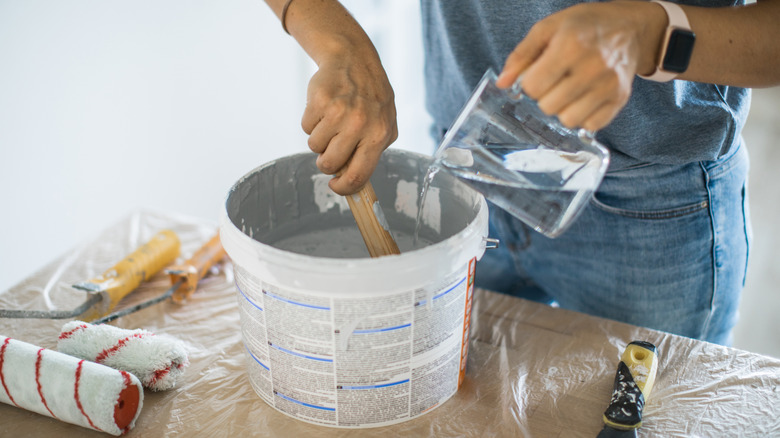
Most of the time when you go to repaint parts of your home, you probably just open the can, give it a stir, and start painting. If you're a little more experienced, you may try using a technique to paint walls that makes it look professional, like utilizing a brush first to cover narrow spaces and corners. However, if you've ever watched an expert, you may have noticed that they add one more step — adding water. It can feel wrong to thin your mixture out like this, but it actually helps make your walls look nicer.
By changing up the thickness, it creates a better-looking surface. You've possibly worked with thick paint before. It's a pain and highlights the marks from your roller, leaving an unattractive pattern that you can't easily cover up. Adding water thins it out enough to help it blend better and prevent any annoying marks. If you live in a dry state, or it's particularly hot that day, professionals may also add water to keep the mixture wet longer, leaving unblended areas and brush strokes.
It's not just about this, though. While the average DIYer uses rollers and brushes to apply the paint, some professionals rely on sprayers for a fast and even application. However, this method requires something thinner than you'll find in a can. If it's too thick, they will have to deal with clogs and possibly some uneven texture on the wall. A diluted liquid creates a more consistent finish.
What to consider before adding water to your own paint
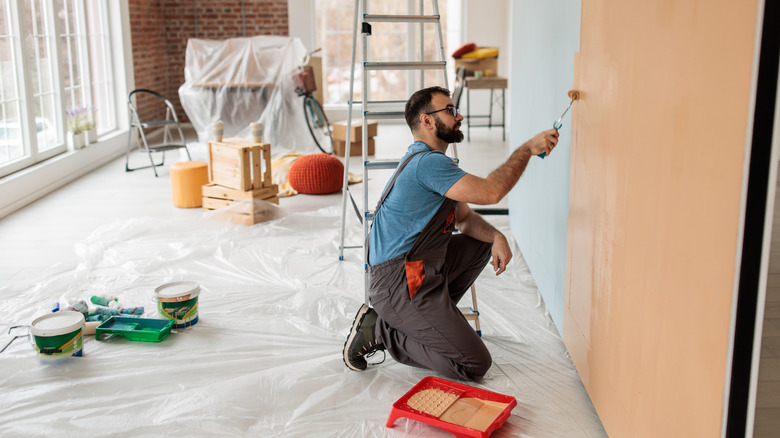
If you've struggled to get a nice finish when painting your home, adding some water can make a difference. However, you don't want to just dump in a cupful and see what happens. Most paint companies recommend including no more than 10% extra liquid when using rollers. Add a little bit of distilled water at a time, testing on a hidden area or an unneeded strip of the same material, until you get results you like. You want it to be easy to apply, but not running. You may also need a thinner first coat for more porous surfaces, such as drywall.
This only works with paints such as latex and acrylic, as they must be water-based. Also, more premium brands, like Aura and Regal Select by Benjamin Moore or Sherwin-Williams' Emerald line, don't usually need dilution. Additionally, you don't want to add water when painting the exterior of your home or in high-traffic areas, as it can lower the durability.
The outside of your house requires a little extra research anyway, as it's quite a bit different from adding a fresh coat in a room, and there are plenty of common mistakes everyone makes when choosing exterior paint. Be aware that this trick can potentially change the look, which can be a disappointment if you've spent a long time choosing the right finish of paint for your house.