

How To Reduce The Grinding Sound Your Lawn Mower Is Making

When it's time to mow your lawn, the last thing you want to find is that your lawn mower is making unwanted noises. Some noise is natural when you're operating a lawn mower, especially if you're using a gas-powered option versus a quieter electric mower. However, if your lawn mower is making excessive grinding sounds, it can be worth checking out and identifying the exact cause, whether it's a blade problem or an issue dealing with internal hardware. After all, fixing a problem sooner rather than later can help reduce the likelihood of more expensive or time-consuming repairs in the future.
There are several reasons that your lawn mower may be making a grinding noise. If your mower makes the noise specifically in the deck area, it could be a result of damage or worn hardware. If it occurs only while mowing, it may instead be the starter. Because these can be vastly different problems with different solutions, you'll want to ensure you're repairing the right issue for a quieter mower experience. Targeting your specific problem can be the best way to reduce the grinding sound your lawn mower is making. If you're not familiar with trouble-shooting your own issues, you may find it best to bring your mower to a professional. Before beginning any sort of maintenance on your lawn mower, always brush up on your mower's manual and ensure that the mower won't accidentally start or move while you're working.
Bad spindle assembly
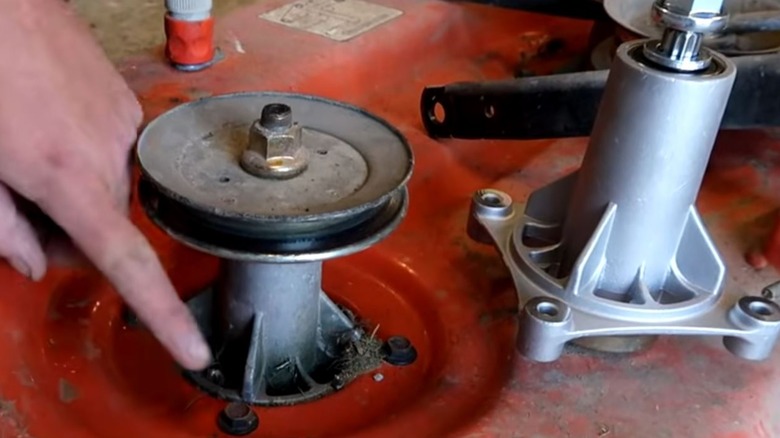
Your lawn mower's spindle assembly is made up of several different parts, all of which are responsible for allowing your mower's blades to turn. Some of the main parts of the assembly are the spindle shaft, bearings, and pulley system. If these pieces begin to wear down, or if they become damaged over time, you're likely to notice that your mowing experience has become a bit noisy; issues in this location can lead to grinding or screeching.
Depending on your mower, spindles may also be known as mandrels or an arbor. If you've identified a bad spindle assembly as the root of your lawn mower's new noise, then the key to reducing that grinding sound is often a repair or replacement. However, before investing in various parts and pieces, you'll want to make sure that it is in fact the spindle that's the problem. After you've turned off your lawn mower and disconnected its power source, give the machine time for all moving pieces to come to a stop. Your mower may have multiple spindles and you'll need to test each spindle to find out which one is the problem. You can often confirm the spindle in need of replacement by looking for wear and tear- roughness, or noise when manually turning.
Actually reducing the sound itself depends on your lawn mower. You may need to replace only a single piece or the entire assembly. You'll also want to check your manual or any available manufacturer information to pick the right pieces for your specific model.
Worn belt
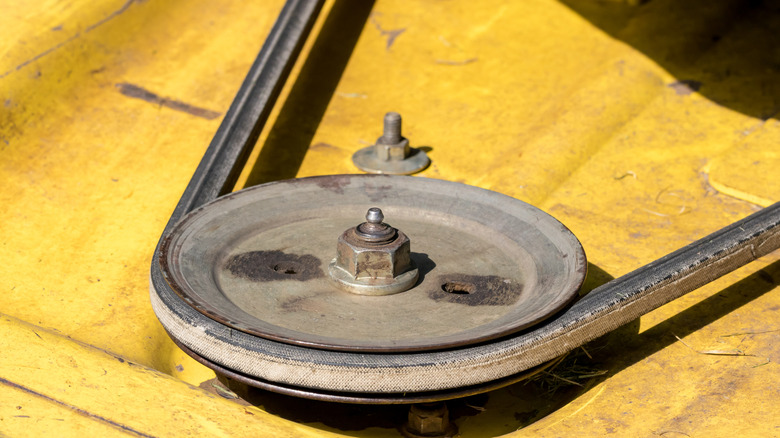
Sometimes, while the spindle assembly itself may be the cause of the grinding sound, you may find that the source of your problem actually has a different culprit. Your lawn mower's belt is responsible for turning the pulleys and keeping your blade spinning. If it becomes damaged or worn down, however, those systems will need to work hard to compensate, which can lead to damage in the assemblies and thus that grinding sound your lawn mower may be making. As a result, if you're finding that the grinding noise and damaged assemblies keep occurring, it may be worthwhile to take a look at the belt.
There are many signs of a bad lawn mower belt. Visible damage is one of the most obvious tells. The surface may display cracks, friction damage, or glazing. (Glazing is a process in which friction melts rubber, causing it to lose traction.) Your belt could also have reduced tension and sagging, which often occurs over time from wear and tear. You should check your mower's belt during regular maintenance and inspections, checking its tension and ensuring there's no signs of damage or glazing. Replacing a worn belt can help take the pressure off of struggling assemblies, which may work to reduce the grinding sound your mower's making if tackling the spindles alone hasn't proven sufficient.
Damaged mower blades
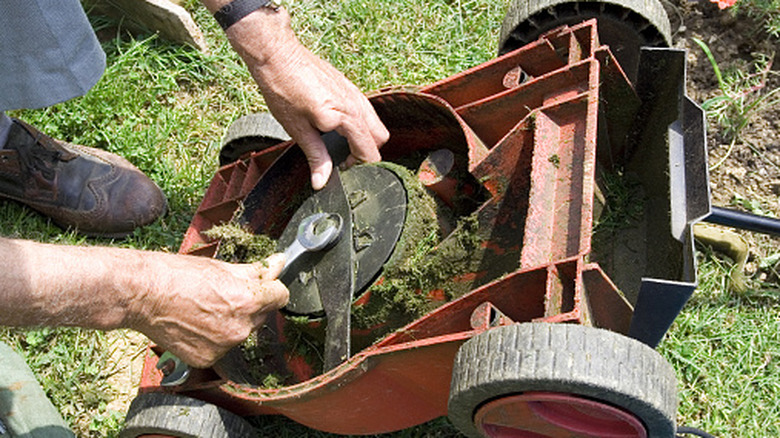
If you're a lawn enthusiast, you may know the importance of a perfectly balanced and sharpened blade. However, you may also know how easy it is for your mower blades to become dull or even damaged. Debris is one of the main culprits of damaged mower blades. This includes rocks, roots, utility equipment, or even hobby equipment like garden tools. Nicks and dents are only one type of damage, however, with warping being another common form.
When your blades aren't situated correctly in your deck with the proper sharpness, it can lead to complications. This includes a grinding sound, depending on the type of damage. For minor damage or dullness, you may be able to remedy the problem with a simple repair, such as sharpening the blades for a flawless surface. There are several DIY ways to sharpen your lawn mower blades, as well as various tools for the job. Depending on the severity of the damage, however, or if you think you're near the end of your lawn mower blade's lifespan, you may find that a replacement is the best way to reduce the grinding sound your lawn mower is making.
Checking your lawn mower blades regularly is an important part of routine lawn mower maintenance. If you've decided that a replacement is the best choice for your blade, keep in mind that different models have different requirements, just like with the spindle assembly. You may be able to refer to your owner's manual or your model's manufacturer for more information on choosing the right lawn mower blades.
Gear assembly problems

If your lawn mower is a gear-driven model, then you've got a gear assembly under the hood, and it's an essential part of keeping your lawn mower running. This component ensures that power reaches the external parts of the lawn mower, such as the wheels and blades, and in self-propelled and riding models, it's especially important. Unfortunately, when things begin to fail in your mower's gear assembly, it can lead to a host of signs. This includes grinding.
Typically, if you're hearing grinding from your lawn mower as a result of gear assembly problems, then it's most likely that the gears themselves are damaged or misaligned. Damage can include typical wear and tear from use, with the gears becoming worn down, or accidental damage like chipping. You'll want to properly diagnose the problem before shopping for parts. Cleaning may be enough to reduce the grinding sound if simple debris or lack of lubrication is the problem. Otherwise, in the case of damage or wear, you may need to replace the gears.
Excess pull starter slack
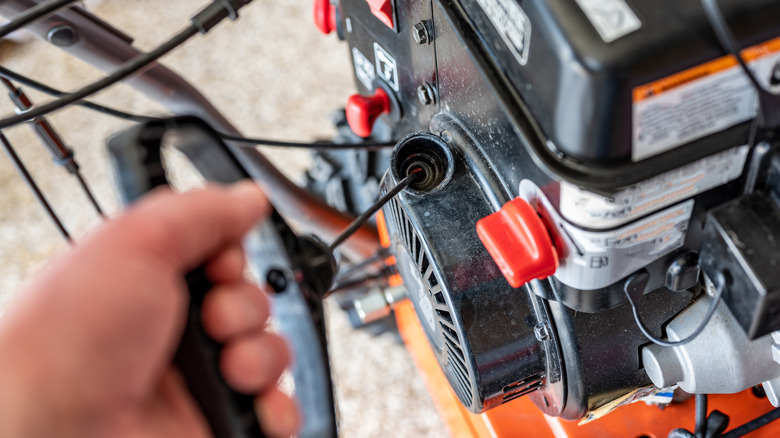
If you have a gas-powered lawn mower versus a battery- or electric-powered option, then you likely have a pull starter. The pull starter is known by several names, including recoil start. This is a rope you'll need to manually engage through pulling to activate the engine. Depending on the type of mower you have, this small component could be the culprit behind that grinding sound. If your pull starter has excess slack, it could lead to grinding when the engine is activated.
In some cases, you may be able to access from the recoil by removing the bolts securing it in place, allowing you to reach the pull starter. If it's the simple problem of the cord being too loose and needed adjustments, you can do that then. However, if your pull starter has too much slack due to damage, you may need to replace the component altogether. When this is the cause of the grinding sound your lawn mower is making, a repair or replacement here should remedy the problem.