

Protect Your Bathroom Pipes During Cold Months With A Trick That Costs Nothing
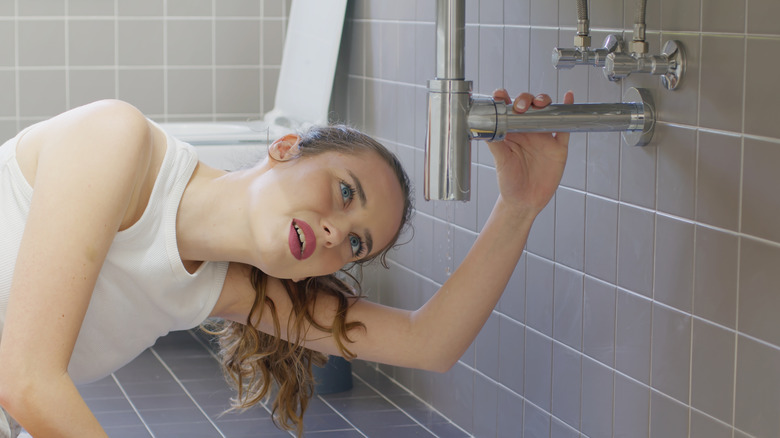
Any homeowner who lives in a cold climate knows about the potential damage that frozen pipes can cause in their home. When you see freezing temperatures in the forecast, you might drain water from hoses, protect outdoor spigots with foam covers, and double-check pipes to make sure they're thoroughly insulated. But have you ever thought about protecting indoor pipes during the cold months? Thankfully, there's an easy way to do this that costs absolutely nothing. Simply opening your bathroom cabinet doors to expose pipes to warm indoor air may lower their risk of freezing and bursting.
Water inside a pipe can seem benign — until it isn't. During long spans of freezing temperatures (32 degrees Fahrenheit or below), water inside a pipe can freeze and expand, causing the pipe to crack or burst. Exposed, uninsulated pipes or those in unheated areas, like crawl spaces, attics, and garages, are particularly vulnerable. Condensation in a pipe also can do the same, causing significant damage. Whether pipes burst of leak, repairs can cost thousands of dollars.
Unfortunately, there isn't a definitive answer to how long it takes pipes in your home to freeze since there are a number of influencing factors. You need to consider the temperature, the amount and quality of insulation around the pipes, and the pipe material. For example, an uninsulated copper pipe might freeze in four to six hours at 25 degrees Fahrenheit, but a well-insulated pipe may take 12 to 16 hours at the same temperature.
How to prevent frozen pipes in your bathroom vanity
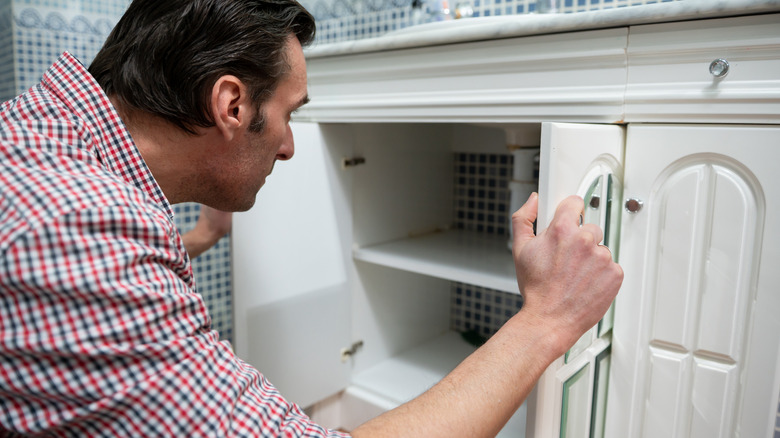
In addition to taking precautions for outdoor pipes, caring for interior pipes adds an extra layer of protection. During a spell of below-freezing temperatures, open the doors to cabinets that contain plumbing, such as those in the bathroom. This allows warmer indoor air to circulate inside the cabinets and, more importantly, around the pipes. The next time a cold front hits your area, compare the temperature underneath your vanity sink with the temperature elsewhere in your house. You'll likely notice a difference.
Another easy solution is to let water slowly drip from your bathroom faucet once external temperatures drop below freezing. This helps reduce the risk of freezing in the pipes by keeping water moving and helps restore flow as any ice in the pipe begins to thaw. Also, setting your thermostat to a warm temperature — at least 68 degrees — keeps both you and your pipes toasty.
Some telltale signs of a frozen pipe include little to no water flowing from the bathroom faucet after a cold spell, or condensation or frost appearing on the surface of the pipe. You might also smell an unpleasant odor (like sulfur) or — most obviously — notice the pipe cracking or bulging. If your pipes freeze during the winter but are not damaged, thaw the frozen areas with a hairdryer, warm towels, or heating pads — never an open flame. And if the pipes burst, immediately turn off the main water supply and call a professional plumber.