

Plastic Vs Wooden Clothespins: What's The Difference And Which Is Better?
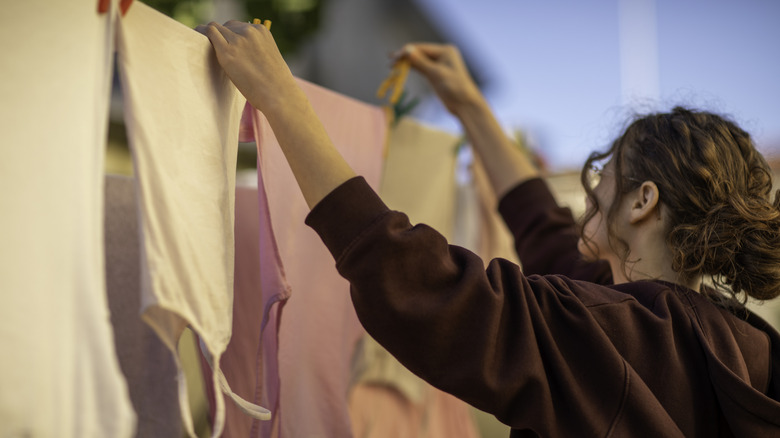
There are many benefits to adding a DIY clothesline to your yard. For one, clotheslines utilize gentle air drying, which can help your clothes last longer. It's also more energy efficient than long dryer cycles, which means it can be better for both your wallet and the environment. However, there is one important thing to consider before installing a clothesline in your yard: what type of clothespins will you use, plastic or wooden? Both options can have advantages and disadvantages, and familiarizing yourself with these specifications beforehand can help you make the right choice for your laundry routine.
There is no single clean-cut answer for whether plastic or wooden clothespins are better. Instead, even though both excel and falter in different places, much of the debate comes down to priorities and personal opinion. Wooden pins can be higher in initial cost, but they may last longer and they're more environmentally friendly. Meanwhile, plastic clothespins offer a different aesthetic with more resistance to rot and a lower investment price, though they can grow brittle in prolonged sunlight.
Deciding if plastic or wooden clothespins are the right choice for you
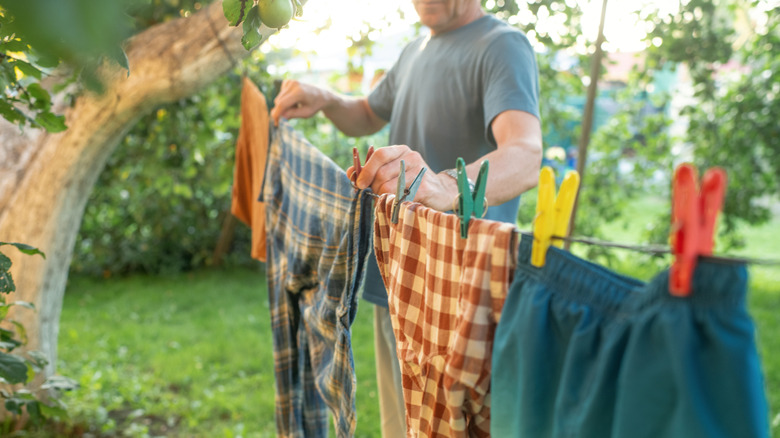
Because both plastic and wooden clothespins have their own pros and cons, the key to deciding which one is better for you depends on which one fits your needs, lifestyle, and preferences more than the other, since there's no objective winner.
Wooden clothes pins are best if you're looking for a more traditional, sustainable choice and don't mind investing a bit more. They're durable enough to hang heavier items of clothing with ease, and once you're finished with them, they'll break down and decompose. You can even use old wooden clothespins for various DIYs, helping you reduce and reuse. They do require some maintenance to preserve their lifespan, however. They can develop weather-worn appearances easily after time spent in the elements, and they're also at risk of developing damage or even mold when left in moist conditions. This means that you'll need to store them properly out of the rain and take care in humid environments.
Plastic, on the other hand, might be more worthwhile if you're looking for clothespins that hold up well to wet weather and you plan to conveniently leave them on the line when not in use. They won't splinter or rot. However, unlike wood, they can crack when left out in the sun for long periods of time, which is likely given their role on your clothesline. Because of this, though they may be more budget-friendly at first, you may need to buy replacements more often. And, once a plastic clothespin breaks, it's not biodegradable.