

Say Goodbye To Traditional Landscape Fabric: The Weed Barrier That Comes From Your Roof
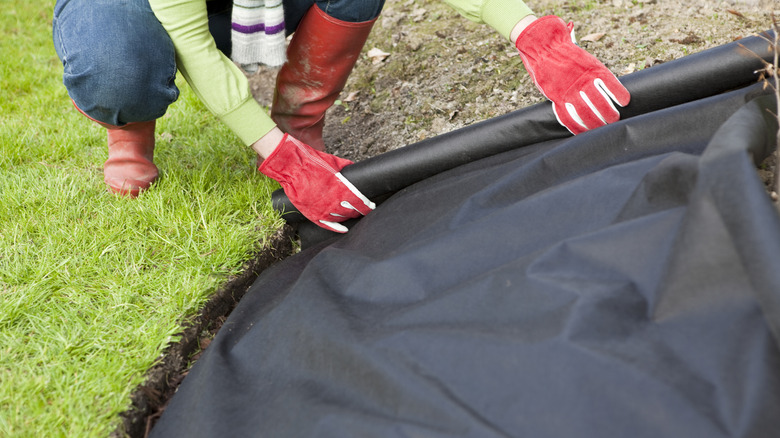
There are various solutions available to gardeners who want to get rid of weeds and prevent them growing back. You can lay down sheets of cardboard, for example, which can suppress new weeds from germinating by starving the seeds of sunlight. The main downside with this method is that the cardboard breaks down quite quickly — not ideal if you're hoping to get several seasons of weed-free gardening out of it. Alternatively, you can use a dedicated roll of weed barrier. But even then, there are several downsides to using landscape fabric, including the fact that it can eventually disintegrate and become very hard to remove.
One type of weed barrier that's proven popular among thrifty homeowners is roof shingles. These are made in a variety of materials, although, in North America, they're most commonly made from asphalt. This makes them highly durable versus other materials, like cardboard or traditional landscape fabric. They're also strong and heavy, which means that they won't become displaced after heavy weather. And since traditional three-tab shingles are designed to slot together and overlap, they make it very difficult for weeds to find a way through.
Of course, getting your hands on roof shingles may not be as simple as, say, buying a roll of weed fabric. However, you can often pick them up on places like Facebook marketplace from homeowners who have recently had their roofs replaced. Alternatively, if you yourself have recently had a new roof fitted — or you're planning to have one installed in the near future — this could well give your old shingles a renewed, and valuable, sense of purpose.
Installing asphalt roof shingles as a weed barrier
In order to put your old or reclaimed shingles to work as a weed barrier, you'll need some basic tools, including a utility knife (to cut the shingles to size), along with some ground staples and a mallet. Armed with those, the installation is actually quite straightforward. First, lay your shingles over your desired area, ensuring that those tabs are locked in place and that there are no gaps for weeds to grow through. Use your knife to cut out any awkward corners or curves, and once you're happy with your layout, simply secure the shingles in place with your staples.
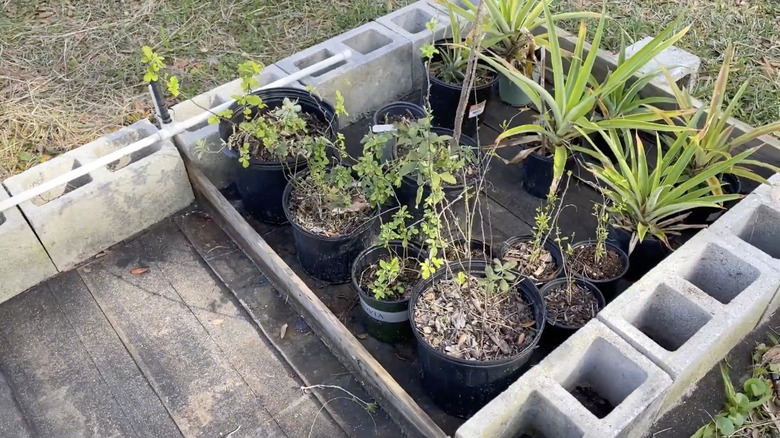
The next thing to do is decide how you'll use your shingled area. And this is where things get tricky. Unlike more traditional landscape fabrics, which allow water to pass through, asphalt shingles are designed to repel it. They're also highly heat-retentive. In other words, as a weed barrier for things like garden paths, it's great. But if you're hoping to cut holes in the barrier in order to plant in the soil beneath, your shingles may work against you. This isn't to say that you don't have options, in fact there are certain plants that positively thrive in poor soil. Lavender, for example, is highly tolerant of drought, and actually prefers poor to only moderately-fertile soil. On the other hand, for plants with more expensive tastes, you may be better off using your shingled zone as a base for a container garden. You could place your pots directly over the top of your shingles, or if you want to go the extra mile, you could lend your space some decorative charm with a layer of wood chips or gravel.