

A Functional Rain Garden Depends On Where You Put It
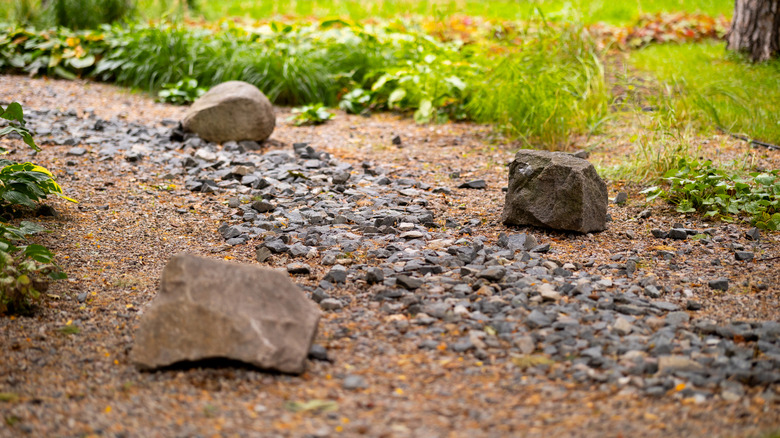
In areas with seasonal rainfall, people have figured out clever ways to use rainwater around the home and garden. After all, water is literally falling from the sky and could be put to good use. One option is a rain garden, which is a shallow basin filled with grass and plants that absorbs rainwater. For optimal functionality, a rain garden should be located where it can catch and offload rainwater from roofs, driveways, and streets — but far enough from the home to avoid flood damage.
A rain garden will give you a lush planting area that's naturally fed on rainy days, but there are a number of significant environmental benefits, too. Rainwater, also referred to as runoff or stormwater, soaks up pollutants like fertilizer, pesticides, and oil, before flowing into storm drains and ditches — and ultimately into our natural water sources. According to the Environmental Protection Agency, "polluted runoff is one of the greatest threats to clean water in the U.S." If runoff ends in a rain garden, we're lowering the risk of water pollution and flooding, while also beautifying our yards.
When determining the most effective site for a rain garden, observe your yard during the wet season. Notice where the water flows and where it tends to drain and pool. For the safety of your home, the garden should slope away from the house and sit at least 10 feet from the foundation. Also stay clear of utility lines, steep slopes or areas susceptible to erosion, poorly draining soil, or wells and septic tanks.
Assessing the potential site for a rain garden
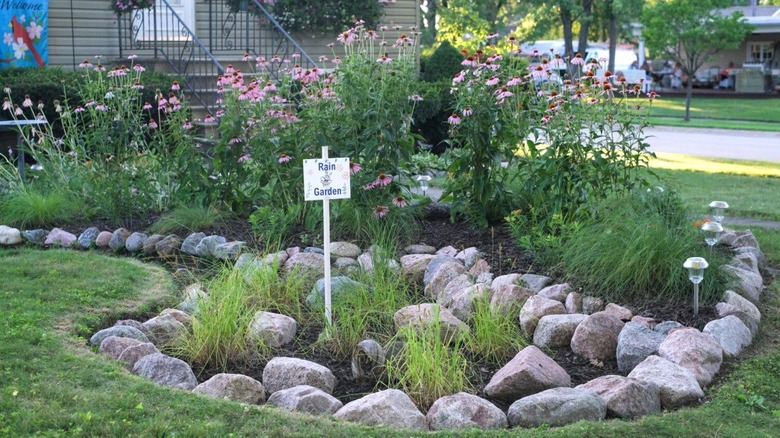
Rain gardens are typically fed by runoff from a downspout that diverts water from a roof, driveway, or other part of the property. An adjacent swale, which is a drainage solution that will keep your grass happy and healthy, can also funnel water to the rain garden. Conversely, rain gardens need proper outlets to direct overflow back into the ground or to a storm drain at a reasonable rate, so make sure your potential spot accounts for that space. A suitable overflow area extends about four feet beyond the garden basin and, ideally, is lined with rocks to protect the soil from erosion.
Finding a suitable spot also requires doing some work underground. During the wet season, test the potential site for drainage. To do this, fill a hole with water and monitor how long the water takes to disappear. Calculate the drainage rate by dividing the depth of the hole by the number of hours that passes, and aim for a rate of at least 0.25 inches per hour.
A soil analysis also will be helpful to determine if amendments are needed before putting in plants. The best soil for a rain garden is a blend of sand, compost, topsoil, and leaf or bark mulch. Sand is particularly important, since it allows water to filter through the soil quickly. A garden with proper drainage should hold water for no more than 48 hours. Otherwise, standing water could become a breeding ground for mosquitoes.