

She Builds A Functional Warre Hive For Her Tree
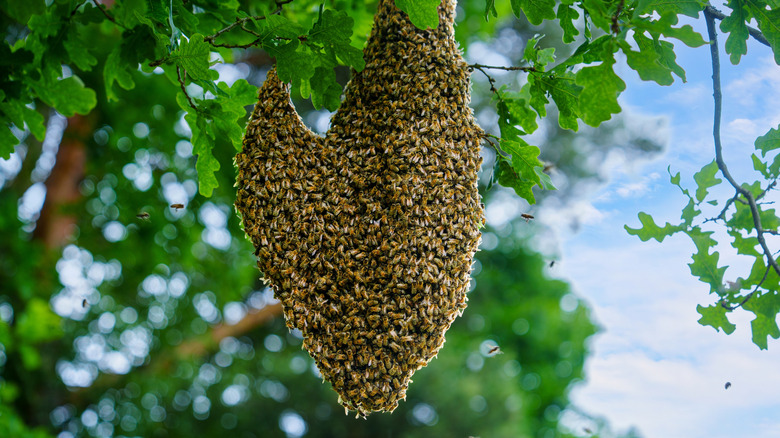
Bees aren't just important for the flowers and vegetables in your yard. According to some reports, they pollinate as much as 70 percent of the food crops we eat. We would be in big trouble without them. Perhaps surprisingly, it's not the well-known honeybee that does most of the work (they're originally from Europe), it's our native wild ones. There are numerous types of these you'll want in your garden, and adding a DIY hive not only benefits you, it also provides a valuable home for the bees at a time when natural habitats are increasingly under threat. Over on YouTube, Amanda, of I Damanda Homestead, shows us how to build one to hang in a tree.
The project is based around a couple of box sections from old Warre hives that are usually used by beekeepers. These are made by stacking boxes on top of one another, with the top one having a peaked roof. The design originates from the 1950s, the idea being that the stack could easily be taken apart to access the honey inside.
Although they can be bought new, you might be able to get secondhand ones through beekeeping groups or online marketplaces. There are also plans available so that you could make your own. Amanda uses two boxes for her hive. Apparently, researchers have found that this size provides a particularly attractive space for wild bees.
Constructing a Warre hive for wild bees
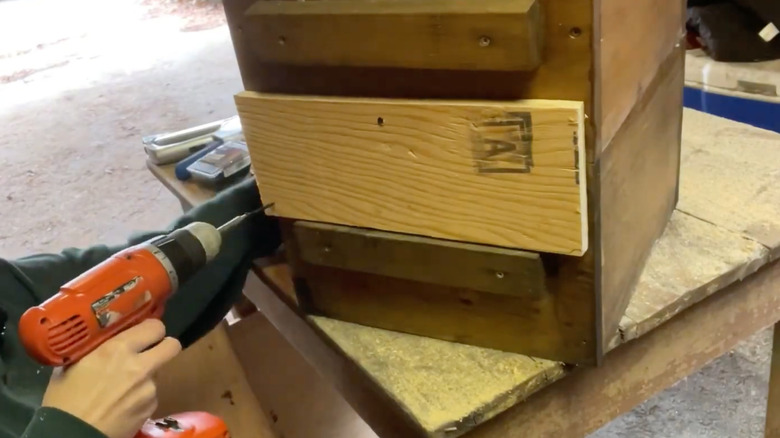
Using existing Warre boxes means a lot of the work has already been done. They need to be joined together, a floor and roof have to be added, plus access for the bees. The only tools required are a cordless drill/driver and a saw of some kind. A circular saw is probably the best choice for cutting straight lines and is among the must-have power tools for homeowners. A heavy-duty stapler is useful but not entirely necessary. In terms of materials, you need some ¾- or 1-inch plywood, a small piece of hardware cloth, and some screws (not nails, because they don't provide a strong enough grip).
The video explains the construction quite clearly, but there are a few points worth going over. Amanda cuts several of the pieces freehand, which isn't the best option because it's neither particularly accurate or safe. It's better to clamp the wood to a bench so you can have both hands on the saw and well clear of the blade. In the video, a spade bit is used for the bee hole. A Forstner bit or hole saw is just as capable if that's what you have. Hardware cloth (or wire mesh) is used to stop birds getting in, but it comes in several sizes. The ⅛-inch option is actually designed to keep insects out, which is not what you want at all, so the ½-inch is a better choice. If you don't have a stapler, hammer a few small nails partially in and bend them over to hold it in place.
Finishing and hanging the Warre hive
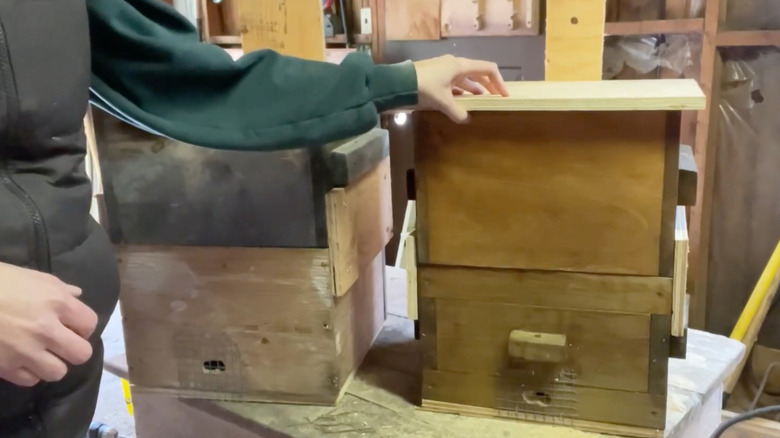
The top and bottom can be screwed on because the honey the wild bees make is to feed them and their larvae, not to be harvested by us. The top bars, which the bees will use to build their honeycombs from, are normally included with the boxes. You might want to check that if you're buying secondhand.
Amanda's bee hives are unfinished, but weather can soon take its toll on exposed wood. Commercial hives are usually painted to offer some protection, and there's no reason you can't do that. However, bees are sensitive, so it's best to use water-based paints or wood stains, never paint any of the inside, and then leave it a week or so before hanging to allow any lingering smells to clear. It's a good idea to use light colors, as dark ones might cause overheating.
Position is important to have the best chance of attracting a wild swarm. According to one expert, wild hives can be more than twenty feet above the ground. However, as this is unlikely to be practical, put it as high as you can safely do so. It should face south, in a shaded position, but one where it can still be seen. If you can also start a pollinator garden somewhere reasonably nearby, you'll maximize the chances of attracting wild bees to their new home, as well as benefiting from the work they do in your yard.