

The Amazon Find That Prevents Newly Planted Grass From Blowing Away
We may receive a commission on purchases made from links.
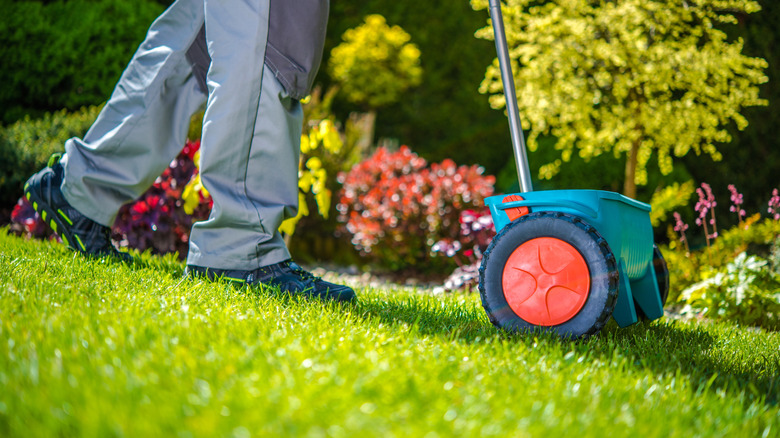
Just scattering grass seed or trying to overseed is not necessarily as straightforward as it sounds. On exposed or sloping sites or in generally windy conditions, you try and scatter your grass seed and it blows away over the next couple of days before it gets a chance to anchor into the soil. Even with very little wind, a sudden downpour can wash seeds into flower beds or downhill, leaving your lawn patchier than before.
DeWitt's Single Net Excelsior Erosion Control Blanket can help keep grass seed in place while it germinates and establishes roots. It'll also help to keep those pesky birds off who like to devour the seed as soon as you sow it. It's made of curled aspen wood fibers held together with netting. You spread your grass seed, then lay the blanket over the top and pin it down. The fine aspen wood fibers help shield the surface and therefore the grass seed from wind, rain, and wildlife, but it lets enough moisture and sunlight through for the grass seed to still be able to germinate. Each 4-by-112.5-foot roll covers up to 450 square feet and costs approximately $79, or around 18 cents per square foot before allowing for overlaps and staples. That can add up if you're reseeding a large lawn, but it may be worthwhile for exposed or sloping areas where grass seed is particularly vulnerable to being washed or blown away. This erosion control blanket provides temporary protection for your grass seed, but for the best results, you need to prepare the ground properly first.
How to install the erosion control blanket so it stays put
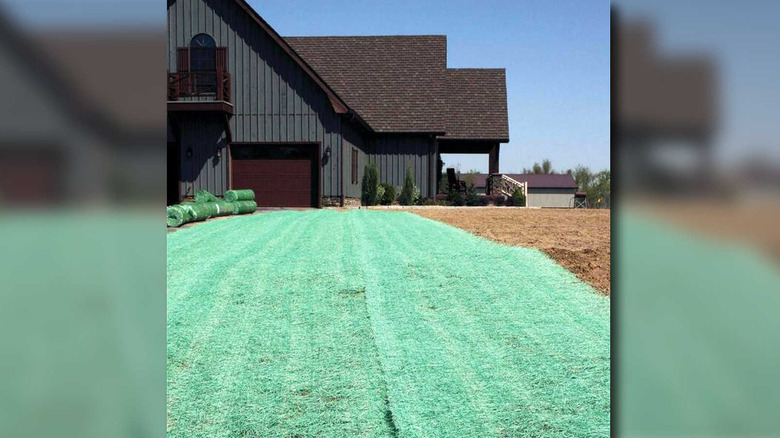
If you simply roll out the blanket without securing it properly, it may not stay in place. Rake the seedbed to create a smooth surface, filling in any hollows where water might collect. Remove any stones or roots so that they don't end up sticking through the mat or creating a bridge where wind and water could lift it. Once you've prepped the ground and sown the seed, unroll the blanket gently over the area so that it lies flat without stretching the fibers too much.
Secure the blanket along the edges and where sections overlap, and add extra staples around dips or rises where the material might lift. On firm, level ground, 6-inch staples like Feed Garden's Galvanized Landscape Staples should be suitable. For loose soil or steeper slopes, consider longer 8-inch landscape staples for a more secure hold. Not preparing the area and failing to use enough landscaping staples are two of the most common mistakes that people also make when using landscaping fabric.
On slopes, run the blanket downhill rather than across the incline to minimize potential shifting. Secure the top end with extra staples. For additional security, anchor the blanket's uphill end in a shallow trench, secure it with staples, then backfill and compact the soil. This helps stop water flowing in from the top and washing seed out from underneath the blanket.
What happens to the blanket once your grass starts growing?
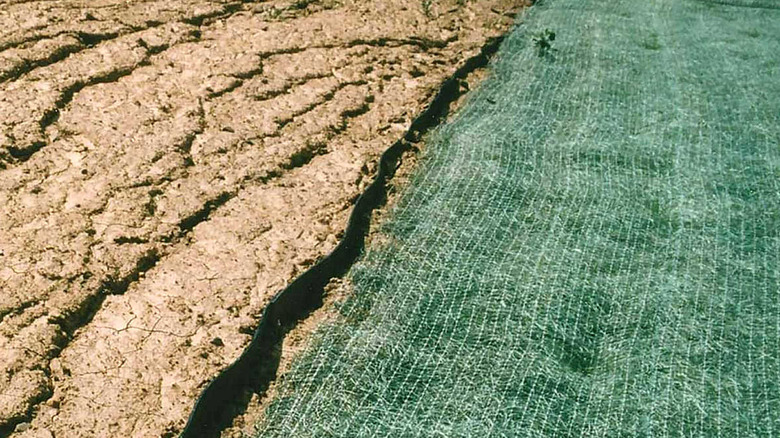
Although DeWitt's erosion control blanket is designed to remain in place as your grass establishes, not all its components break down in the same way. The curled aspen wood fibers are biodegradable and gradually decompose into the soil. However, the netting that holds them together is made from photodegradable polypropylene. This means sunlight gradually weakens the plastic netting, which can fragment into smaller plastic pieces rather than biodegrading completely.
Aside from the environmental implications, there are also some day-to-day practicalities you need to think about. Plastic netting can catch on mowing equipment, and it can entangle wildlife. As it starts to degrade or as the wood fibers beneath start to decompose, you'll need to keep an eye out for loose or exposed pieces of netting and cut it away. This product is designed to remain in place, so you can't simply yank out the whole blanket. You'll also need to inspect the area carefully before you mow every single time so that you don't accidentally catch your mower blades in the netting. If adding microplastics to your garden bothers you, you can go with a fully biodegradable option like a AgFabric's Jute Erosion Control Blanket. For sloping areas, pair that with low-growing ground covers that help prevent erosion instead of regular lawn. Some native grasses can also help limit erosion on slopes.