

'The Rocks Don't Even Budge': Amazon Has A Clever Solution For Long-Lasting Gravel
We may receive a commission on purchases made from links.
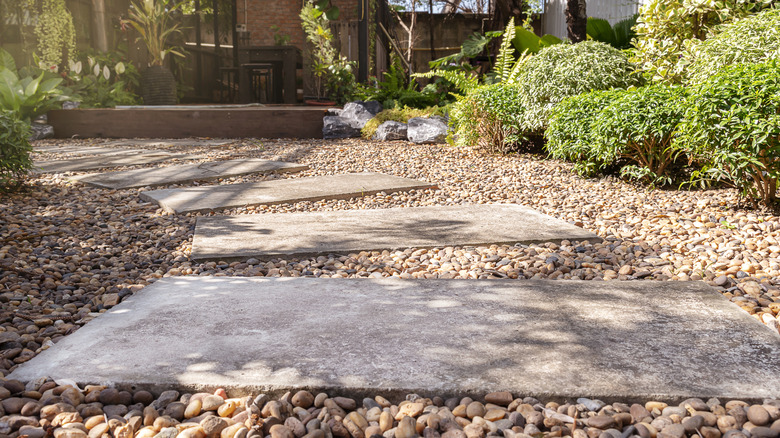
Gravel is a popular choice for budget-friendly DIY garden pathway ideas. However, it tends to migrate because it's loose. You track it in on your boots, and it manages to escape the walkway and get into the lawn and flower beds. Rounded pea gravel is a common loose landscaping stone, but it's particularly troublesome because the stones are, as the name implies, fairly round, so they roll and move easily.
Decorative stone looks fabulous in the right places, and it is a good, cost-effective option. Having to rake it back into position after every downpour or every time the dogs or the kids run across it a bit enthusiastically is a real pain. The obvious solution is resin binding, but this is costly and more complicated than straightforward gravel installation, and it's not always practical in every setup. A good alternative is Easihold Rock and Mulch Glue.
It costs around $40 a gallon and can cover up to 107 square feet with a spray-on application, costing around 37 cents per square foot for a single coating. However, a minimum of two coats is actually recommended by the manufacturer for a stronger, longer-lasting finish. Based on the recommended two-coat spray application, a gallon at $39.99 gives you enough to treat a pathway up to 25 feet long and 2 feet wide. Do note, however, that heavier applications (such as pouring instead of spraying) and porous stones will significantly reduce coverage.
Where Easihold gravel glue works best and when to avoid it
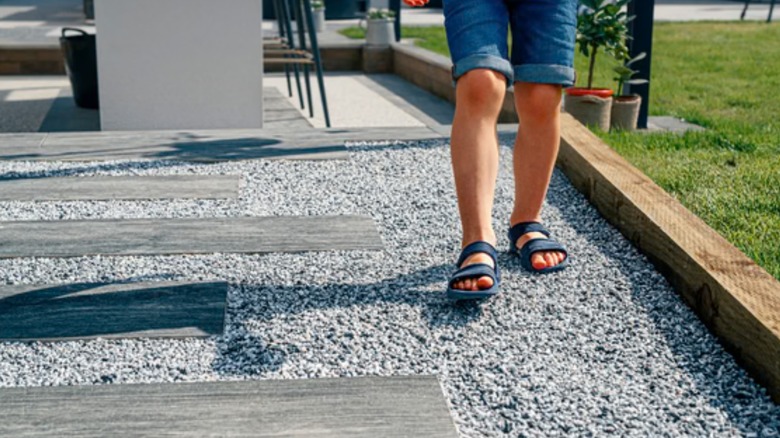
The smaller the stone, the better suited it is to use with the glue. Easihold is recommended for stones measuring between 4 and 20 millimeters. These smaller stones, specifically between 4 and 10 millimeters, are the better choice for any areas that receive foot traffic. With smaller stones, there are more contact points where the adhesive can bond, so you end up with a firmer surface less prone to shifting and bond cracking. Larger stones, especially irregular ones, don't pack down as well, so they have larger gaps between stones. Therefore, the adhesive, especially when sprayed on, can struggle to form appropriate bonds between large stones because it can't bridge the large air gaps.
If you're wanting to spray stone adhesive, keep the gravel layer thin and under 25 millimeters. If you go too deep, the glue will only be effective on the upper stones. The loose material underneath will shift, which can break the bonds in the glued upper layers.
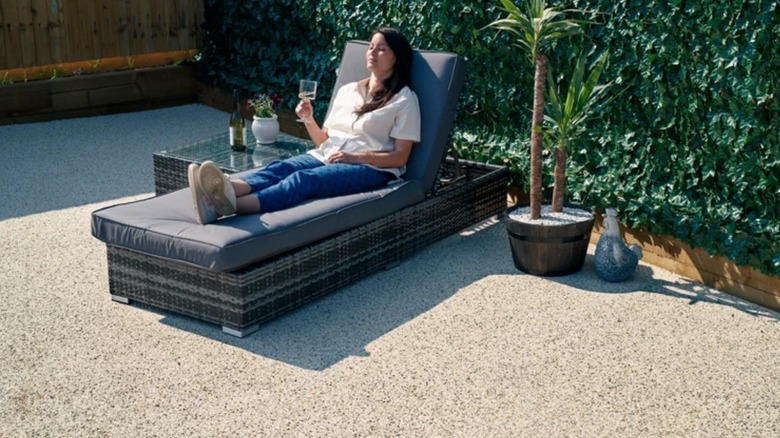
Easihold and most readily available consumer-grade gravel glue are not suitable for vehicle traffic, so you won't be able to use this on a driveway and expect good results. The same goes for a gravel patio where there's heavy furniture that gets a lot of use. Even pathways that get a great deal of foot traffic will cause the glue to break down over time and therefore need replenishing on a fairly regular basis. Where this is an issue, it may be worth considering a suitable gravel stabilization grid if you don't want to pay for a resin-bound system.
How to apply Easihold for a longer-lasting finish
Remember that you are working with an adhesive, so the basic rules of working with any glue apply to Easihold too. Dust, soil particles, and moisture will stop the adhesive from forming a strong bond, so old, dirty gravel needs to be washed and allowed to dry completely. Check the weather forecast too, as you need roughly 72 hours for the glue to cure properly with dry temperatures above 32 degrees Fahrenheit.
If you are preparing a new gravel installation, you can mix the gravel and binder together in a bucket before you spread it over the prepared base. This method ensures that each stone is evenly covered and will get you better results than just treating the exposed surface. It will, however, use considerably more product than spraying does, so you won't get as much total coverage. Once you've applied the mixture to the base, compact it with a trowel to pack it down and get rid of as many air pockets as possible so that the glue has the best chance of forming strong bonds with surrounding stones.
If you're treating gravel that's already in place, you can apply Easihold with an airless pressure sprayer. Apply an even coat, holding the sprayer between 8 and 12 inches above the stones. Don't flood the gravel, though, and try not to leave puddles of glue. Compact the surface with a trowel, then wait around 30 minutes before applying a second, even coat. Even after the adhesive has cured, you should avoid pressure-washing treated gravel, as even on a gentle setting, the force of a pressure washer can break the bond between the stones and require you to start all over again with the glue.