

What To Know About Vaulted Ceilings Before Buying A Home
There is a joy that comes with searching for the perfect home. Your house hunter list will have everything from serious must-haves like a hallway bathroom to personal wants like a bay window. However, with certain elements of a home, there is more to them than meets the eye, as they can affect both the style and functionality of the space. Take vaulted ceilings, for example. These tall, structural designs are grandiose, but they also affect the property's energy efficiency, acoustics, and ease of maintenance. So look up — the ceiling is one thing to notice when buying a house that saves you money down the line.
Vaulted ceilings are arched, barrel, or triangular designs that sit below the roof line, typically reaching anywhere between 12 and 20 feet high. One major advantage of these ceilings is their aesthetic, which suits homes with dramatic and elegant living room spaces. Since they aren't common in new builds and are difficult, as well as expensive, to add to existing properties, finding a home on the market with this feature is a real treat. It is a focal point that creates the illusion of more space, plus it works well with sky boxes, tall windows, or chandeliers. However, there is more to consider before falling in love with a home that has vaulted ceilings.
Vaulted ceilings can be less practical than standard ones
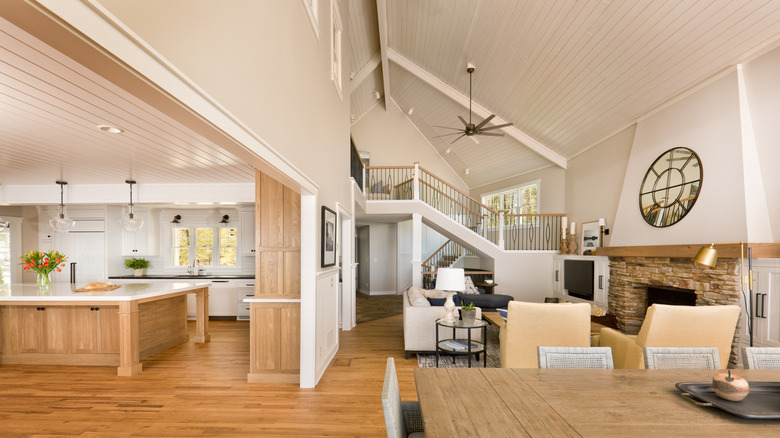
Although the height and grandeur of vaulted ceilings create a bright, airy, and luxurious space, many compromises are made to reach such a goal. The extra ceiling height takes away from the second story, meaning the home will have less usable space on the second floor or no attic. If extra storage or living area is a priority, it's probably best to avoid a home with vaulted ceilings. Further, while the aesthetic is a major plus, maintaining that look is also a challenge. Tall ceilings are less accessible, which makes painting, cleaning, and decorating a harder task. That also applies to light fixtures and windows that are close to the roofline. Be prepared to climb a 20-foot ladder, or hire a professional, just to change a lightbulb or dust the trim.
The extra space created by the higher ceilings also means more air to heat and cool, aka higher energy bills. The design is less energy efficient, as the height makes it harder to control the room's temperature. Plus, your HVAC system and wallet will work hard to regulate a 15-foot-high space no one is using. Not to mention, you might find the acoustics don't lend themselves well to conversations or media, given the echoes.
For a home with vaulted ceilings to be worth buying, it is best if it's in a hot-climate region. The large, breezy space and rooms will benefit from the hot air rising. It should also have enough square footage that the would-be attic or second story won't be missed. Keeping this in mind will help you avoid buyer's remorse on your home purchase.