

Your Backyard Could Use A Spigot: How To DIY The Cutest One
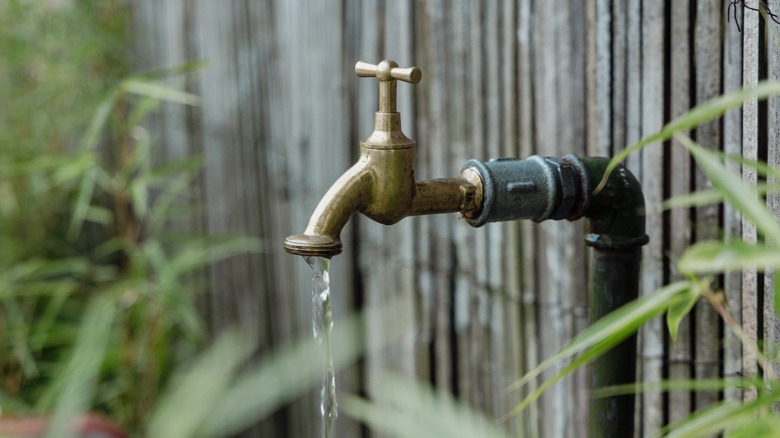
An outdoor spigot is invaluable for watering your plants. However, even when you have one fitted to the wall, it can get tiring wandering back and forth with a watering can. The alternative is to use a long hose, but while you can DIY a hose storage solution, you still have to run it all the way out and roll it back up again when you're finished. There is another option which allows you to add a spigot just about anywhere in your garden, either as fixed or movable fixture. Let's take a look at how it's done.
You will need a wooden fence post that is 4 inches by 4 inches, with the height of your choice, a metal fence post ground spike (the kind with the square socket on top), and a spigot that will go through the fence post. There are many different types of outdoor spigots, but a simple brass spigot is both attractive and rust-resistant. Rain barrel spigots often have a long reach and a nut to hold them in place. You can search your local hardware store for an adapter that connects the spigot to a standard hose. With many parts and accessories available, it shouldn't be difficult to find what you require for this project. You'll also need a cordless drill and a spade drill bit large enough to bore a hole through the post for your spigot.
How to assemble your spigot and where to put it
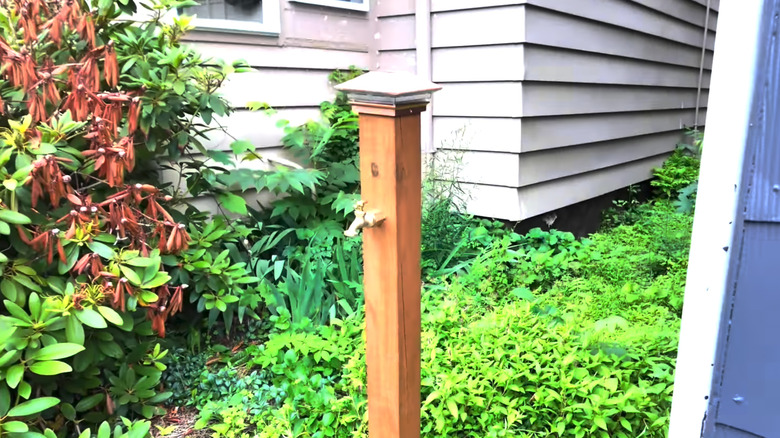
Putting it all together is straightforward. Drill a hole through the wooden post about 8 inches to 1 foot from the top. Then insert and assemble the spigot components. You can also stain or paint the fence post to suit your yard decor. If you'd like, you can finish the top with a solar light designed for fence posts.
Now it's just a question of deciding where in the yard you want to put it. Once you have a location, all you have to do is insert the spike in the ground, drop in the post, and run a hose from your existing wall spigot. If you intend for the location to be permanent, you will want to start thinking about ways to stop your pipe from freezing in the winter. Another option is to pack away the hose and post once it gets cold, keeping them in storage until you need them again in the spring.
If you have a large yard, you could make several of these for different areas. Hose splitters are available with up to four connections, allowing you to run lengths of hose to several locations. If you don't want to leave them on the surface, you can dig shallow trenches and bury them without much work.