

Quickly Sharpen Garden Tools With A Handheld, Packable Tool From Home Depot
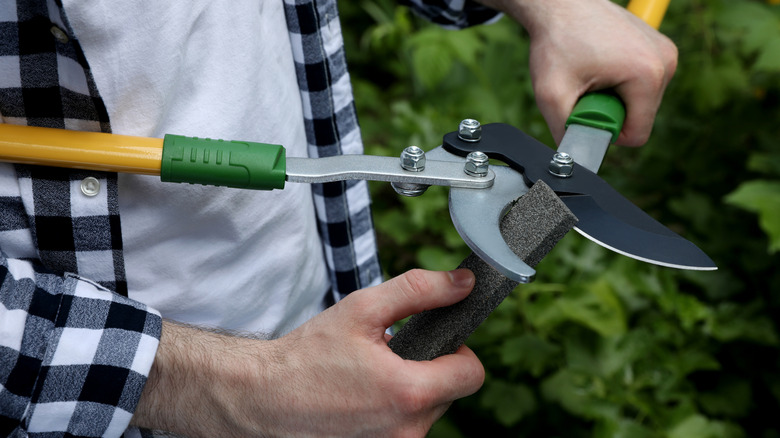
We may receive a commission on purchases made from links.
Keeping your lawn and garden in good shape becomes much harder when your tools lose their edge. Blunt pruners leave ragged wounds on shrubs, and dull mower blades can make grass look uneven. Although taking these tools to a hardware store for professional sharpening might an option, the extra expense and repeated trips aren't always convenient. Fortunately, you don't have to rely on professional services to restore your tools. Available for $39.99, the Work Sharp Guided Field Sharpener from Home Depot offers a practical way to maintain sharp blades at home.
Designed mainly for producing razor sharp kitchen knives and pocket knives, the Work Sharp Guided Field Sharpener is a small handheld tool with two diamond sharpening plates of different grits. It also has two ceramic honing rods, a leather strop, and a built-in 20- to 25-degree angle guide, designed for sharpening a range of shears, pruners, axe blades, machetes, serrated knives and more. Its ceramic rod also features a grooved surface for sharpening fish hooks, which makes it useful for even more than just garden tools. Also, since the sharpener is quite small, you can easily pack it and carry it around. It even has a lanyard hole, which allows users to clip it onto a bag or hang it on a wall hook.
As for buyer feedback, the majority of the customers seem happy with the Work Sharp Guided Field Sharpener. Reviewers on Home Depot consistently praise it for its compact size, good value, and ease of use, especially with the built-in angle guide. However, the compact sharpener may work better for some tools than others, depending on their size and how finely sharpened you need the edge to be.
Sharpening tools with the Work Sharp guided field sharpener
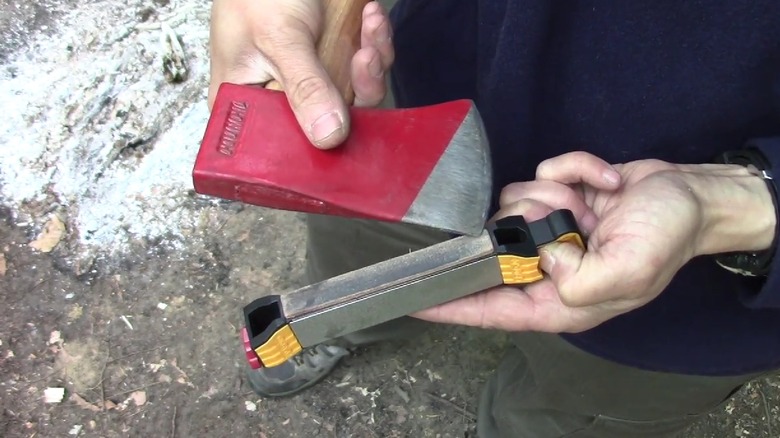
If you want to get the most out of the Work Sharp Guided Field Sharpener, you must make sure that you clean your gardening tools first. Dirt, dried sap, and rust can get in the way of sharpening, so scrub it all away before starting the sharpening process. Also, make sure that you know which sharpening side to use. The coarse 220-grit diamond plate, for instance, is a useful starting point for extremely dull edges and blades with minor nicks. The finer 600-grit plate is better for refining the edge and making it extra sharp.
You should only need a few passes to bring each tool edge back to life. When sharpening, use light, controlled strokes. If you press too hard, it can remove too much material, which might weaken the cutting edge of your tool. Pay special attention to the angle as well. Ideally, you should follow the blade's existing angle or bevel. The Work Sharp Guided Field Sharpener's built-in angle guides support 20- and 25-degree angles, but this might not match the original bevel of some garden tools. Shovels, for example, tend to have a wider 45-degree angle. You can still sharpen these tools freehanded, but it might be a bit trickier to produce an even result.
It is also worth noting here that since the Work Sharp guided field sharpener is quite compact, it might not be ideal for sharpening large gardening tools or large knives, since you may not be able to swipe the whole edge against the short plate. Lastly, don't forget to protect your tools once they are sharpened. Use a product like the Rust-Oleum Rust Dissolver Spray Gel, which not only helps remove rust from your garden tools but also prevents rust from building.