

Check Under Your Kitchen Sink: This Part Needs To Be Replaced Every 5 Years

One of the biggest challenges of homeownership is the long list of tasks that need to be completed on a regular basis. These tasks vary in complexity and frequency, from mowing your lawn once a week to putting a new roof on your home every 20 years. Yet another maintenance task that needs to be completed at regular intervals is replacing a common component of your kitchen sink: your faucet supply line.
As a rule of thumb, it's best to replace your kitchen faucet's supply lines once every five years. While this may seem excessive (especially for new homeowners), when you consider the job of these supply lines, it becomes clear why regular replacement is so important. The supply lines route water to your kitchen sink, providing you with hot and cold water right when you need it. It is this exact on-demand nature of the faucet supply lines that makes them prone to failure at predictable intervals.
Because their design puts them under pressure on a constant basis, the components of the faucet supply lines will wear out over time, putting them at risk of leaks. In the worst cases, worn-out supply lines can actually burst, resulting in a massive flood on your kitchen floor and leading to costly water mitigation services. While some faucet supply lines will last longer, many plumbing experts agree that five years is a sweet spot that allows you to complete the replacement before disaster strikes.
How to tell when your faucet supply line needs to be replaced
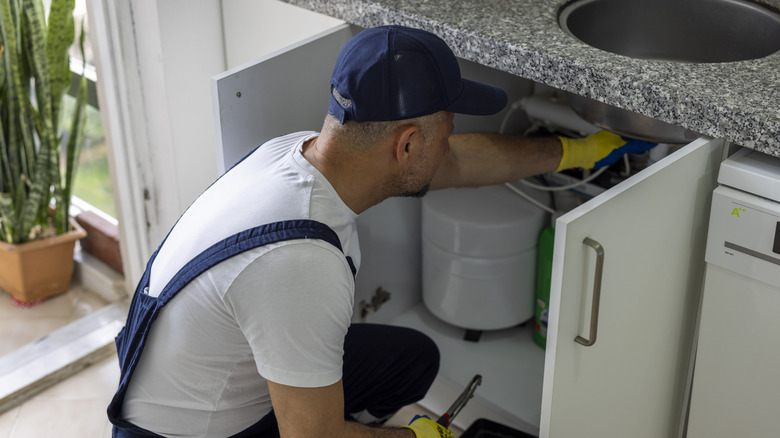
If this is your first time hearing about replacing a faucet supply line, the first step is to take a deep breath: Even if you're due for a new one, the absence of a leak would mean that you're not yet too late. However, a leak or another sign of failure may have popped up without your noticing. To check, grab your flashlight and look under your sink. You'll be able to identify the faucet supply line by following the pipes from the floor of your cabinet up to the underside of the faucet itself. Examine the fittings and the pipe itself, looking closely for any dripping, corrosion, bulging, or damage, as these are all clues that a supply line is failing. You'll also want to check the floor of your cabinet to see if there's any warping or other evidence of recent water damage.
If you notice any of these things, you'll want to find the water shut-off valve and turn it off while you make some calls to hire a plumber. Replacing a functioning faucet supply line is completely doable on your own with the right tools, but if your supply lines show the aforementioned signs of failure, that's a sign that you need to call a professional. In either case, make sure that you or your chosen plumber uses a braided stainless steel line, which will offer affordable longevity. If you've recently purchased your home and don't know the age of your kitchen faucet supply lines, you can utilize the same inspection process to check their health. When in doubt, it may be best to begin budgeting for a replacement, which will be cheaper — and more pleasant to manage — than a post-leak fix.