

Collectors Dream Of Finding The Secondhand Garden Tool That Makes Rustic Home Decor

There's something rather lovely about old garden tools, particularly the ones that have clearly seen decades of hard work. Old wooden handles, worn smooth from years of use, or a battered metal tool with its original paint still clinging on, are lovely because their physical appearance tells you their history. Most of these old tools aren't particularly valuable but some have become desirable to collectors. There are plenty of valuable thrift store items you shouldn't overlook for your garden and some make wonderful rustic decor.
One such item is the vintage garden sprayer. Not the ugly modern plastic pump-up versions but the old-fashioned hand-operated ones. These are often made from painted metal, brass, or copper, sometimes with beautiful glass reservoirs and turned wooden handles. These were originally designed for spraying plants with insecticides and fungicides and you'll find them in a surprising variety of shapes and sizes. While hopefully you're not dousing all your plants in these chemicals today, the sprayers themselves make a lovely addition to home or garden decor. They look charming on the windowsill in a farmhouse-style kitchen or quaintly sitting in a potting shed. Because you won't be using the sprayer, it doesn't even need to work. It just needs to look the part.
What to look for when buying vintage garden sprayers
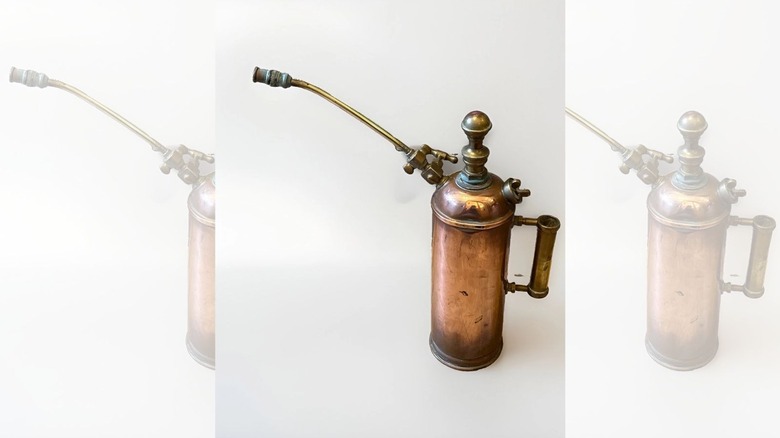
Not every old sprayer is worth picking up, and what may be right for you may not be right for somebody else's sense of style. Some of the most recognizable ones, however, are hand-pump tin insecticide sprayers, often called Flit guns. These have long cylindrical pumps and pleasantly plump round reservoirs. Many of these had colorful painted finishes, often with advertising graphics. For example, original FLIT sprayers from the 1930s have distinctive blue and yellow branding while other designs had glass reservoirs instead of metal ones, like the FlyDed sprayer with its original green glass jar.
Lots of these vintage pieces are wonderful examples of how to combine form and function. They are as lovely to look at as they are practical to use (as long as they are clean and in good working order — more on this shortly). Older heavier brass and copper models, especially those with worn but smooth and intact wooden handles, decorative fittings, and recognizable makers' marks, are particularly collectible. Models such as Enot's Cooper and Brass Sprayer, dated between 1850 and 1900, are prime examples of the sort of craftsmanship worth looking out for.
Age and materials don't automatically make something valuable though. If you're wondering whether your vintage tools are worth good money, originality, condition, rarity, and collectability are all important. For vintage garden sprayers, check that the sprayer has its original reservoir, pump, handle, and nozzle. Look for cracks in glass jars, serious corrosion, and missing components. A little surface rust, faded paint, and a nicely aged patina can actually add to the charm but missing or badly damaged parts generally make a piece less desirable.
How to use vintage garden sprayers as rustic decor
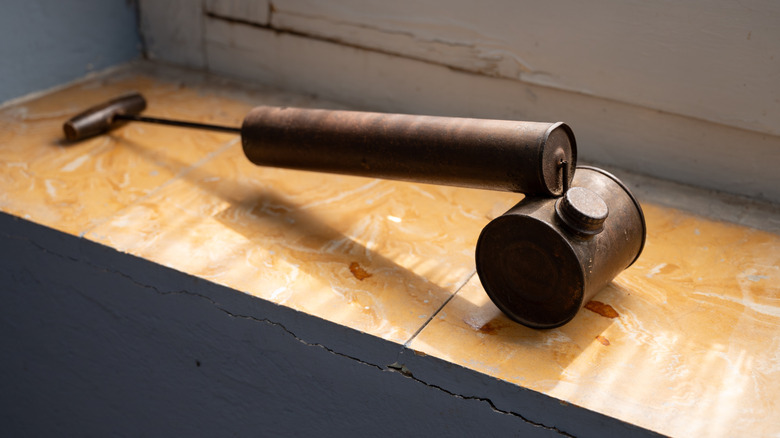
The majority of vintage garden sprayers you'll find in the wild won't be in working condition, particularly not the type with leather pump seals. Because they contain leather and often sit untouched for years, the leather dries out and perishes. If you're going for a farmhouse-style display, try arranging a couple of smaller vintage sprayers on a rustic wooden shelf alongside old seed tins, terracotta pots, and other vintage garden paraphernalia. The smaller glass jar types can look particularly attractive on a shelf or windowsill while the larger copper and brass examples make interesting standalone pieces, taking pride of place on a hearth or even on a potting bench. If you take pride in your potting shed or you have a summer house outdoors, you could always mount a collection of vintage garden sprayers to the walls for a quaint rustic cottage garden vibe. There are plenty of ways to repurpose old garden tools in and around your home but sometimes simply displaying them in their original form works best without applying lots of extra paint or stripping away decades of natural patina.
It is important to remember, however, that these old sprayers were often used to apply pesticides, including chemicals that are no longer allowed to be used. You have no way of knowing exactly what a secondhand sprayer once contained, so don't be tempted to refill it with water for misting houseplants if you're lucky enough to find a working model. Don't use the glass reservoir as a flower vase. Pesticide residues can remain in old containers even if you give them a thorough clean so it makes more sense to keep your sprayer as a strictly decorative item.