

Skip The Traditional Mulch For A Long-Lasting Material That Suppresses Weeds
We may receive a commission on purchases made from links.
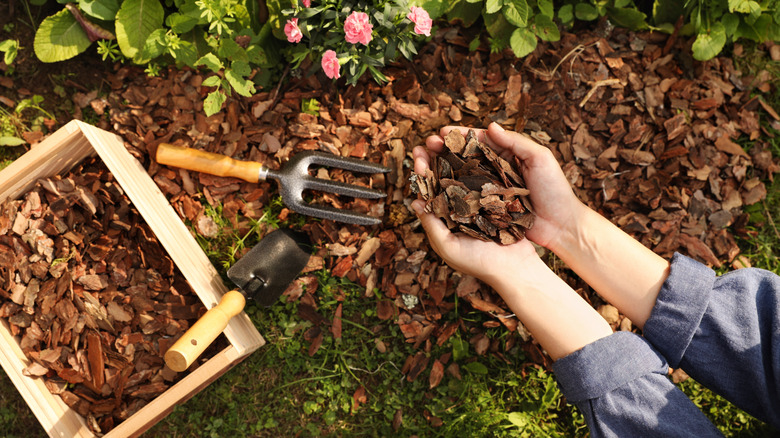
Weeds are the worst. They ruin the look of your garden, steal nutrients from your beloved plants, and once they are established, they do not seem to go away. That is why many people use mulch to keep weeds at bay. It suppresses weeds and keeps their seeds from germinating. There is, however, a problem. Traditional mulch like that made of wood chips, bark, or straw breaks down very quickly in garden beds and you have to keep refilling it regularly. If you don't, weeds might come back. Frustrating, right? Well, do not worry! That is where plastic mulch can help.
Plastic mulch is mostly made from thin sheets of polyethylene and unlike traditional mulch, it does not break down quickly and can help suppress weeds in your garden for a long time. Better yet? Plastic mulch can help keep the soil warm and prevent moisture loss by as much as 70%, which is especially important for crops like tomatoes and melons that like warmth and need a lot of water. Just make sure that you do not confuse plastic mulch with landscape fabric. Although they are both made of plastic, landscape fabric is porous and allows water and air in, whereas plastic mulch is designed to block these things from reaching the soil completely.
Also keep in mind that plastic mulch has some drawbacks, too. For instance, unlike mulch made of wood or straw, it does not add nutrients to the soil. Similarly, since plastic does not decompose easily, it needs to be handled and collected carefully after use. Otherwise, it can become an environmental concern and contribute to pollution in your neighborhood.
Using plastic mulch to suppress weeds
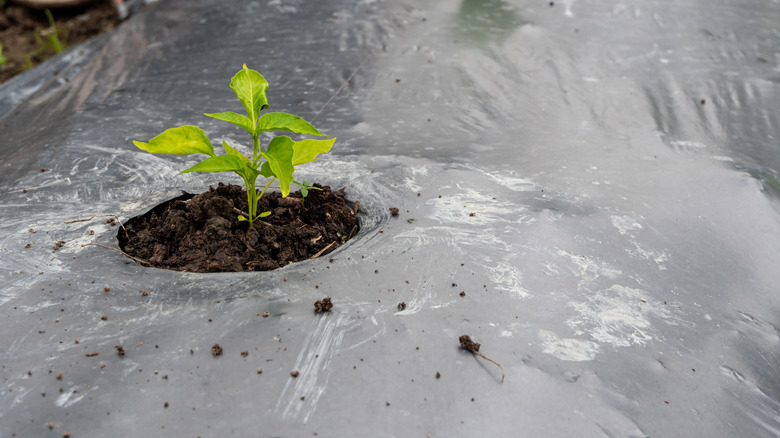
Plastic mulch comes in many colors. Black, white, silver — the list goes on. If you want to suppress weeds completely, use the black one as silver and white kinds let some light through, which can allow some pesky weeds to grow underneath. Consider the thickness of the mulch, too. Sure, the thick plastic mulches cost more but they are also more durable and better at suppressing weeds. So, if you have a consistent weed problem, it might be worth the investment.
Nevertheless, once you have purchased your desired plastic mulch, take some time to prepare your garden bed and clear the existing weeds, rocks, and other debris. Do not install the plastic mulch without doing so. It is a mistake that can prevent your landscaping from being weed free. Also, do not forget to install a drip irrigation line or soaker hose before laying down the plastic mulch as it will not allow rainwater to pass through easily. Then once the soil is ready, lay down the plastic mulch and make sure that you bury its corners tightly underneath the soil so wind does not blow it off.
After securing the plastic mulch securely, cut some small holes into it. This is where plants will grow. Just make sure to not make these holes too large. If you do, it can allow the weeds to grow as well. Also, if you are using black plastic mulch, be careful with heat-sensitive crops and use a soil thermometer, like the Luster Leaf Digital Soil Thermometer, as it heats soils faster than other types of plastic mulch.