

More Durable Than Pea Gravel: The Long-Lasting Alternative For French Drains
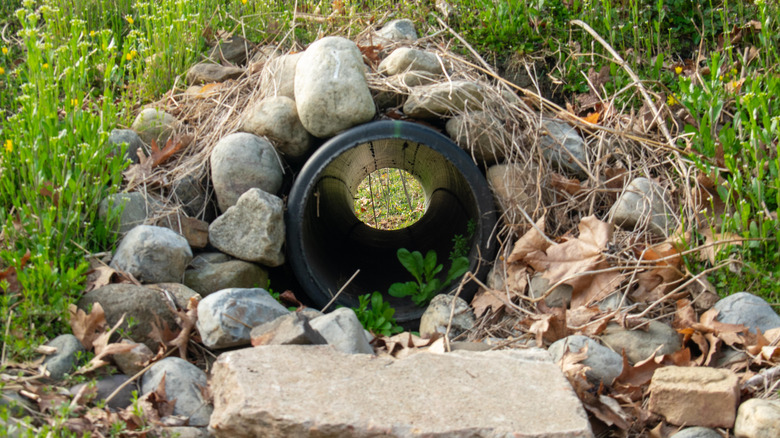
French drains are popular because they are a relatively simple, cost-effective drainage system you can build yourself. Plus, they are an easy way to get rid of excess water from soggy areas of your yard or around a patio with runoff issues. Their effectiveness depends on more than just putting a perforated pipe in a trench and covering it with gravel. Most people choose pea gravel for their backyards, and sometimes for French drainage projects, because it's usually inexpensive and readily available. But crushed stone is a better, more durable alternative.
If you're considering whether you need a French drain in your yard, you should understand how one works and what it needs before you start digging. Water travels through the drain trench and between the gravel before going through the pipe. Then it carries the water to a suitable drainage point. Even though pea gravel is popular, its small size and smooth texture cause it to move over time, instead of staying in place, which affects the integrity of the French drain and its ability to drain properly. On the other hand, washed crushed stone is angular and provides plenty of space for water to pass through while remaining relatively stable around the pipe. Not all crushed stone is suitable, though, as it needs to be appropriately sized and open-graded.
Why crushed stone is a better choice for your French drain
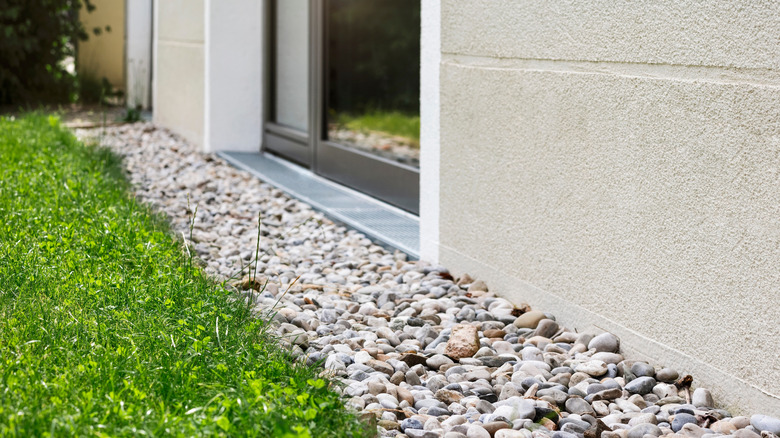
Crushed stone is made by breaking or crushing larger rocks, resulting in mismatched pieces with pointed edges. Each piece is angular, which helps the stones connect with one another and, ultimately, provide a sturdy base. However, that doesn't automatically mean that it provides better drainage. Water moves through gaps between the stones, and how much space is available depends largely on the stones' size, grading, and how tightly they pack together.
Clean, consistently sized stones generally allow water to move more freely than mixtures with many different-sized stones. Additionally, excessive interlocking can actually restrict water flow rather than help it. For a typical residential French drain, clean, washed #57 crushed stone is a commonly recommended choice. The size is between ¾ inch and 1 inch, with some smaller stones included in the grading but very little fine material. This creates an open structure with plenty of voids for the water to move through freely.
Although they are both stone, pea gravel and crushed stone have different uses in your yard. Pea gravel isn't inherently a poor drainage material. In fact, larger, clean, rounded gravel can work very well for a French drain. But washed #57 crushed stone provides a good balance of base stability and drainage. Plus, because of the established grading, you know it's suitable for drainage, and you're not relying on a random, unspecified bag of gravel.
How to use crushed stone for a long-lasting French drain
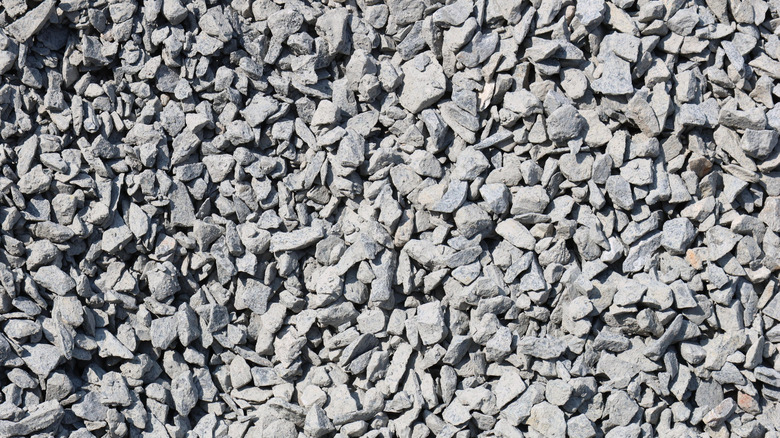
Not all crushed stone is suitable for drainage. Avoid materials like crusher run, which contains a mix of crushed rocks, small particles, and stone dust. This type of product is designed to compact into a firm, relatively dense layer. That's great when you're building a driveway but terrible for a French drain. The smaller particles fill the space between the larger stones and reduce the amount of water that passes through.
Make sure you specifically ask for clean, washed drainage stone, such as #57, or another appropriately graded aggregate recommended for your installation. To keep soil and fine particles from blocking the openings, install proper drainage fabric so the water drains correctly. Using the wrong filtration fabric is one common mistake when installing French drains, so choose a non-woven geotextile. Cover the trench with the fabric before you add the stone and the pipe. Then fold it over the aggregate and backfill to stop the soil from falling into the gaps from above.
No matter what gravel, stone, or fabric you choose, none of it will compensate for poor installation. As well as getting the materials right, you must make sure your trench and pipe have a consistent downward slope toward a suitable outlet, with enough aggregate around the pipe to support it and allow water to enter freely. How much of a slope you need and the aggregate size depend on the site and the drainage design.