

Spraying Your Bathtub With Vinegar: Why It's Recommended
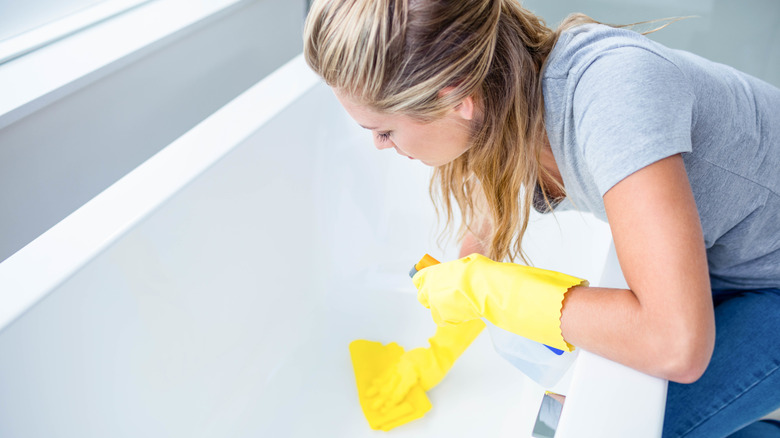
No matter how hard you work to keep your bathroom clean, the warmth, water, and condensation give mold the perfect environment to take hold. Even if you scrubbed your bathtub spotless just last weekend, there's a chance that you'll find some kind of mold still lurking there. But before you cover every nook and cranny in your bathroom with an expensive specialty cleaner that costs a ridiculous amount per bottle, give regular 5% white vinegar a try. It's inexpensive, you can get it anywhere, and it doesn't carry as many dangers as many specialist mold-removing formulations.
Vinegar can make your bathroom sparkle, as its acidity, even at just 5% strength, can help with all kinds of tasks. It can lift mineral deposits and soap residue and act as a disinfectant, which is why more and more people are turning to this old-fashioned budget-friendly pantry staple to clean rooms and surfaces in their home. While vinegar is excellent at killing some mold, using it obviously won't fix the conditions that invited it to grow in the first place. Whether you should try spraying your bathtub with vinegar to eradicate mold depends on the severity of the growth and what your bathtub is made of.
How to use vinegar on bathtub mold
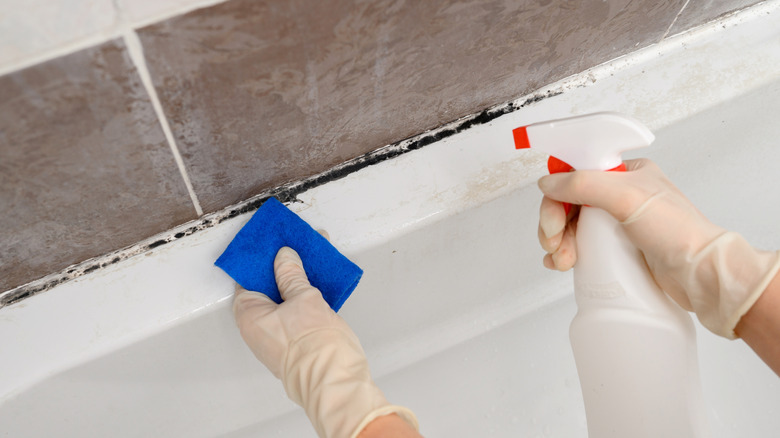
Vinegar doesn't require fancy preparation or extra cleaning ingredients to be effective. Standard distilled white vinegar with 5% acetic acid can inhibit certain fungi, but the popular myth that claims it kills any type of mold isn't strictly true. In a 2015 laboratory study, vinegar was tested against "two common fungal genera," which were "commonly found in indoor air." It stopped the growth of penicillium chrysogenum but had no comparable effect on the other fungus, aspergillus fumigatus.
Most people can't tell what type of bathroom mold they have just by looking at it, so it's hard to know whether it will stop growing unless you spray it. If you find some and have vinegar on hand, it's worth trying it if your bathtub has a nonporous surface that can tolerate acidic cleaners. Common materials like porcelain, fiberglass, and acrylic are usually able to handle vinegar's acidity, but if you're unsure, test it in a small spot before spraying your entire tub.
For proper mold cleanup, you need to start by wiping away the soap scum with a mild detergent and warm water. Rinse, then spray the affected area with undiluted white vinegar and let it sit for about an hour. Gently scrub with a soft brush or nonabrasive sponge, rinse the area thoroughly, and then leave it to dry. Undiluted white vinegar can have quite a strong scent, so it's a good idea to open the windows. Because it is an acid, you may want to wear gloves, as it can be a bit harsh on the skin. And if the vinegar doesn't work effectively, make sure you rinse it completely before trying something else.
When you should not use vinegar on bathtubs

Even though vinegar has its benefits, you can't use it to clean everything. Depending on your tub's material, you may need to reconsider using vinegar to clean your shower or bath. If it has natural stone trim, cement-based grout, or is made of marble, limestone, granite, or other stones, do not use it. The acid can affect the stone and dramatically alter its appearance. The type of finish you have matters too. Some acrylic bathtub manufacturers say their products can cope with vinegar, while others recommend mild soap instead. Check your bathtub's care instructions before you spray.
If you've got black mold spots embedded in the silicone, no amount of surface spraying vinegar will get rid of it. Removing and replacing moldy shower or bath caulking is often the only choice when mold growth persists beneath or around a failing seal. Additionally, if the mold is a result of a failing seal and there's water getting behind the bathtub, you have to address that issue rather than just keep trying to treat the stains.
You should never mix vinegar with bleach or any other cleaning chemicals. When bleach is combined with other ingredients, it can release dangerous chlorine gas. Lastly, you can minimize the risk of mold returning with a few steps. Wipe up any pooled water from around the rim and squeegee wet surfaces when you're finished showering or soaking in the bath. Shift bottles and bath products off the ledge and onto a bathroom storage rack or shelf where they can drip-dry and not cause mold issues.