

Smart Water Heaters: Are They Worth It?

The prospect of needing an app to operate your water heater seems ridiculous to most people. After all, the majority of homeowners don't give much thought to their water heaters beyond scheduling routine maintenance unless something goes wrong and you're met with an unpleasant blast of freezing cold water when you turn on the shower. That's most definitely a rude wake-up call. In some circumstances, though, a smart water heater can offer some genuinely useful features, including helping you manage energy costs and potentially catching a leak before it causes expensive damage. They are particularly relevant for people who have a rental property, a second home, or are away from their residence for long periods or on a frequent basis.
A smart water heater connects to your home network, usually via Wi-Fi, and lets you monitor or control certain functions from your phone. The exact features will depend on the model but commonly include temperature adjustment, scheduling, usage monitoring, and leak detection. Don't fall for any greenwashing though, as just because a water heater is smart, it's not automatically energy efficient or cheaper to run. A hybrid heat pump water heater, for example, can use significantly less electricity than a conventional electric model because of the way it heats water. Whether a smart water heater is worth it or not really comes down to whether the connected features offer your specific household enough benefit to warrant the extra cost.
The benefits of investing in a smart water heater
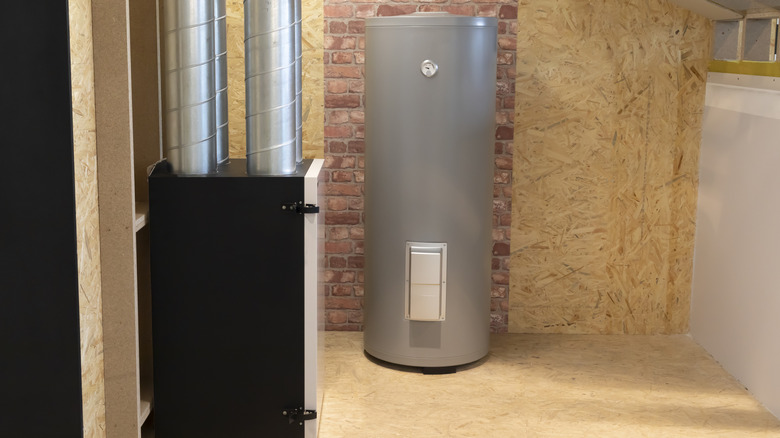
The biggest advantage of investing in a smart water heater is convenience. Particularly if your household hot water needs are inconsistent. If you're regularly away from home, for example, you can use your app to switch your water heater into vacation mode and return it to normal operation when you're on your way back. Some models also let you schedule heating to coincide with your household's regular routine.
It's also useful if you're on a time-of-use electricity tariff, as shifting water heating to cheaper off-peak periods can help reduce your bills. That's a useful feature whether your household uses very little or a great deal of hot water, although for this to be a factor you'd obviously need a compatible heater and enough hot water storage to cover peak-rate periods when you don't want the water heater to run. Energy monitoring is another distinct advantage. Rather than simply wondering why your electricity bill seems to have increased, you can check how much power your heater is actually consuming. Some systems, like Rheem's EcoNet, provide weekly, monthly, and annual usage reports.
One of the biggest arguments for investing in a smart water heater is leak detection. Certain smart water heater models can send an alert to your phone if they detect moisture or equipment faults. Some include automatic shut-off valves that restrict incoming water to help limit the damage a leak can cause before you get there.
When a smart water heater isn't worth the extra money

A smart water heater isn't automatically the correct choice for every home. If your household has relatively predictable hot water needs and your existing water heater works fine, then smart controls might not bring much value. You can already manually adjust the thermostat on a conventional heater and lots of relatively modern ones have some kind of basic vacation settings. If you're unlikely to use scheduling, energy monitoring, or remote controls, it's not worth paying for an app that you'll probably never use after the first week. The cost can also be prohibitive for some households as smart models tend to be more expensive upfront. It's also not always true that smart models will pay for themselves in energy savings. In a study of retrofit smart controllers the average energy savings were only between 2.3% and 9.3%. Most models are unlikely to pay for themselves quickly in energy savings.
Your savings will depend on how much and how you use hot water, the cost of your electricity, and whether you take full advantage of the controls that the app gives you. If there are already signs that your water heater needs replacing, then considering a model with smart functionality makes sense. But you should prioritize affordability, energy efficiency, capacity, reliability, and warranty coverage. If you're already doing what you can to extend the life of your water heater and it still has plenty of life in it, then a compatible retrofit controller or a standalone leak detection system may offer the most useful features of a smart water heater without the expense of replacing the whole thing.