

Lawn Aerators Vs Dethatchers: What's The Difference
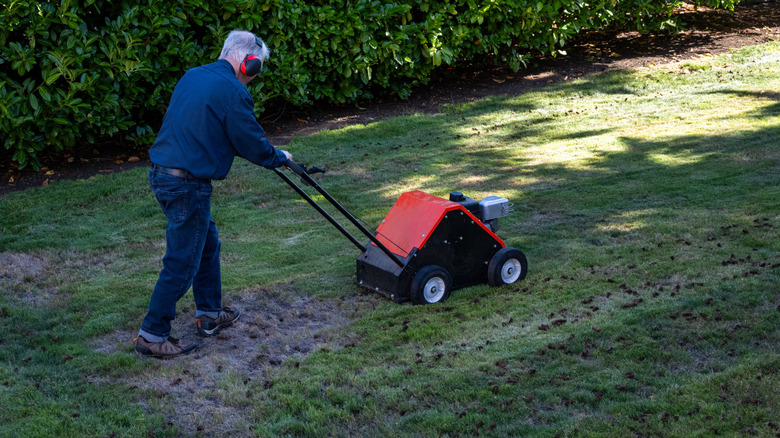
Lots of people mix up aerating and dethatching or think the two are the same, but they are quite different, and getting the two confused is a common lawn aeration mistake. As with all lawn care tasks, if you don't know what's actually wrong with your grass and you use the wrong equipment, you can make matters worse. Areas that feel strangely spongy when you walk across them, or stubborn bare patches that are just coincidentally where the kids and dogs spend a lot of time running around, have different causes and require different solutions. Even though both problems leave you with unhealthy and struggling grass, one needs an aerator and the other needs a dethatcher.
A dethatcher uses a row of blades or tines to dig up dead and partially decomposed plant matter that sits between the grass and the soil. An aerator uses tines to create holes in the soil to help water and air get down to the roots and reduce compaction. In short, a dethatcher removes the obstructive layer above the soil, while an aerator improves the structure of the soil itself.
You don't need to regularly use either of these pieces of equipment. If you've built a healthy lawn with good drainage and there's vigorous growth with no excessive thatch buildup, then there is no need to punch the lawn full of holes with an aerator or rip up perfectly healthy grass with a dethatcher. You shouldn't use them on a just-in-case basis either, as both of these lawn treatments disturb the grass and the roots, making them hard on your lawn. They should only be used when the lawn really does need the help.
What dethatchers do and when you should use one
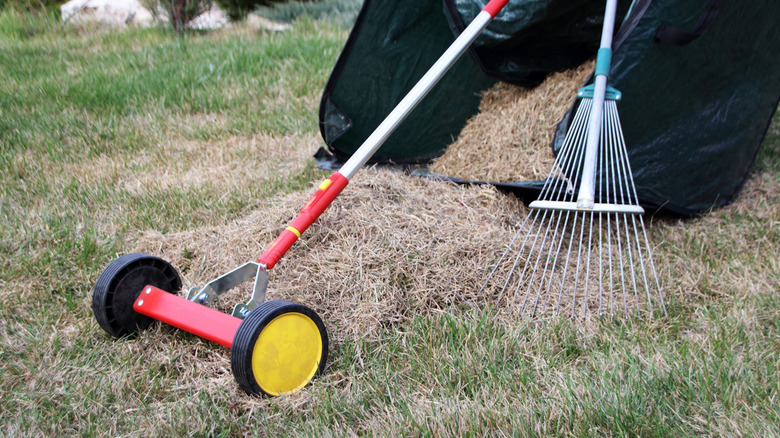
Thatch is a dense, fibrous layer of dead and living stems, roots, and other organic material that accumulates just above the soil at the base of the grass blades. A thin thatch layer is actually beneficial as it helps to cushion the turf and protect the soil. However, when it gets too thick, it can start to restrict water movement, harbor pests, and create an environment where grass diseases start to thrive. While aerating removes thatch, a dethatcher that is specifically designed for the task is more efficient.
To check whether dethatching is needed, cut a small wedge of turf with a spade somewhere out of the way. Make sure you get a couple inches of soil beneath the roots. Look for the brown fibrous material that's sandwiched between the green grass and the actual soil. If it's more than about ½ inch thick, you may want to consider dethatching. If it's only a small area that's affected, you can use a manual dethatching rake. To treat a more substantial area of your lawn, a powered dethatcher that uses rotating blades or tines to pull out the accumulated matter is an easier option.
You'll also need to rake up the debris after the dethatching is finished, and be prepared for your lawn to look rather battered for a while. Dethatching is disruptive and punishing; it does active damage to the growing grass plants. That's why it should only be done when necessary and only while the grass is actively growing so that it has time to recover before it goes dormant.
How lawn aerators work and when you need one
Repeated foot traffic, heavy lawn equipment, and working on ground that's too wet will squeeze soil particles together, shrinking the spaces that usually hold air and water. This results in a heavy, hard, compacted area. Grass roots struggle to penetrate it, and beneficial organisms in the soil can't easily move through heavily compacted soil either. The soil can even become so compacted that water runs off or collects on the surface instead of soaking in and hydrating your plant roots.
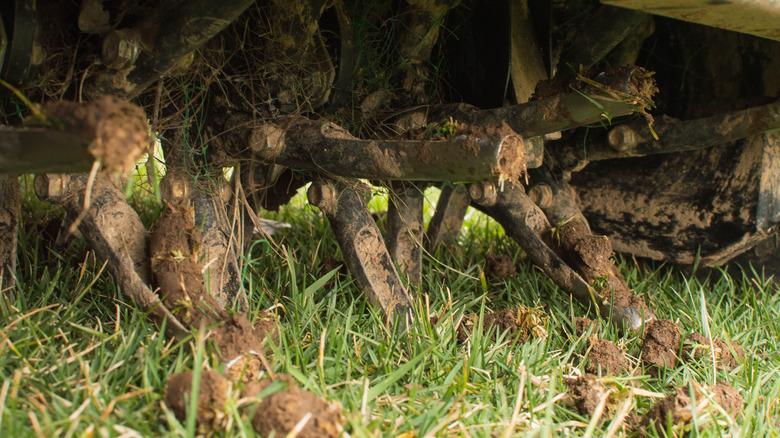
When this happens, aeration is the solution. If the problem is widespread, renting a lawn aerator for your yard often makes more sense than buying a machine you'll only use occasionally. There are lots of different types, but a core aerator is the best choice. These particular pieces of equipment use hollow tines to extract small plugs of soil, leaving holes behind. These holes improve air, moisture, and nutrient flow through the soil, letting them reach the root zone as well as giving the roots more room to grow. They also help worms and other soil life start to naturally improve soil structure from below. In contrast, spike aerators dig into the ground without removing any soil. They are much less effective and can actually compress the surrounding soil further.
To figure out if your lawn needs aerating, wait until it's moist and then push a screwdriver into the soil. If you meet considerable resistance (particularly if it's in an area that's heavily used, where you suspect compaction may be a problem), then you may need to aerate. Only aerate when the ground is moist but not waterlogged. Leave the extracted soil plugs to sit on the surface of the lawn, where they will naturally break down fairly quickly.