

Turn Foraged Pine Needles Into A DIY All-Purpose Cleaner With One Simple Addition
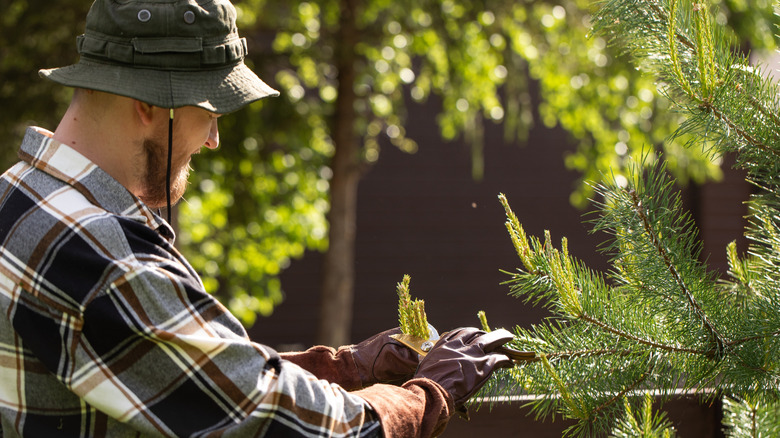
Pine has long been associated with cleanliness, and that's due to more than just its pleasant, fresh aroma. Pine needles contain oils rich in terpenes — compounds that can have antimicrobial and antiseptic properties. That's why there are lots of ways to use pine oil for a sparkling clean kitchen and bathroom. Unfortunately, extracting the oil from pine needles is a complicated process that's difficult to do at home. If you love that piney aroma but don't want to use pine-scented chemical cleaners, it's easy to make your own natural alternative. You can turn foraged pine tips and needles into an eco-friendly all-purpose cleaner by simply steeping them in vinegar. This is a great project for folks who love how effective vinegar is as an all-natural cleaner but who can't stand the acrid smell.
Start by gathering a few cups' worth of pine tips. These should be fresh tips from trees in your backyard or your neighbor's (with permission), rather than from cultivated trees that may have been treated with chemicals. (While you're at it, gather some old pine needles to transform into the cutest foraging basket.) When you get back home, give the tips a quick rinse to remove any dirt and cut them into small pieces so they are easier to work with. The next step is to stuff the pine tips into a clean mason jar. You should pack them in pretty tightly — if needed, remove the needles from the stems to fit more in. Cover the tips and needles with white vinegar, screw the lid onto the jar, and let the solution steep for up to three weeks. After steeping, strain the pine-scented vinegar into a clean container or spray bottle and add it to your cleaning arsenal.
How to customize your powerful pine-scented vinegar cleaner
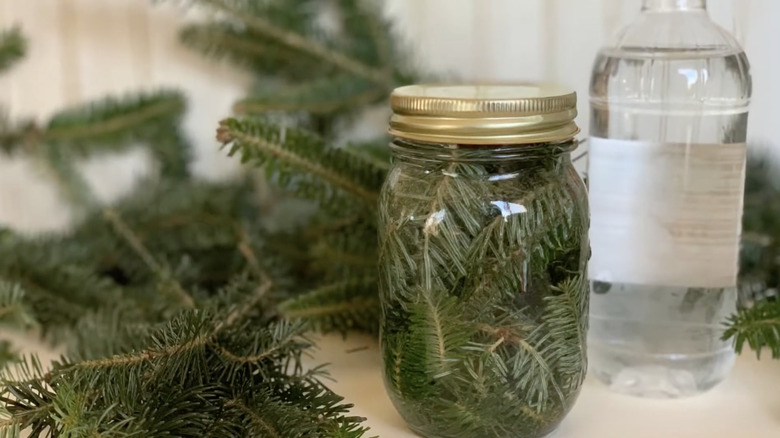
There are a few ways to customize your new cleaner made from fresh pine tips, as well as a few tricks to speed up the process. For instance, if you gently heat the white vinegar without boiling it before adding it to the mason jar, it will infuse the pine needles faster, reducing the steeping time to as little as three days. After transferring your pine-imbued vinegar into its own container, you can boost the fresh scent by adding your choice of essential oils. Peppermint, orange, and lemon essential oils all pair well with the earthy scent of pine, or you could add a few drops of pure pine oil to the solution to potentially make it an even more effective cleaner.
Whatever recipe you choose, you'll have a naturally scented household cleaner that is useful for tackling everyday dirt and greasy messes. After all, spraying your walls with vinegar is recommended for mold prevention. Why not add a piney scent to this common remedy, too? A word of warning: If you've never cleaned your home with vinegar before, you may want to do spot tests on different surfaces to make sure there are no adverse effects. It can damage natural stone, electronic screens, hardwood flooring, some metals, and rubber parts. When you're done cleaning, store the solution in a cool, dark place, and take pride in the fact that your pine-scented cleaner isn't false advertising — it's the real deal.