

Pouring Vinegar In Your Toilet Tank: Why So Many Homes Do It
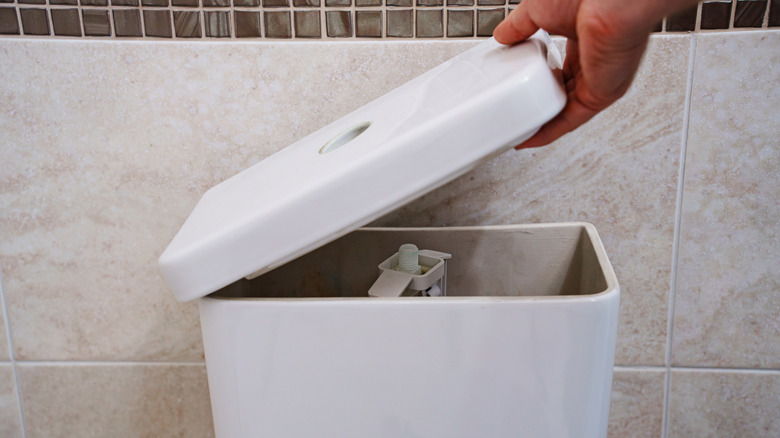
Have you ever heard of homeowners pouring vinegar in their toilet tank? That's right — not the toilet bowl, but the tank. While the task might seem odd, there's actually a good reason so many homeowners do it, and it has to do with the health of your toilet tank. Your toilet tank is likely one of those commonly overlooked things you should be disinfecting and cleaning. However, cleaning your toilet tank doesn't just affect odors and germs; it can also improve its functionality. Have you noticed that your toilet isn't flushing as well as it should? Are you having problems with your toilet's water flow? While there can be various causes behind these common toilet issues, you may also find that the culprit is a toilet tank with mineral buildup.
By pouring vinegar into your toilet tank, you can deep-clean the tank and descale the buildup that takes a toll on your toilet, keeping it clean and working properly. The main component of white vinegar is acetic acid, which is acidic enough to break down buildup without the use of harsher cleaning products or hard scrubbing. Mineral buildup in toilet tanks is especially prevalent in homes with hard water. (Whether or not you can determine what your hard water is made of doesn't matter; vinegar should still work.) But before you dive into filling up your toilet's tank with vinegar, you'll want to familiarize yourself with the right steps to take. This includes what kind of vinegar to use, how much to pour in, and how long to leave it in the toilet tank to deep-clean it.
How to deep clean your toilet tank with distilled white vinegar
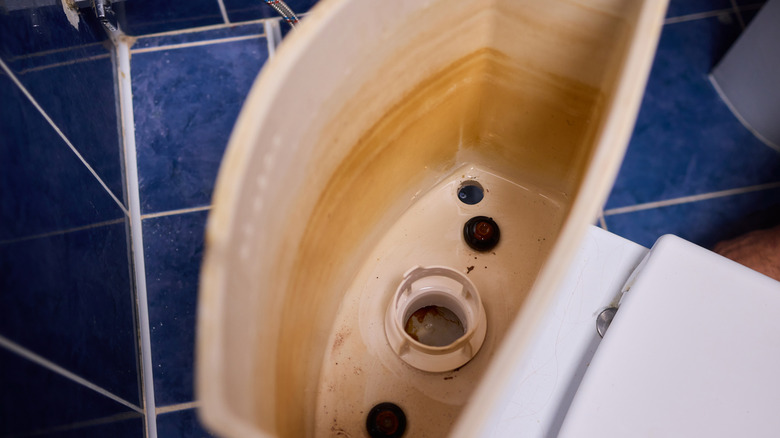
If you want to reap the cleaning and descaling benefits of pouring vinegar into your toilet tank, make sure you have the right vinegar on hand. Distilled white vinegar is typically strong enough to get the job done. To clean your toilet tank with vinegar, start by turning off the water supply, which is usually located on the wall behind your toilet, and flushing to empty the tank. Then fill the tank with distilled white vinegar. You'll want to ensure that any areas of limescale or other mineral buildup are completely submerged for this heavy-duty soak. You'll need a bit over 1½ gallons of distilled white vinegar, though the exact volume depends on the size of your tank.
How long you leave the vinegar in the tank depends on how thorough a cleaning you want. If this is your first time cleaning your toilet tank and there is a large amount of buildup, you may choose a longer duration, such as overnight. Soaking for 8 to 12 hours is typically safe with vinegar. At minimum, you should allow the vinegar to sit for 30 minutes. Less than this, and you may not see any of the effects you hoped for. Cleaning the toilet tank can sound more strenuous than simply wiping down counters. Fortunately, you won't need to clean your toilet tank as often as you should clean your toilet bowl and seat. Rather than cleaning it daily or weekly, you only need to clean your toilet tank with vinegar every six months. Homeowners with hard water may get more buildup, requiring more frequent tank cleans.