

How To Improve Your Tap Water's Quality For Healthier Houseplants

We may receive a commission on purchases made from links.
Caring for houseplants can sometimes be complicated, even for experienced plant aficionados. Making sure they have appropriate light exposure, temperature, soil, and containers, as well as that all important element: water. Knowing how often to water is considered one of the most foundational aspects of houseplant care. But the type of water you use is also important. We asked expert Paris Lalicata, the Head of Plant Education and Community at The Sill gardening center, about using tap water on houseplants and how to improve your tap water so your plants thrive.
In her exclusive interview with House Digest, Lalicata shared that the minerals and chemicals in tap water — like fluoride, calcium, and magnesium – can sometimes affect soil which in turn affects plant health, and signs of damage may not show up until you're been watering for a while. "When these build up in the soil, it can disrupt beneficial microbes found in organic soils, and even cause chemical burns that leave behind crispy brown leaf tips and margins, scorched margins, including a powdery white crust on top of your potting mix," she explained.
Lalicata also mentioned that areas known for having hard water may have more tap water additives in the form of water softeners, and that urban water systems rely on disinfectant chemicals (such as chlorine) for safety, which may also impact houseplants. Fortunately, there are ways to improve your tap water so your plants get a fresh drink without any side effects.
How to improve tap water for sensitive houseplants
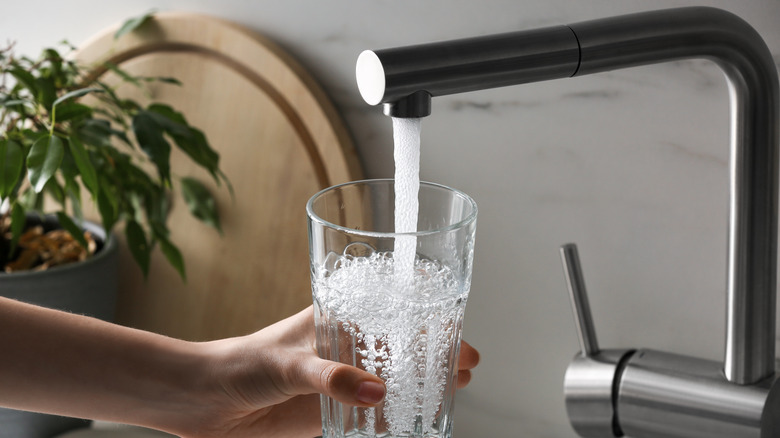
Additives in tap water can vary depending on its source. "Homes supplied by groundwater or hard water regions naturally carry higher mineral content that build up in potted soil over time," Lalicata explained. "I suggest if you're curious about the minerals or chemicals in your tap water to do a water test first before making any changes, especially if your plants haven't showed any signs of stress." There are a number of water testing kits available for home use. This will uncover the specific mineral or chemical that is the problem and determine the best water-improvement method.
"If your city uses standard chlorine, simply pouring your tap water into an open watering pitcher," Lalicata said, "or being exposed to air for 24 hours can help evaporate the chlorine before you water." Another method to improve what comes out of the faucet is using tap water conditioners. These are very straightforward to use: "simply add a few drops to your watering can to help filter out the water." Southside Plants Tap Water Conditioner is specifically formulated to remove chlorine and detoxify heavy metals that can harm plant growth.
Further, Lalicata said you can purchase machines that make distilled water from ordinary tap water (or try a DIY distillation method). That way you can skip constantly buying bottles of it, but your plants can benefit from drinking distilled water. Another option she recommended is installing a reverse osmosis filter to remove impurities and chemicals.
Best water options for sensitive plants
While not all plants will react negatively to the use of municipal tap water, the additives in some may cause issues for some plant varieties. Lalicata offered a useful list of plants that may be particularly sensitive to chemicals found in tap water, including "prayer plants like Calathea, Maranta, Stromanthe, and Ctenanthe, as well as Dracaena, the bird of paradise, peace lilies, and spider plants." She also said that "carnivorous plants like your Venus fly traps and Nepenthese require chemically inert water" to thrive, and that municipal tap water is best avoided.
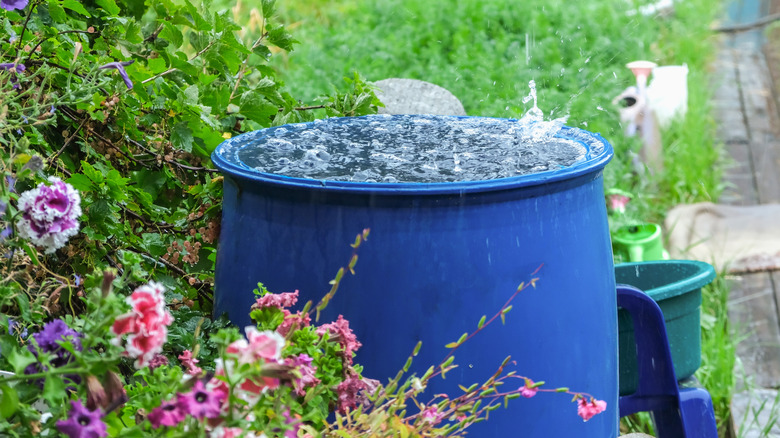
Using water other than that straight from the faucet is an option that Lalicata favors. "I usually recommend collecting rainwater or using filtered or distilled water to eliminate fluoride and heavy minerals," she said. Rainwater is as natural as it gets and you don't have to add extra purification steps to your plant care routine. However, using a basic Brita pitcher might also be a good stopgap while you consider other methods for improving your tap water.