

Spraying Walls With Bleach: The One And Only Time You Should Do It
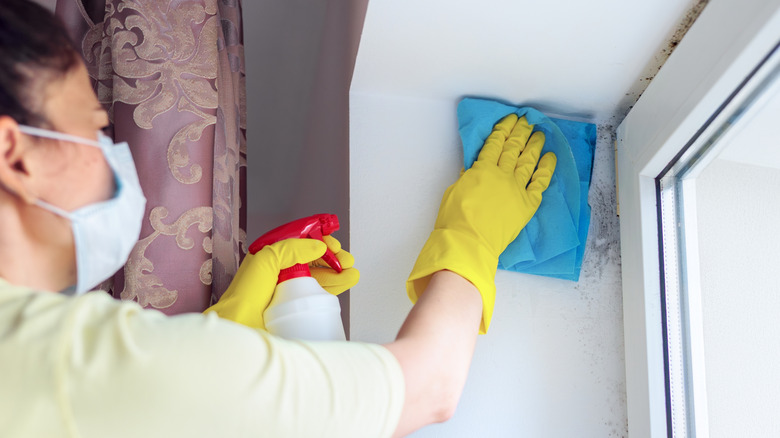
Bleach is an invaluable part of anyone's cleaning arsenal. It's great for sanitizing high-contact surfaces, and it can even kill mold spores. And while there are definitely some things you should never clean with bleach, your walls aren't one of them. You might be hesitant to spray bleach outside of your kitchen or bathroom, and there are usually better ways to clean normal surface dirt off walls. But a bleach spray might actually be the best way to clean your walls when dealing with stains.
Water stains in particular can be very difficult to remove from surfaces like drywall or plaster. To make a wall-safe DIY bleach cleaning spray, simply mix water and bleach in a bottle. This diluted cleaning solution is useful for removing stains from your walls, and it can also keep dangerous mold away. However, there are some rules you need to follow to do it properly — and safely — without damaging your walls. Here's what you need to know.
The safe and effective way to use bleach to clean your walls
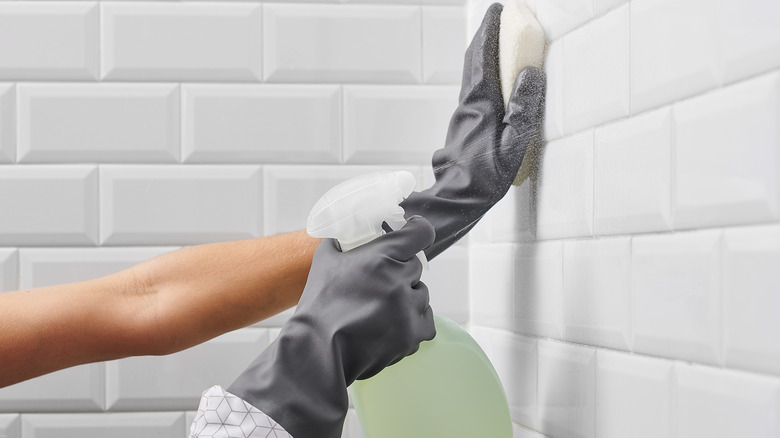
The most important rule when cleaning with bleach is to dilute it with water. Your mixture should have a 1:3 or 1:4 ratio of bleach to water (for example, one cup of bleach to three or four cups of water). Not diluting your cleaning solution is one of the most common mistakes people make when cleaning with bleach. This is dangerous due to chlorine fumes, and bleach is harsh; it can damage your walls if you're not careful.
You can create the mixture in a bucket or adapt the ratio for a spray bottle. For safety, wear gloves, eye protection, and a face mask when cleaning with bleach. Apply your diluted bleach solution directly onto the stains on your wall using a sponge (scrub gently) or spray bottle and let it sit for about 30 minutes. This gives the bleach time to break down the stain. Then, wipe away any excess solution and let it dry. You can use a fan or hair dryer to speed up the process.
Stubborn stains may require two or three applications, but if successful, no trace of the stain should remain after the treated spot fully dries. However, if your bleach solution doesn't fully remove the stain from your walls, they may be too deep for a surface cleaning to fix. In that case, it's time to consider repainting. If so, prep your walls with a stain-killing primer before you paint; don't paint directly over the stains. A stain-killing primer ensures a clean, even finish when you repaint, with nothing showing through the new coat.