

Spraying Your Laundry Room Ceilings With Vinegar: What It's For And Why It's Recommended

In natural cleaning circles, white vinegar is beloved as a powerful but safe multi-purpose cleaner. There is a less-well-known use for vinegar, however, and it involves spraying it on your laundry room ceiling to combat mold. Laundry rooms can be spaces of moisture and warmth, which are the exact conditions that mold thrives in. If you've ever looked up and noticed black spots or splotches, you might be dealing with ceiling mold. Not only is this an unsightly presence, but it can also lead to health concerns over time for individuals with allergies or sensitive immune systems.
Fortunately, vinegar is a versatile cleaning tool and can fight mold because it targets and kills its spores. While you may be tempted to turn to bleach for mold removal, vinegar is a better choice because it creates drier conditions that are less hospitable to mold growth in the future. So, the next time you use vinegar to give your windows a dazzling shine or dissolve hard water deposits on your shower head, inspect your laundry room ceiling and consider spraying it on any mold spots.
How to clean your laundry room ceilings with vinegar
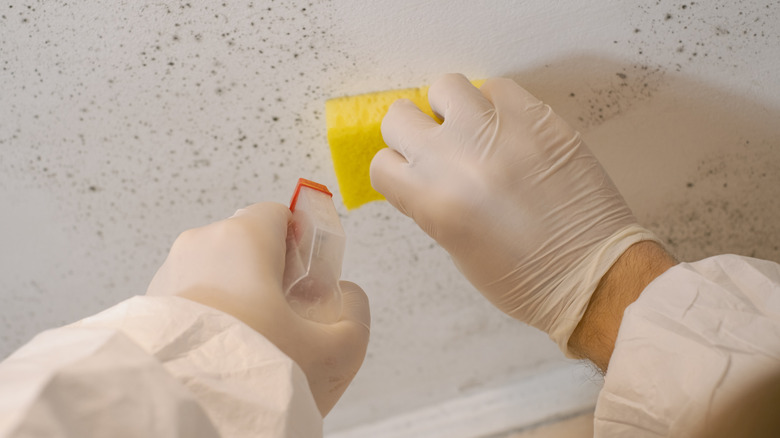
If you're ready to get rid of laundry room ceiling mold once and for all, you'll need to use the appropriate technique and tools. Begin by gathering materials: gloves, a face mask, and a sturdy step stool are all required to keep you safe while cleaning. You'll also need a spray bottle filled with white vinegar, a cloth, and a stiff-bristled cleaning brush.
Don the protective gear and mount the step stool with the spray bottle in hand. Thoroughly spray the mold spores that you can see, as well as the rest of the ceiling (even though you might only see it in some spots, there are likely undetectable spores all over the rest of the space). Next, let the vinegar sit for about an hour, then return with your scrub brush to remove any visible mold. If you are having trouble with this step, use a baking soda and water paste to lift stains. When you're done scrubbing, remove as much vinegar as you can with a damp cloth. Lastly, spray the ceiling with a little more vinegar and leave it to dry.
Your ceilings should look much cleaner after this scrubbing session, but the reality is that moist and warm spaces will always lead to mold growth. One of the best ways to mitigate the presence of mold is to limit moisture by adding a powerful dehumidifier to the space. If you're not sure where to begin, you can refer to our 12 best dehumidifiers, based on reviews. Another way to limit future mold growth on your ceilings is by painting a protective coat of KILZ Mold & Mildew Primer, which has a mold-resistant finish.