

More Frugal Than A Heater: The Better Splurge For The Garage During Cold Months
We may receive a commission on purchases made from links.
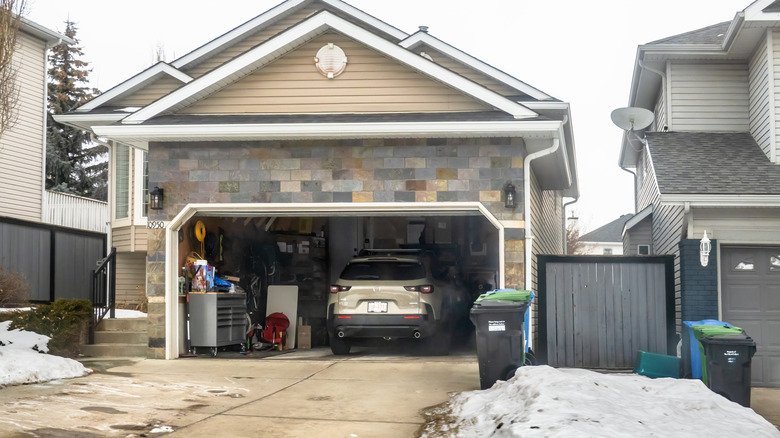
Tiptoeing from the cozy warmth of your home to the frosting cold of your garage in winter is a battle. You must prepare yourself mentally for that short journey, and odds are you'll still come away feeling underprepared. Would a space heater help? Maybe, but not by much, especially if the space is too large for the space heater to handle. Typically, home garages are poorly insulated, if at all, featuring unfinished, stud walls and, worse, cold floors. Given that, in some situations, splurging on garage insulation can be a better long-term deal than investing in a heater alone.
While insulation doesn't generate heat, it does retain existing warmth. This is crucial when your garage is attached to the main living space, as your home may lose heat through uninsulated walls. The result is wasted energy and the reason your electric bill is through the roof. Insulating your garage has additional benefits. You could probably block some of the unfriendly neighborly ruckus and traffic noise, or your own if you use it as a workshop. And by reducing major temperature swings, you expand the range of items you can store in your garage. And if you ever sell your home, buyers may look at your property more favorably, given the tighter heat envelope.
Why insulation may be a better investment for your garage
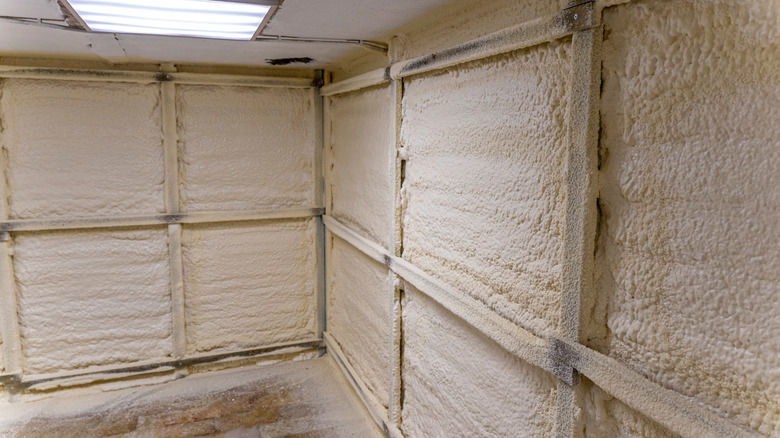
Granted, insulating your garage is expensive. But the higher upfront costs may pay for themselves over time if you put your garage to daily use or live in an extremely frigid environment that would make the space unusable without insulation. But if you have a detached garage, experience mild winters, or only use your garage for your car and not as an extended living or work space, you may be better off with a lone heater that you can turn on remotely before leaving.
You can keep things simple and inexpensive by only insulating the garage door. Columbus Door Sales estimates that this thermal barrier can bring down the temperatures by around 10 to 15 degrees Fahrenheit, with even better cooling effects in the summer. You can do this yourself by purchasing garage door insulation kits on Amazon, like this Reach Barrier Store Single Door Kit. But pay attention to the R-Value of the kit you finalize (the higher it is, the better it will be at trapping heat) and its effects on your door. Insulating material adds weight, which may interfere with the functioning of springs and tracks.
In fact, if you're already thinking about replacing the garage door, it'd be better to get a pre-insulated one instead. Insulating the ceiling, in addition to the door, can offer even more benefits. But it will drive up costs further. Depending on the size, materials, labor, and final finishing, you may expect to spend between $800 and $5,100 for the whole project, according to HomeGuide.