

Baking Soda And Vinegar For Window And Door Tracks: Why It's Recommended
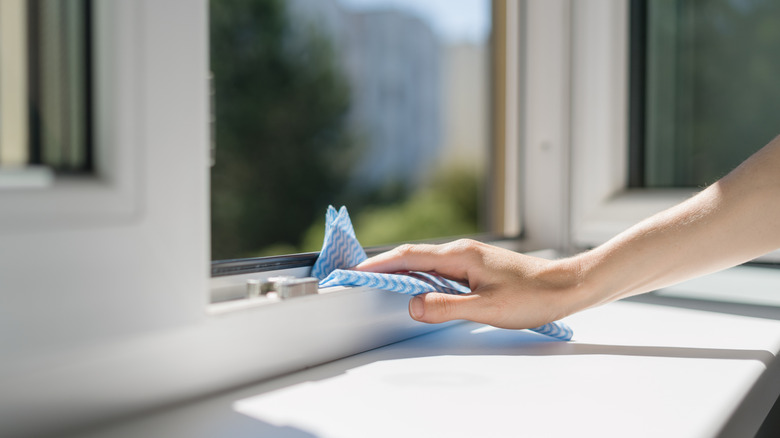
You've finally got your cleaning routine down and can say goodbye to dirty windows. Clean the glass, wipe down the frames, dust the tracks, and then stare threateningly at the crannies along the window track that collect dust and grime like they're going out of style. Okay, while that exact routine might be unique to us, the battle against dirty window and door tracks is one every homeowner faces. Instead of spending hours trying to scrape out the gunk or deciding to never open your blinds again, try this easy way to clean dirty window and door tracks: baking soda and vinegar. The method is recommended because the gentle fizz helps loosen stubborn grime, making it easier to remove.
Why do window and door tracks get dirty in the first place? It's partly their location — near to the ground — and partly their design. Because these tracks guide the movement of windows and doors, they inherently have little nooks that attract dirt, pet hair, and other grime. At first, the buildup merely looks gross but seems harmless. The truth is that dirt stuck to the tracks can actually cause windows and doors to stick or scrape against their frames. It can also keep water from naturally draining out of the weep holes (the tiny holes along the track), allowing moisture to accumulate and mold to grow — and nobody wants that.
When combined, baking soda and vinegar can help loosen grime. When the vinegar hits the baking soda, it causes a reaction that creates bubbles — just like in your elementary school science project. The fizz can help loosen dirt and gunk, making it easier to wipe away. This isn't a one-size-fits-all-sills solution. Don't use baking soda and vinegar on wooden sills — painted, stained, or otherwise — as the mixture may damage the material.
How to use baking soda and vinegar for sparkling tracks
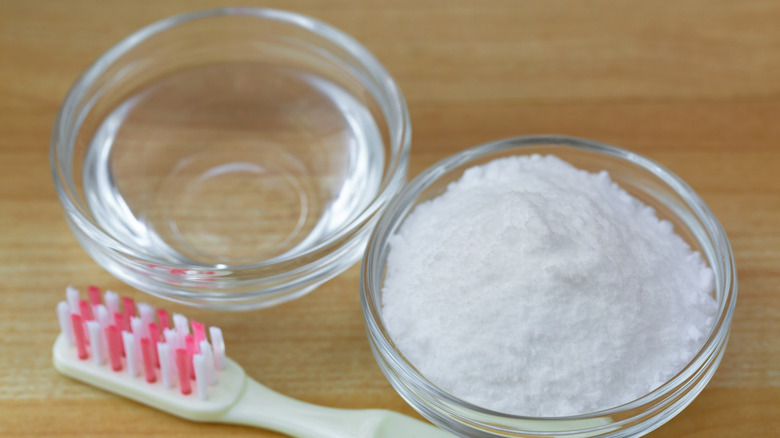
Luckily, using a mixture of baking soda and vinegar to clean your window and door tracks is as easy as it first appears. Start by using your vacuum's crevice tool — the slim nozzle that came with your vacuum — to remove any dirt, pet hair, or other debris. Many homeowners head straight into the deep cleaning step, but clearing away this surface-level gunk allows the vinegar and baking soda to work more effectively on caked-on grime.
Sprinkle the baking soda onto the track. Resist the urge to pack it in; a little goes a long way. Then add one part water and one part distilled white vinegar to a spray bottle. Shake to mix, and spritz the solution over the baking soda. Distilled white vinegar is ideal; apple cider vinegar may leave residue, while cleaning vinegar often has a higher concentration of acetic acid. Let the mix sit on the track for about five minutes. If the track is especially dirty, leave it for up to 10 minutes.
Grab an old toothbrush and scrub. The corners, edges, weep holes, and the track itself all need a good scouring. Use a microfiber cloth to wipe away the baking soda and vinegar mixture, then use a rag or paper towel to sop up any leftover liquid. Leave the window propped open to allow the track to air-dry completely. Now that the tracks are clean, how do you keep them that way? Add vacuuming the tracks to your weekly cleaning habits for a cleaner home, and always wipe them dry after a rainy day. Deep clean the tracks every two to three months all year round to keep them sparkling.