

Swap Concrete Pavers: The Sustainable Material For Garden Paths
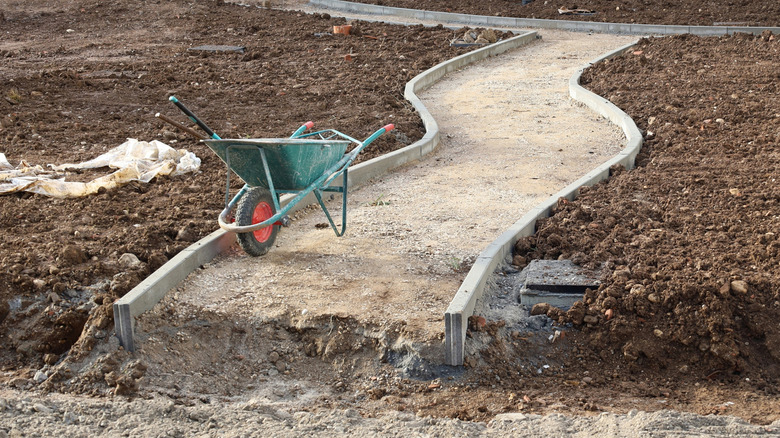
Concrete pavers are often the go-to choice for garden pathways — and that makes sense! After all, they're tough and affordable, and, when installed right, can last for decades. There is, however, a catch. They are not very eco-friendly, since they're made with cement, and cement manufacturing is one of the largest sources of pollution in the world. Concrete pavers are also heavy, so transporting them uses a lot of fuel. So, building a garden path with concrete pavers is not ideal if you're looking for easy ways to make your home more eco-friendly. Don't worry, though, as there are some sustainable alternatives to these pavers, such as wood-plastic composite (WPC).
If you have never heard of WPC before, it is basically a mix of wood fibers and plastic. When combined, they create a durable and low-maintenance material, which is often used for outdoor decking and garden paths. In fact, it is arguably one of the best options for outdoor flooring over grass. But why exactly is WPC so sustainable? For starters, it gives plastic waste a second life, keeping it out of landfills and reducing pollution. Better yet, since it is lightweight, transporting it uses less fuel, which reduces its environmental impact even more.
That said, keep in mind that it is not a completely green material, as not every WPC product is made entirely from recycled waste. Some contain new plastic, and producing it uses considerable energy. Furthermore, recycling old WPC boards can be difficult, and worn-out boards may end up in landfills anyway. While WPC can reduce waste, it is only a moderately sustainable choice.
What to consider before choosing a wood-plastic composite garden path
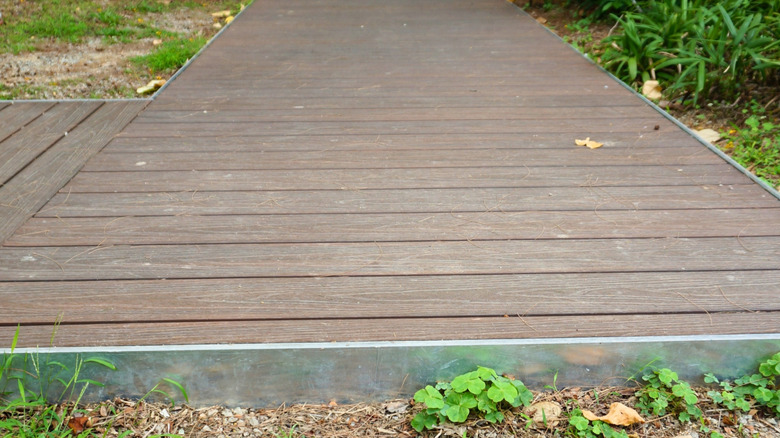
Although WPC is a sustainable material, it can be a bit costly. According to Angi, WPC starts at about $15 per square foot on average. By comparison, HomeGuide reports that concrete pavers are around $2 to $4 per square foot. Add labor and other expenses, and a WPC garden path can cost over $10,000. Simply put, WPC is not a good choice if you are looking for an affordable garden path solution in your yard. On the plus side, though, it needs little maintenance, which is worth considering if you are willing to invest more upfront.
It is also worth noting that a WPC garden path is only suitable for places with light foot traffic. If your walkway will also be used by vehicles or see heavy use, concrete pavers may still be the better choice. Also, WPC tends to get very hot when exposed to the sun for long periods, so if you want to avoid that, choose wood-plastic composite boards in a light color.
If you're leaning towards building a WPC garden pathway, here is an overview of the project. You will need to start with a solid subframe. It will act as the foundation under the boards. The frame is often built from treated timber or metal, and it must be properly leveled to stop water from pooling on top. When the subframe is ready, you can lay your WPC boards on top and secure them in place using hidden clips or screws. If you choose screws, make sure they are stainless steel to avoid any rust. Also, leave a little space between the boards to allow for movement or contraction during seasonal changes.