

Why Do My Lawn Mower Tires Keep Going Flat?
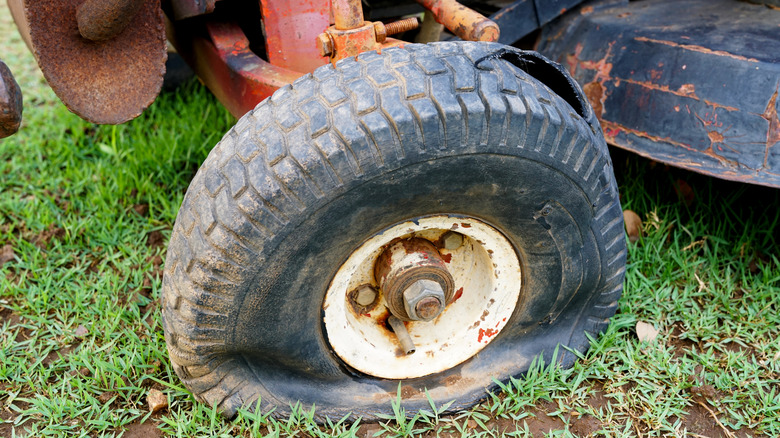
A flat lawn mower tire is one of the most frustrating things that can happen during routine lawn care, especially when it happens again and again and keeps throwing off your mowing plans. Now, if you are like most people, chances are you will blame it all on a tire puncture. But think again! A puncture is not the only reason why your lawn mower tires keep going flat. There are several other culprits, too. Take, for instance, a leaking tire bead, damaged rim, or a faulty valve.
To understand how a lawn mower tire keeps going flat, let's look at the tire bead first. If you have never heard of a tire bead before, it is basically a reinforced edge of a tire that sits against the wheel's rim, and its job is to create an airtight seal that keeps the air inside. The problem begins when rust, dust, or any other piece of debris keeps the tire bead from maintaining a proper seal. This causes the air to leak slowly and the tire to deflate. A bent or damaged rim can lead to a similar issue.
Another possible culprit is the valve. It is the small part through which you inflate your tire, and over time, its rubber can crack, or the valve core inside can become loose or damaged. This, again, can cause the lawn mower tire to go flat. So, when it's time to mow your lawn and you see that it has a flat tire, do not just blame it on a puncture, especially if it keeps happening again and again.
How to figure out why your lawn mower tires keep going flat
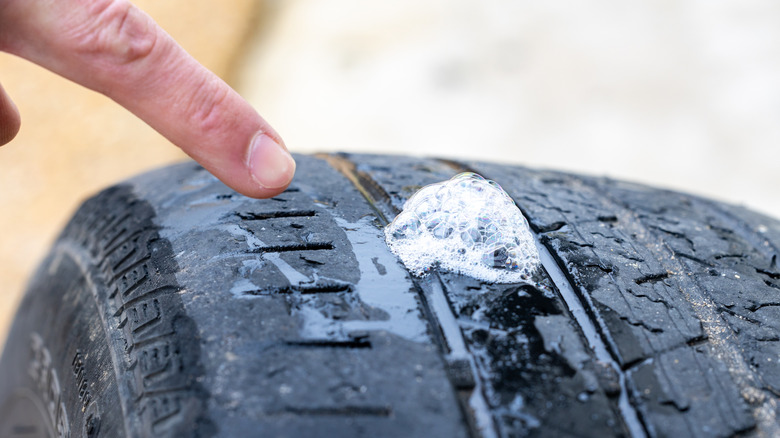
Now that you know that there are several reasons besides a puncture that can lead to flat lawn mower tires, let's see how you can figure out the exact culprit. This is important so that you can prevent your lawn mower tires from going flat in the future. Do not worry. It is easy! All you have to do is park your lawn mower and inflate the problem tire to the manufacturer's recommended pressure. Then, just mix some dish soap with water and spray it over the tire. If you can remove the tire completely and submerge it in soapy water, that is even better, but no matter what method you use, the aim is to see where the bubbles form. It can tell you a lot.
For instance, if the bubbles are coming from near the valve opening, the valve core may need tightening or replacing. However, if you see the bubbles arising from the valve, the valve itself might be damaged. Similarly, if you see that the water bubbles are appearing where the tire meets the rim, it usually points toward a bead leak, and in such a situation, you might need to have the rim cleaned and the tire reseated.
But what if the bubbles are coming from the tire's tread? Well, that usually points to a puncture. A puncture is an easy fix if you have the right tools and, in some cases, you might even be able to fix it with a sealant. That said, keep in mind that not all tires that go flat again and again are worth fixing. So, make sure you know when to give up and when to replace the tires on your lawn mower.