

Turn Empty Glass Jars Used For Spices Into A Creative Way To Propagate Plant Cuttings
When it comes to size, plant parents don't discriminate, and any degree of growth is reason to celebrate. We are here for it all. So when it comes to growing new plants via cuttings (also known as propagation), we swoon over the early signs of growth. If you've been looking for ways to repurpose empty spice jars in your home and garden, this is it. The shaker caps on the jars are perfect for securing plant cuttings — and the clear container gives you a front row view of the tiny roots as they form.
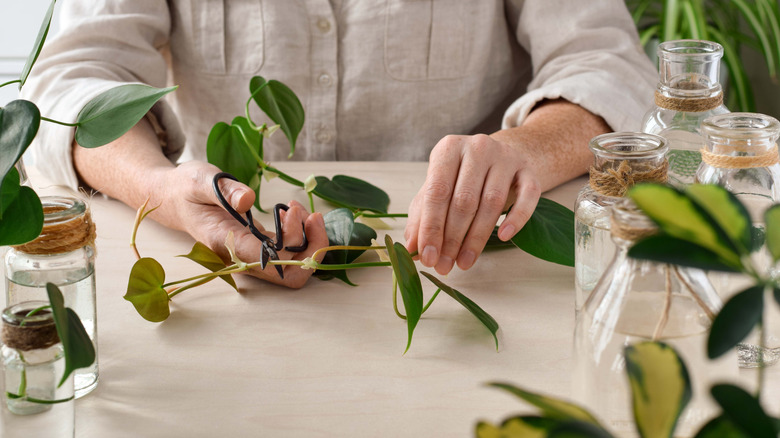
Experimenting with propagation is one of the most rewarding aspects of plant parenthood. Simply take a leaf, stem, or root (depending on the species) of a mature plant and put it in water or soil. With quite a few plants to easily propagate from cuttings, you don't even need to have a green thumb. If the cutting doesn't survive, just try again with another one.
The shaker or sifter lid of a spice jar helps to keep cuttings upright and stable in the container, whether in the smaller holes used for light dispensing or the larger segment designed for scooping. The size of the jars are perfect space-savers for baby plants, fitting on a windowsill or bookshelf. Glass jars work best because of their weight, but don't toss the plastic ones just yet. If you're worried about them tipping over, cluster the jars in a large planter or container, which also helps you disguise your propagations as a full-looking plant.
Tips for a successful propagation in a spice jar
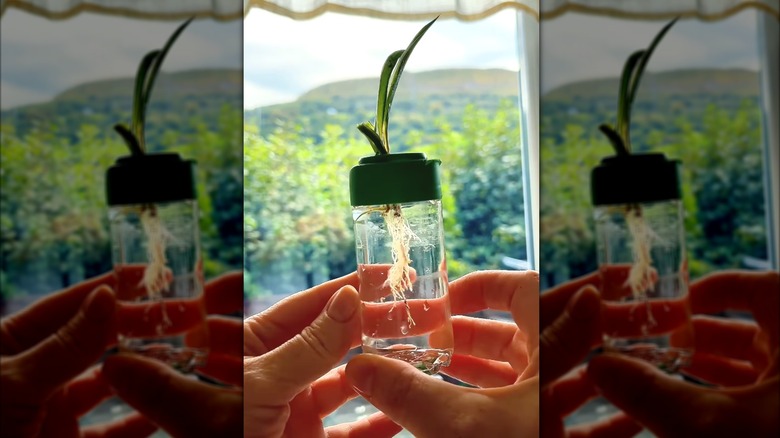
To turn your spice jar into a propagation station, keep the shaker lid in place and cut off the main flip-top cap. Wash all of the parts thoroughly. Plants with narrow stems, like philodendrons, begonias, smaller monstera variations, and pothos, will most likely fit through the holes of the lid. Also, select only houseplants you can propagate in water. Spice jars lack drainage holes, a necessity when planting in soil to prevent root rot and improve aeration.
The cutting should be at least 4 to 6 inches long, with any leaves below the water line removed. Some gardeners prefer to dip their cutting into a rooting hormone to stimulate the growth of new roots. There are different types of rooting hormones you can use to multiply plants, including synthetic and natural powders, gels, and liquids. While your cutting can grow without these hormones, they can help boost the development of slow-growing plants.
The cutting typically forms roots within three to four weeks. While some cuttings can stay in the jar of water, you can also put them in potting soil once the roots are a few inches long. Monitor the size of the roots as they begin to emerge to make sure you can still safely pull them through the sifter holes. If you're concerned about ruining the cutting, you can also completely forgo the shaker lid and just use the uncovered spice jar for propagation. Your new plant baby won't know the difference.