

Plant This Winter-Blooming Shrub Near Retaining Walls For A Boost In Erosion Control
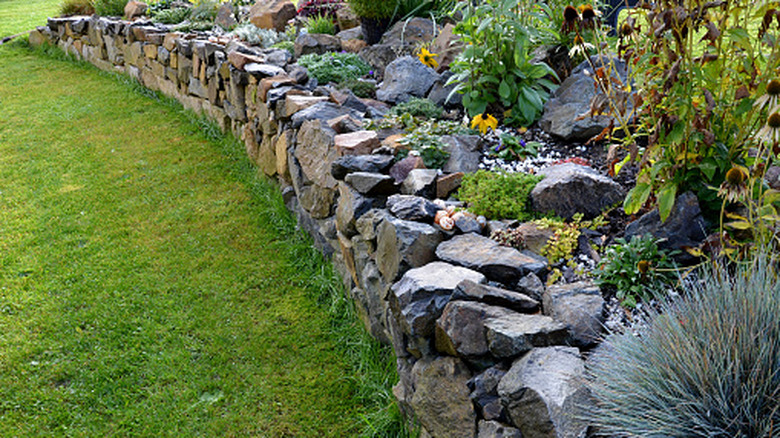
If you live under high amounts of rainfall, your yard might suffer from erosion even with a retaining wall. While you can never entirely stop erosion, there are ways to reduce its severity. That includes planting this winter-blooming shrub for a boost in erosion control around your existing retaining walls.
Manzanita (Arctostaphylos spp.) is a shrub native to the United States that survives in a variety of distinctive habitats, including those prone to erosion like mountain bluffs. On the surface, they're eye-catching, with evergreen foliage and winter blossoms that produce small fruit for which they're named. While they're helpful in preventing erosion as a native plant, they're also a favorite among hummingbirds, bees, and other wildlife, which makes them a clever multi-purpose addition when starting a pollinator-friendly garden. Because manzanita is a genus rather than an individual species, pick the right one to meet your landscaping needs. Choosing a ground cover species for erosion control from this genus is often a helpful place to start .
If you want to grow manzanita near your retaining wall, determine a suitable location, because some gardeners may find this plant more challenging to grow. Since each species varies, brush up on the care requirements for your chosen manzanita. However, learning the basics beforehand can help decide if this plant is right for your garden.
How to grow manzanita
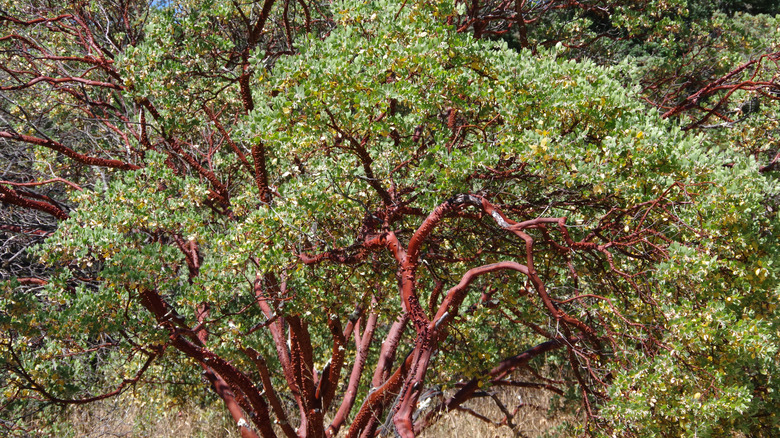
When growing any perennial species, first establish whether you're in the right USDA growing zones to support a plant. After all, if you're struggling with erosion, you'll likely want protection all year, and a plant unable to survive winter won't serve much use in your landscaping. Overall, the manzanita species has a fairly limited hardiness range, typically winter hardy in zones 8 through 10.
Sunlight is another key consideration. Full sun or light shade will meet the needs of this plant, depending on the species. As for its medium, pay close attention to moisture. Although a low-water plant, they do need moist soil while they're still unestablished in your yard. Afterwards, they can tolerate dry spells with ease and are relatively self-sufficient. They grow well even in poor soil, but they need well-draining conditions that won't hold water and leave them waterlogged or soggy. As a result, when planting around a retaining wall, you'll want to ensure that the ground provides adequate drainage to ensure that these plants can aid in boosting erosion control without suffering from pooling water.
Because they grow best in poor soil, you won't need to fertilize your manzanitas, and several varieties won't need pruning. However, for those that do benefit from pruning, trimming, and shaping, do so outside of the flowering season.