

Spraying Your Attic With Vinegar: What It's For And Why It's Recommended
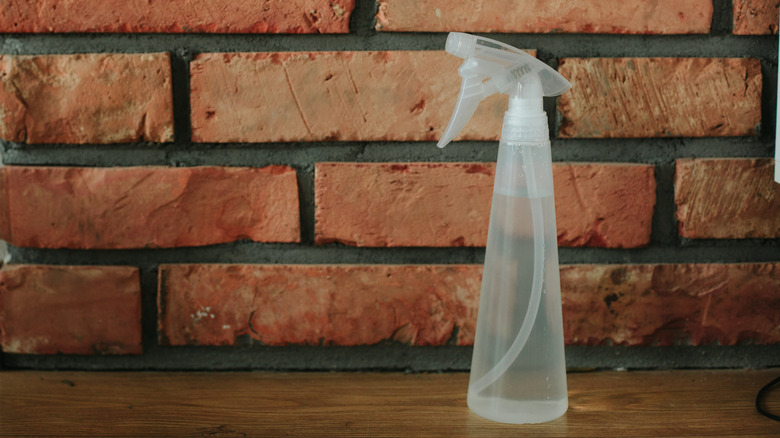
White vinegar is a household essential. Whether for removing rust from hand tools, deterring pests, killing weeds, or any of its other uses, vinegar is an incredibly versatile tool to keep in your pantry. And since it is an acidic solution, it is an effective natural cleaner known for dissolving dirt and grime. Beyond these benefits, vinegar is strong enough to tackle any mold spores and mildew. And there is one place where it can come in handy the most: your attic.
Home attics typically aren't finished, leaving many wood surfaces exposed. They often lack proper ventilation and contain other materials prone to mold, such as cardboard and paper. These conditions make the space a ripe environment for mold spores to thrive. Luckily, vinegar is an easy and cheap DIY treatment for mold. According to a 2020 study by Rhine-Waal University of Applied Sciences, even at a 5% concentration, it is effective at addressing fungal growth. When applied to affected, untreated wood surfaces, including plywood, it can kill some, but not all, common types of mold and mildew.
To eliminate mold lurking in your attic, all you'll need is a spray bottle filled with white vinegar and a soft bristle brush. You should also wear gloves, a face mask, and eye protection when cleaning mold. There's no need to dilute the vinegar with water. After spraying, let the vinegar sit for an hour or two to give it enough time to kill the mold (this is important), then gently scrub with the brush. After treatment, bag and remove any contaminated materials, such as cardboard boxes or paper, and ensure your attic is dry. This DIY spray solution is a quick fix, but there are some limitations to its effectiveness.
The limits of using vinegar to kill mold
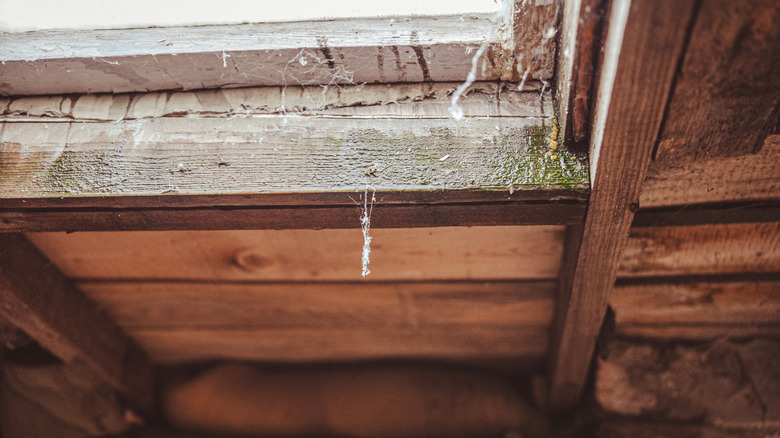
Using a vinegar spray to kill and clean surface mold is not a sufficient remediation for a serious mold infestation. EPA guidelines recommend treating mold yourself only if the affected area is less than 10 square feet. Deep mold growth in your attic is not only dangerous to your health but can also damage wood and cause structural problems. Mold spreads quickly through porous surfaces, especially if there's an untreated moisture problem. If your roof has a leak, for example, the wood in your attic will be the first to get wet, making it a likely place for mold to grow unnoticed.
Additionally, even if you succeed in using vinegar to kill the mold, that may not be enough. If there is lingering moisture, mold may return, or the wood in your attic may begin to rot. Proper attic ventilation is necessary to prevent mold from entering your home, as well as future moisture and mildew problems. Finally, if you discover a major mold infestation in your attic or signs of water damage, it's best to call a professional rather than trying to fix it yourself.