

Testing Soil pH With Vinegar: What The Steps Are And Why It's So Helpful
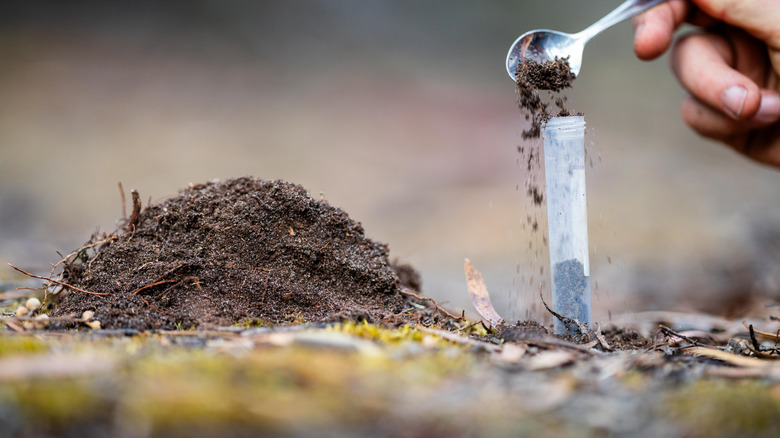
Testing your soil pH is something you might not think about doing until your plans for a bountiful harvest go awry. Perhaps those blueberry bushes you planted are looking sickly, or the asparagus you were hoping to harvest simply are not growing as you hoped. Sure, you could use a pH meter and find out exactly what's going on underground, but there are other ways to test your soil using common products you have in your kitchen. In fact, that humble pantry staple, vinegar, is one of the helpful ingredients you can use to measure the pH of your soil so that you can grow healthier plants.
Of course, everyone wants to have an abundant garden and flourishing landscaping plants, so to use vinegar, that versatile cleaning tool, to test your lawn or garden pH, the first step is to take a sample of your soil. When collecting it, dig down 6 inches instead of scraping the surface. Then gather a few more samples from multiple spots, since you're trying to get an average pH for a given area, not just one tiny spot. Depending on the size of your garden or yard, you may need as few as four or as many as 20 samples. Next, mix the various soil samples together. Don't worry if your mixture is small, as you'll need no more than a cup of it for this test. Finally, scoop out 2 tablespoons of the sample mix and combine it with vinegar in a jar. If the mixture produces bubbles, your soil is alkaline and has a pH greater than 7.
How vinegar tells you your soil's pH and why it matters
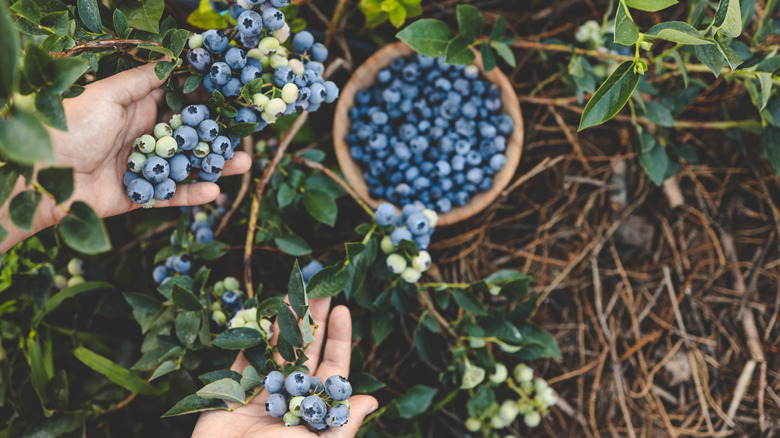
A soil and vinegar mixture can tell you whether your growing conditions are alkaline because it creates a fizz due to carbon dioxide production. Vinegar alone, however, won't tell you if your soil is acidic or neutral. To check for acidity, which means a pH lower than 7, you can do the same test with another helpful ingredient, baking soda, and watch for bubbling. Your soil is neutral if neither trial results in fizzing. Apart from the neutral test, using vinegar and baking soda to find pH isn't extremely precise, but it's still worth a try to get a sense of your range. Plus, this activity is one of those fun home science projects you might want to involve your kids or grandkids in.
The reason why soil acidity matters is because different plants have different pH preferences. Those blueberry bushes we mentioned earlier need acidic conditions to thrive. Potatoes also prefer acidic soil as well. If you're growing asparagus, lilacs, or peonies, on the other hand, you'll want alkaline soils. If you're interested in testing the pH of your vegetable gardens, you'll want either no fizzing or slight fizzing when baking soda is added to the soil samples, since most garden crops thrive with neutral or somewhat acidic conditions.