

He Uses Concrete To Make A One-Of-A-Kind Bubbling Fountain
A bubbling fountain can bring a sense of calm to just about any outdoor space. It is also a stunning outdoor feature that will boost your home's curb appeal like crazy. After all, the sight and sound of gently flowing water are hard to beat. The problem? Store-bought fountains are expensive, especially if you want something large and one-of-a-kind. In fact, even simple, low-profile bubbling fountains with minimal splashing can cost between $1,200 and $3,800 to install, according to Angi.
Don't worry, though! You do not necessarily have to spend a fortune to bring the soothing sound of flowing water into your backyard. Instead, take inspiration from YouTuber Travis Jantzer. He used concrete and river rocks to make a one-of-a-kind bubbling fountain at a fraction of the cost.
In his tutorial, Jantzer showed how he created a large, square bubbling fountain from concrete with water flowing down its open center and onto the ground below. The best part? You do not need any fancy supplies or specialized tools to complete this DIY project. A few wooden boards, screws, concrete mix, a water pipe, a submersible fountain pump, pond liner, river rocks, and basic tools like a drill, shovel, level, and trowel are all you need to get started. Better yet, you can easily customize the shape and size of this bubbling fountain to create something that is truly one of a kind.
Making a bubbling fountain from concrete and river rocks
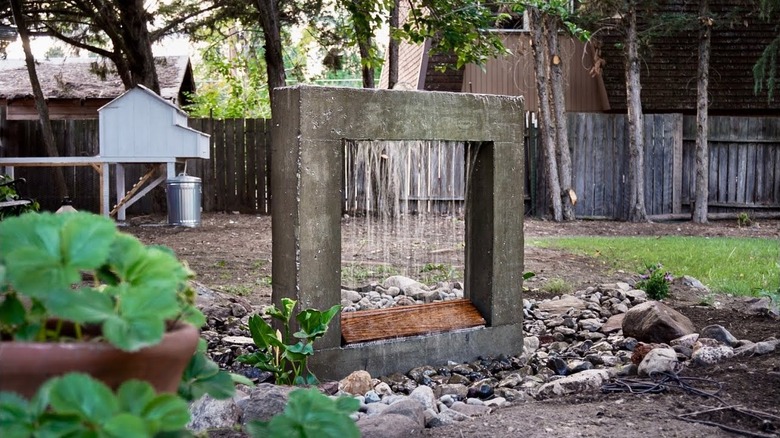
Decide how big you want your bubbling fountain. YouTuber Travis Jantzer's fountain is 3 feet tall and 6 inches thick. However, he also shows viewers how to build a smaller, 2-foot-tall wooden mold. The size you choose will also affect the materials and equipment you need. For instance, you'll need a stronger water pump to push water to the top of a taller fountain and more material to build it. Once you have decided on the dimensions of your fountain, you can cut your wooden boards to size and screw them together to create a square concrete mold.
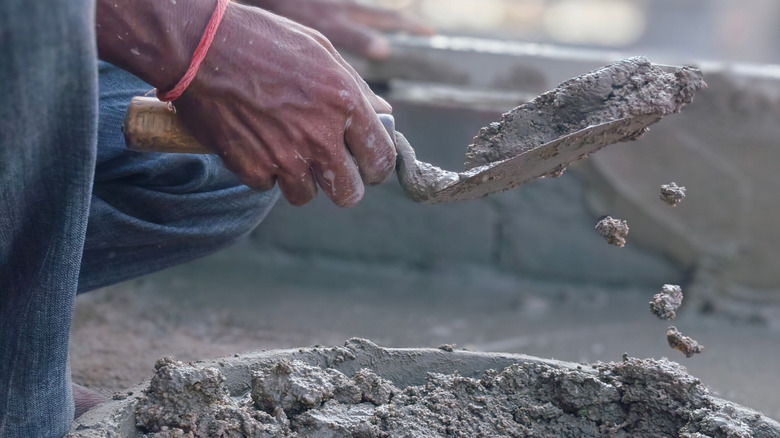
Keeping the mold flat on the ground, apply cooking spray to the boards before pouring the concrete. Jantzer does this because it makes removing the mold much easier. Also, put on some proper protective gear, including waterproof boots, coveralls, gloves, and safety goggles. Failing to do so is a DIY concrete mistake that could leave you in serious pain. Next, pour the concrete into the mold, filling it to about the halfway mark. The pipe that will carry the water to the top of the fountain needs to be embedded into the concrete, so place it inside the mold before finishing the pour.
Once the concrete has cured, it is time to bring your bubbling fountain to life. Head outside and dig a hole in the ground. Line it with pond liner to create an underground reservoir that holds the pump and catches the falling water. You also need to build a level wooden platform that can hold the weight of the fountain. Place your bubbling fountain on top, connect the embedded pipe to the pump, and test the water flow before surrounding the fountain with rocks and moisture-loving plants.
Avoid these mistakes when building your DIY bubbling fountain
Let's start with the biggest mistake YouTuber Travis Jantzer made in his tutorial — and, thankfully, later addressed. When he turned the fountain on, the falling water started slapping against the flat surface below, creating a loud sound that is obviously not relaxing at all. To fix this, he laid a board underneath the waterfall, which softened the sound. You, however, can also add smooth river rocks at the base of the fountain to break the water's fall or design the fountain with a shorter drop to reduce splashing and soften the sound.
Also, once the fountain is running, do not let its reservoir go dry or you risk the pump's motor burning out. This is especially important on sunny or hot days when the water evaporates faster. Besides that, keep in mind that some water from your bubbling fountain will also be lost when it falls and splashes from a height. Jantzer also noted this water loss, so make sure to account for it.
Other than that, do not cut corners on electrical safety. Jantzer uses an outdoor plug with surge protection and a timer. This is a good start, but to be on the safer side, you should take things one step further and use a GFCI-protected outlet. This type of outlet helps reduce the risk of electric shock. Lastly, keep your bubbling fountain clean. Remove anything that could clog the water pump, and keep an eye out for moss, which loves growing in damp places. Don't worry, though — white vinegar is a natural ingredient that'll take care of moss growing on concrete.