

The Iconic Wedgwood Line That Collectors Would Be Ecstatic To Find (It's So Valuable)
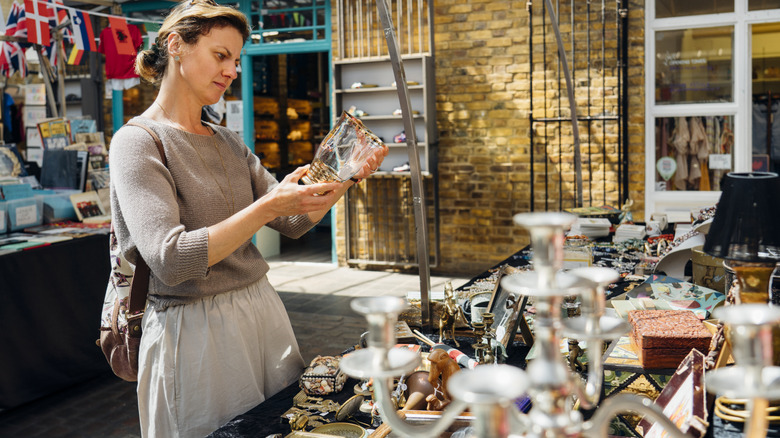
Wedgwood is the stunning antique houseware brand people are thrifting for like crazy, but you might not know about some of its most iconic pieces. A British brand founded in 1759, Wedgwood's most popular dishes include Jasperware, its vintage colorful dishes adorned with relief classical figures. Rare, pristine examples of individual Jasperware piececs can sell for over $3,000. But another Wedgwood line is even more valuable to collectors: Fairyland Lustre.
Fairyland Lustre may be the most whimsical design Wedgwood created. These unusual pieces were designed by the incomparable Daisy Makeig-Jones. She joined Wedgwood as a painter and eventually opened her own design studio. She introduced Fairyland Lustre in 1915, creating multiple patterns full of fanciful creatures like dragons, elves, fairies, and goblins ripped from the pages of fantasy books. Makeig-Jones was inspired by folklore, in particular the illustrations by Gustave Doré, Edmund Dulac, and H.J. Ford for the stories of Hans Christian Andersen as well as Andrew Lang's fairy books.
Fairyland Lustre pieces are incredibly valuable. In March 2025, two Fairyland vases sold for tens of thousands of dollars each. The first vase, in the Dragon King pattern, fetched $87,500 while a smaller vase with the Ghostly Woods pattern sold for $43,000. Ghostly Woods is a fantastical creation with a psychedelic rabbit, winged creatures, and a vaguely menacing frog, beguiling to collectors who may veer towards the macabre.
What to look for with Fairyland Lustre
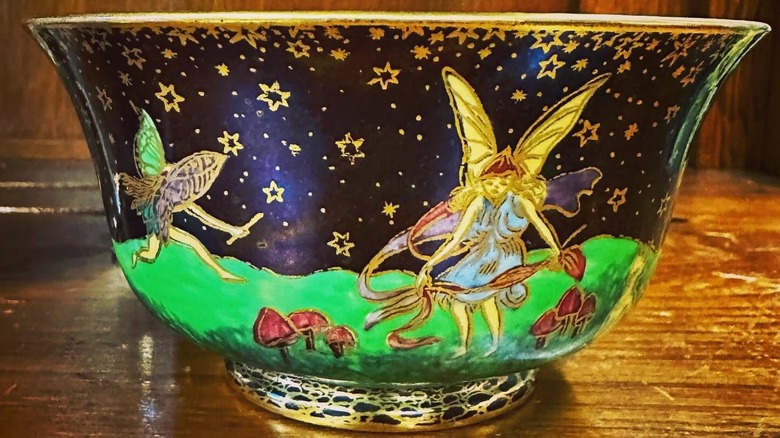
Eventually, the whimsical elements of Fairyland Lustre paled in comparison to the appeal of Art Deco, and the line stopped being sold in 1930. However, today, the pieces have eager fans, and if you find one in the wild, you've got a gem. A true example of Fairyland Lustre will stand apart from the crowd because it looks expensive. That opulent look is the result of production techniques that included painting over a fired glaze before going through five or six kiln firings. Wedgwood made roughly 60 designs,including "Garden of Paradise" themed after the Hans Christian Andersen story, "Sycamore Tree," and "Fairyland Candlemas."
The scenes were hand-painted by artisans under the direction of Daisy Makeig-Jones. Once painted, they were finished by dusting gold powder over the oil paintings, giving each one a vibrant sheen, then fired again. Since they were not mass-produced, each piece contains slight variations. When you inspect the bottom of a thrift store find, look for the Wedgwood mark, which should be accompanied by a "Z" pattern number. Z-codes were Wedgwood's designation for luxury luster glazes. Before you start hunting for vintage Wedgwood china, however, you should learn everything there is to know about china patterns. As for other Wedgwood patterns, a handmade Jasperware vase is still one of the 13 thrift store vases that can turn out to be quite valuable.