

What Do Professional Window Cleaners Add To Their Water?
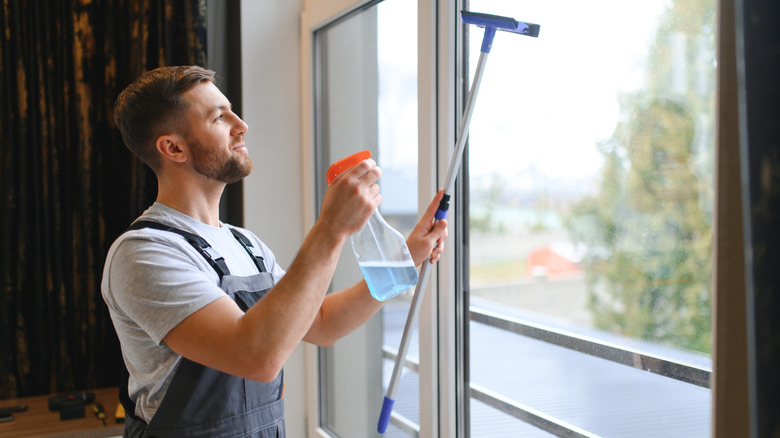
Hiring a professional to clean your windows on a regular basis is a great way to keep them streak-free. Alas, it can cost between $150 and $303 (per estimates from Angi) per cleaning session. Or more if you live in an expensive city, like New York. If you are not willing or able to spend hundreds of dollars a year on window cleaning, you may think that the next best way to clean your windows is to use a bottle of window cleaner and a towel. However, Clayton Wise, the franchise support manager at FISH Window Cleaning, reveals that experts use water with one simple addition for superior results.
In an exclusive interview with House Digest, he explains, "We typically use a window-cleaning bucket that holds 3 gallons of water. We then add 1 to 2 ounces of Dawn dish soap to the water. This solution works well for both interior and exterior windows, although we may use less soap during the hot summer months to help prevent the solution from drying too quickly." He further mentions that it's a popular solution among professionals and they use it commonly. "We choose Dawn because it's a household name that many people recognize and already have in their homes. It's cost-effective, and it works," adds our expert. So, you can essentially say goodbye to dirty windows with a cleaning solution you probably own. That being said, he clarifies that sometimes window cleaning experts may turn to professional-grade solutions for tough jobs.
Why you should use a dish soap and water solution to clean your windows
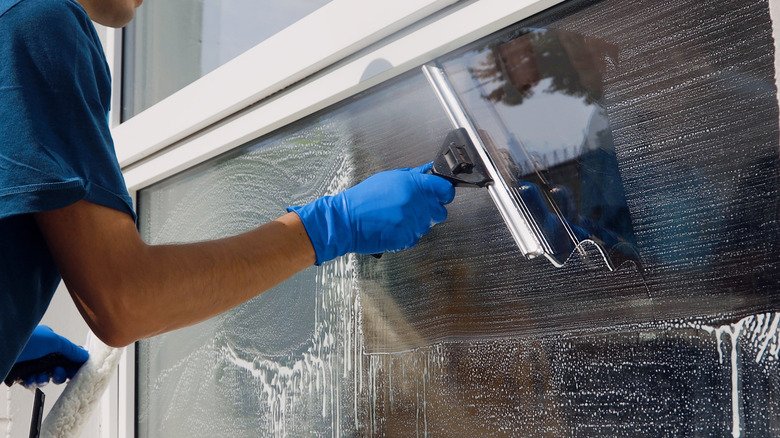
Explaining the benefits of mixing in a bit of dish soap with water when cleaning windows, Wise explained, "Dawn is a great degreaser and works well for removing months or even years of accumulated dirt and grime from windows." This makes it easier to cut through the grease, grime, and stubborn debris hampering your looking glass' clarity — something water alone will struggle to handle. In addition, "The soap also provides lubrication, allowing the squeegee to glide smoothly across the glass, making the cleaning process easier," he explains. That doesn't mean you should add it generously, or you'll have to deal with the residual film. As Wise notes,1 to 2 tablespoons in 3 gallons of water is enough.
When asked about his company's usual cleaning approach, Wise details, "We typically use a strip washer attached to a T-bar, commonly referred to as a mop, which we dip into the bucket of water and Dawn solution." And if the window in question is incredibly filthy, "We'll use a white scrubbing pad suitable for the glass surface to provide additional agitation and remove stubborn fingerprints or grease marks," notes our expert. Either way, apply the soapy water solution thoroughly to dirty window panes, so you can clean them without much elbow grease. However, stay away from the edges, or water will seep beneath, leading to mold and compromising the seal over time. Once done, use a squeegee to remove the water and suds (if any). "Finally, we use a towel to detail the edges of the glass and wipe down the window frames and sills," he states. This is an important step, as leftover solution can lead to a sticky buildup and attract dirt, necessitating more frequent cleaning.
Mistakes to avoid when using a soapy water solution to clean your windows
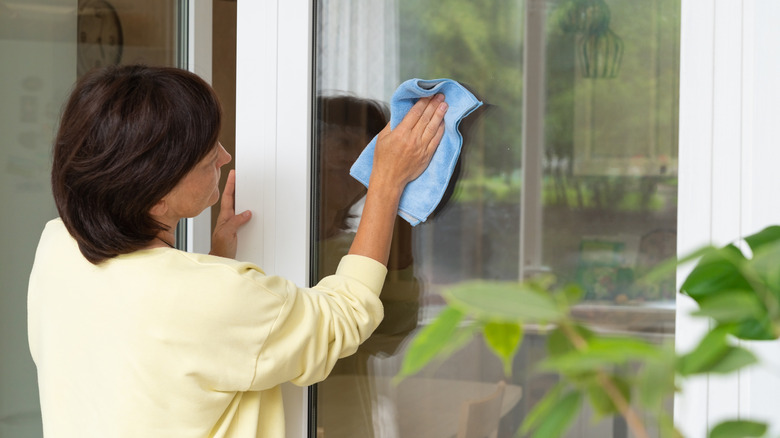
While it can be easy way to maintain your windows, there are a few blunders you should avoid when using a dish soap and water solution. Highlighting the most common gaffes, Wise says, "One of the biggest mistakes homeowners make is not having proper squeegee technique. Professional window cleaners are trained to maintain the correct squeegee angle and use techniques that prevent streaks and water from running down the glass." He recommends moving a squeegee in a swirling or fanning motion to minimize the chances of unsightly streaks and a dull-looking window pane.
Also, it's a good idea to do a dry run with your squeegee to make sure you can maintain control when needed. "The goal is to avoid having to use a towel to correct mistakes on the glass itself, because wiping those areas can leave smears that become especially noticeable when sunlight hits the window," he emphasizes. According to Wise, another mistake is trying to clean high-up windows without a ladder or specialized equipment. "We also have all the proper safety equipment and ladders to get to the hard-to-reach windows." So, it may be best to contact professionals for higher-up windows, especially if you haven't been able to clean them yourself.