

Spraying Your Counters With Tea Tree Oil: What It's For And Why It's Recommended

After the pandemic, many people got into the habit of being extra vigilant with disinfecting surfaces around the house. That means they wanted the cleaning supplies to be strong, instantly killing germs. However, cleaning your house shouldn't feel like you're in a science lab, nor should you compromise your standards around cleanliness if you're using a less potent product. Thankfully, not all effective products need to be toxic or costly. A cleaning spray made of tea tree oil, white vinegar, and water packs an antimicrobial punch to keep your kitchen and bathroom counters sanitary and smelling fresh.
Tea tree oil, made from the Melaleuca alternafolia plant in Australia, has long been used by Aboriginal communities for its healing powers. In the 1930s, it was heralded as a disinfectant and used in first aid kits among the Australian military. Today, tea tree oil has many uses around the home, such as freshening laundry, deodorizing, controlling pests, and fighting mold.
This essential oil is widely known to kill certain bacteria, viruses, and fungi, thanks to a compound called terpinen-4-ol. A study in the International Journal of Environmental Research and Public Health found that direct contact with tea tree oil inhibited the growth of two common fungi often found indoors. These two types of mold, Aspergillus fumigatus and Penicillium chrysogenum, could lead to diseases and allergy symptoms, especially among people with weak immune systems. However, tea tree oil was shown to alter the cell membranes of the fungi and interfere with cell activity.
Making a DIY cleaning spray with tea tree oil
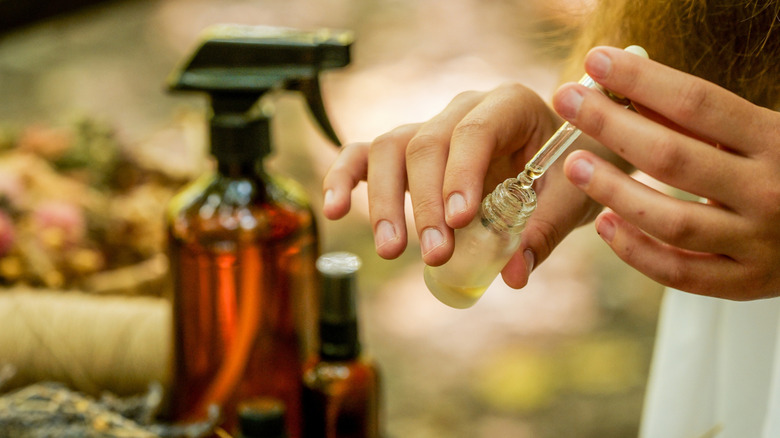
To make your own cleaning spray, combine 20 drops of tea tree oil with a 1:1 solution of white vinegar and warm water. Always dilute the oil, since its pure form can damage some surfaces. If your countertops need degreasing, add a similar amount of lemon oil to the mixture (if you aren't already using it all to clean your oven). Always shake the bottle well before spraying, and let the liquid sit on your counters for a few minutes before wiping them down.
The mixture is safe for tile, laminate, stainless steel, and glass, but may not be suitable for natural stone (like marble and granite) and natural and unsealed wood. Test the solution on an inconspicuous spot before using the cleaner broadly. For optimal results, make a fresh batch of tea tree spray each week, and store the cleaning spray and oil in a cool, dark place to prolong their effectiveness. If you're unsure of your oil's efficacy, don't toss it yet, as there are ways to use old or expired essential oils around the house.
It's important to know that tea tree oil is toxic if ingested, so keep both the cleaning spray and the essential oil out of reach. If you have a particularly curious cat, dry the surfaces well after using the tea tree spray. It might even be worth it to consider rinsing the surfaces after cleaning, so you can thoroughly remove all traces of the essential oil.