

Stop Tossing Old Lampshades: Transform Them Into Cement Flower Pots

We may receive a commission on purchases made from links.
If, instead of upgrading your old lampshades with fabric, you've decided to replace them altogether, then don't toss them out just yet. While you may no longer have use for them indoors, did you know that they could actually be put to very good work in your yard? In fact, all you really need to do is grab a bag of cement (which, since you're headed to the store anyway, shouldn't be a big deal!), and, like YouTuber Stephie McCarthy, turn those lampshades into rustic, homemade flower pots.
There are several things about this idea that we absolutely love. Firstly, it's cost effective, requiring just your lampshade and a few cheap supplies. A fabric shade works best to soak in the cement coat. One with a ring, or fitter, also helps, adding structural support while serving as a frame for the cemented base. Secondly, the finished result is beautiful. The pots look like the real deal and hold up very well outdoors — even during wet weather. Not only that, but while the basic DIY steps result in gorgeous flower pots, they're also highly customizable, allowing you to achieve a finish that perfectly suits your yard. Add to this the exciting variety of plants that you can grow in containers, and this DIY is worth it.
Transforming your fabric lampshade into a cement flower pot
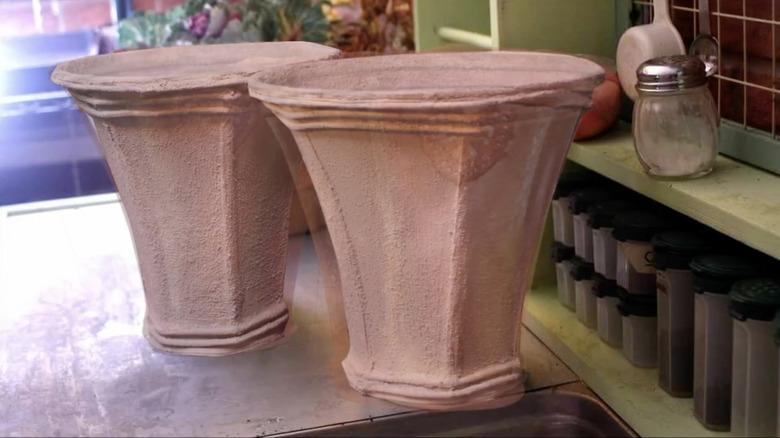
The first thing to do is gather some basic DIY tools and supplies. These include a protective mask and gloves, some sticks to mix the cement, a paint brush, pen or dowel, and some lubricant. As for the cement itself, the creator uses Rapid Set Cement All, which is available at Home Depot for around $22. A water mister can also help to make the project easier, and if you have some, you can glue lengths of clothes line around the shade rims, which adds decoration while also aiding with adhesion.
Have all your supplies close to hand, since the cement tends to dry quite quickly. When you're ready, slowly add cement (roughly 4 cups) to 2 cups of water until you have a paint-like consistency. Adding a tiny drop of dish soap also helps to make the mix more workable. Then, wet the shade with a brush or mister, before coating it inside and out with your slurry. Allow it to dry for a few days. When it's dry, mix up more cement, this time aiming for a mud-like consistency (7 cups cement to 2 cups water). Use this to fill the bottom, packing it around the wire rim and placing a lubricated dowel or pen in the center to retain a hole for drainage. Next, gradually build up the interior walls with around a ¼-inch of cement, smoothing it with a wet brush. Finally, once it's dry, seal the entire pot with linseed oil, which will harden as it cures and help to protect the cemented surface.
How to customize your cement flower pot
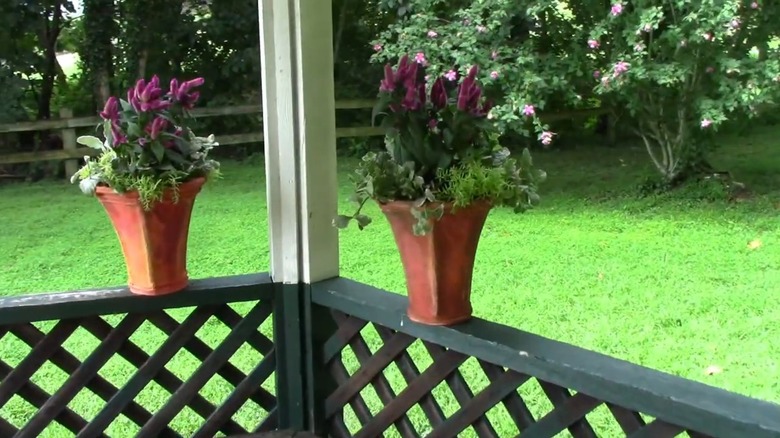
Once you've cemented your lampshade, you may be tempted to fill it with soil, pop your favorite flowers inside, and enjoy the fruits of your crafty labor. But before you do, it's worth at least considering some additional decorative touches. For example, one way to customize your pot is to follow the creator's tip and glue some appliques to the walls. Again, this is super easy, and you can even use vintage thrift-store doilies to achieve it. Or apply a vintage terracotta-like finish with some watered-down orange and yellow paint, which you scrub into the cement with a toothbrush.
Alternatively, depending on your style, you could apply a stencil around your pot (using tape, or a hand-drawn design on paper) and then paint a pattern using that. Checkers, for example, could lend it a more contemporary look versus the antique finish. Alternatively, you could stencil on a single design, be that a flower, a butterfly, or perhaps your own initials. Try gluing some jute or sisal rope around the bottom to soften the industrial cement look while introducing some organic, rustic texture. And don't forget, when the pot itself is finished, there's still the important matter of what you'll plant inside it. Even if you shoot for a more pared back design, there are plenty of flower and plant combinations for containers that'll lend a dynamic pop of color to your space.