

Ensure Healthy Green Grass After Using Lawn Aerators With This Expert-Recommended Step
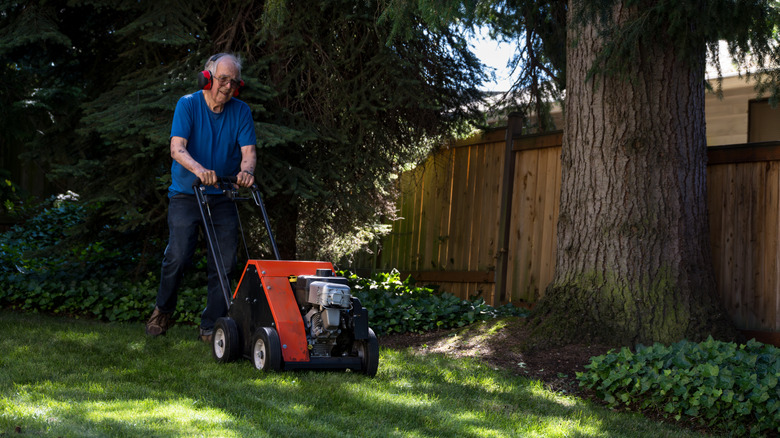
It's no secret that you should aerate your lawn for healthier grass. By removing soil plugs at set intervals, you loosen the soil, enabling air and water to percolate deeply and reach the roots, supporting dense growth. This underground improvement is reflected on top, as bigger roots can support a thicker turf. But if you're truly hoping to transform your lackluster lawn into a stunning green oasis, Jon Sneider, owner of Jon Sneider Lawn Care & Tree Service, a Newton, Massachusetts-based lawn care company serving Greater Boston since 1994, says take it a step further and fertilize it right after aeration.
In his exclusive interview with House Digest, Sneider shares, "After aerating a lawn, I personally prefer applying a slow-release granular nitrogen fertilizer to encourage healthy growth and help the grass recover." That way, the fertilizer settles at soil level, becoming readily available for root absorption, thus promoting dense, healthy, and green above-ground growth. It also helps restore the turf's appearance after aeration reduced it to a — thankfully temporary — sorry state. It is best to aerate and fertilize only when your grass is actively growing, and not after it has gone dormant. When strapped for time, you may feed it later, but preferably within two days of using lawn aerators. In three weeks, you can expect to see noticeably healthy growth.
Apply a slow-release granular fertilizer after aerating your lawn
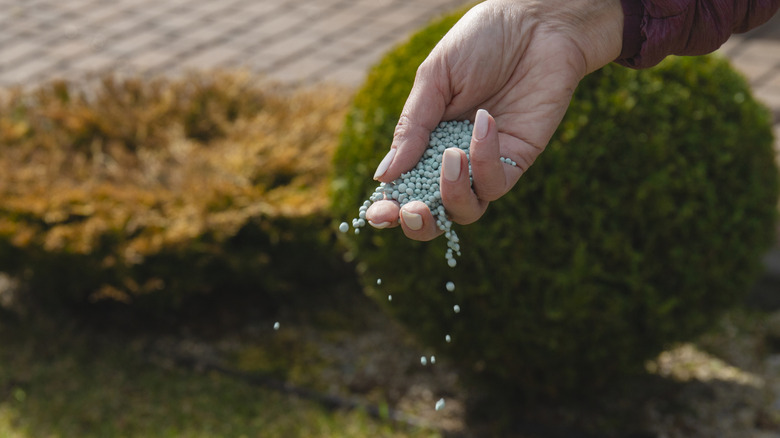
Although several kinds of fertilizers are available, our lawn care expert prefers granular formulations. Explaining why, Sneider says, "I choose granular fertilizer over liquid applications because it provides a more gradual release of nutrients and longer-lasting results." He also advises using slow-release fertilizers. These variants release nutrients at a more measured pace over several weeks. "This helps maintain more consistent color, reduces how often fertilizer needs to be applied, and generally lowers the risk of burning the grass when applied correctly," Sneider adds.
Slow-release fertilizers are also a superior choice for the environment. As you might know, fertilizer runoff is a grave concern. When fertilizer leaches into water sources, it impairs their quality and may even promote algal blooms, harming aquatic life and the ecosystem. However, according to Sneider, "Slow-release nitrogen can also reduce nutrient loss through leaching compared with quick-release fertilizers." When fertilizer releases gradually, the risk of runoff is lower.
Avoid quick-release and phosphorus-heavy fertilizers on established turf
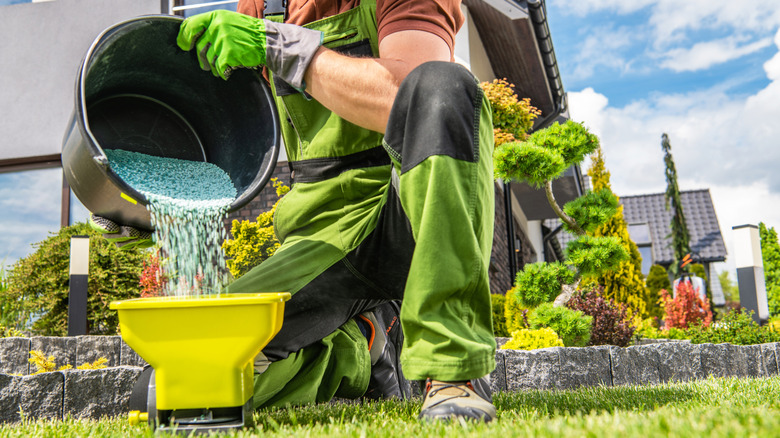
When deciding which fertilizer is best for your lawn, don't forget to factor in its growth. Along with liquid formulas, Sneider says, "I would also avoid high-phosphorus starter fertilizers on established lawns unless the lawn is being seeded or renovated, or a soil test indicates that additional phosphorus is needed." Performing a soil test every three years is a good practice to know exactly what nutrients your lawn is lacking. Not to mention, phosphorus-heavy fertilizers may not be allowed in some states or have application restrictions during certain periods (often late fall through early spring) due to the runoff risks.
In addition, resist using quick-release forms of nitrogen fertilizers for rapidly-growing, healthy lawns. "Quick-release fertilizers can cause a sudden burst of growth, resulting in more frequent mowing and an increased risk of fertilizer burn if applied improperly," Sneider explains. Do note that since nitrogen requirements can't be determined even with a soil test, you must follow the label requirements to remain avoid overfertilization.