

This Simple Concrete Paver Technique Transforms Your Garden Into A Playful Checkerboard Pattern
We may receive a commission on purchases made from links.
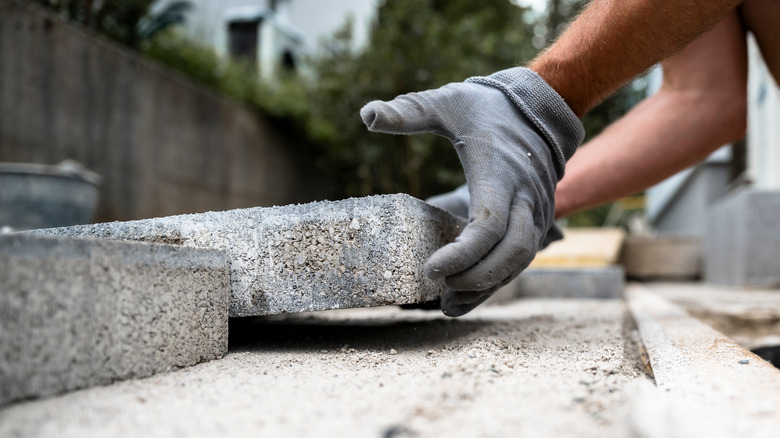
Neat and orderly pavers give your garden a classic look that sometimes can border on utilitarian. A traditional hardscape design features concrete pavers arranged into pathways or patios and relegates the flowers and shrubs to the border. Your garden space might feel disjointed with the plants off to the side. Instead, transform your space with a unique symmetrical garden design that pairs pavers and greenery together into one eye-catching checkerboard pattern. By alternating pavers with squares filled with plants in a playful checkerboard format, you can enrich your garden and showcase your favorite flowers and shrubs at the same time.
This technique works best with concrete pavers in the same size and style. At Lowe's, you can purchase Square Gray Concrete Patio Stones for around $2 each. These patio stones are 12 inches long by 12 inches wide. Of course, you can also add squares filled with gravel, mulch, or other styles of pavers to make the look of your garden checkerboard more eclectic. Some tools to have on hand include a shovel, garden rake, and hand tamper. Grab a bag of sand for leveling, like this SAKRETE Step 2 Paver Leveling Sand at Home Depot, and have several bags of top soil to spread in between the pavers. You will also want to pick out your favorite plants to grow in the spaces next to the pavers.
How to make a checkerboard garden design out of a storybook
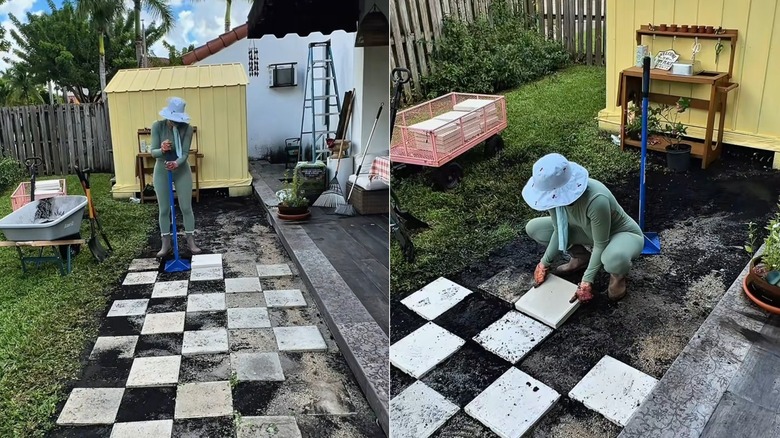
Using this DIY paver project to elevate your landscaping, you can create a scene straight from a storybook with a whimsical garden layout. First, plot out the entire area for your design. Ideally, this space will have clean edges to allow for uniformity when arranging the pavers. After marking the spot out in your garden, dig out any sod and dirt so that your pavers will lay snugly in place and your flowers will not be lopsided. Additionally, preparing the ground before laying the pavers prevents them from shifting or sinking in the future. A hand tamper can be used to compact the dirt for a nice, level area.
To leaves room for plants, one option is to mark out your paver spots one-by-one. Start at one end of your space, laying a paver in the corner. Ensure proper leveling by adding paver sand underneath, if necessary. Once you have laid the first paver, place another paver next to it to measure the proper distance. Then install your next paver and pick up the stand-in paver. Once removed, the stand-in paver should leave behind a perfect square of dirt. Repeat this process throughout your prepared space, ensuring each paver is properly level and snug in place. Once you've completed all your rows, you can let your creativity flow as you add plants to put the finishing touch on your checkerboard layout.
Best types of plants to boost this playful garden design
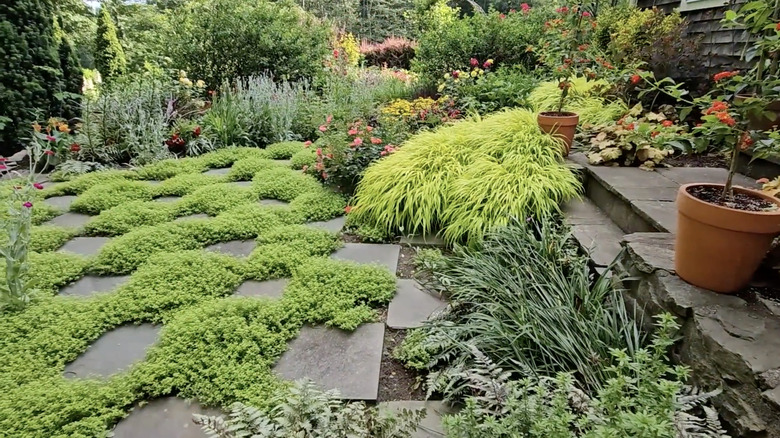
Deciding what to plant in the squares in between your pavers is the best part about this transformation. Consider what type of space you will create. If you want to use pavers to make a path in your garden, low-growing plants may be the best choice. Opt for durable types of ground cover you can walk on, like creeping thyme (Thymus serpyllum) or lady's mantle (Alchemilla mollis). Another way to add greenery to the checkerboard is with moss, although you will need the right kind of humid and shady spot for it to work well. Walkable ground cover will make your checkerboard layout more inviting, like a spot to stop and enjoy.
Of course, flowers are also fun to grow in the soil spaces and add brightness next to the concrete pavers. You can create an idyllic cottage garden with a charming mix of tall, bold agastache (Agastache sp.), fragrant lavender (Lavandula angustifolia), and pollinator-friendly sweet alyssum (Lobularia maritima). Or you can turn your checkerboard into a chess board straight out of Lewis Carroll's "Alice's Adventures in Wonderland" and add some white and red roses. If you have a little ambition and time to spare, perhaps try your hand at growing a topiary out of an evergreen shrub. You can model it after your favorite chess piece or a character from the novel, like the white rabbit. There are endless options to mix and match flowers, shrubs, and ground cover to transform your garden into a charming checkerboard.