

Spraying Windows With Lemon Juice: What It's For And Why It's Recommended
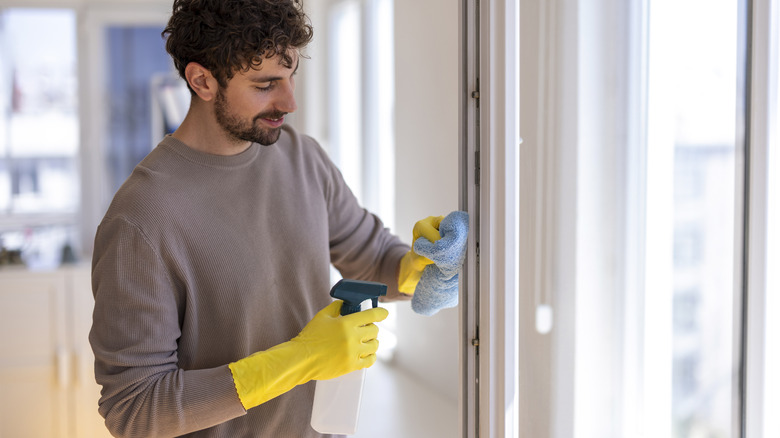
On overcast days, our windows look crystal clear. But then the sun emerges, revealing our windows' true colors — or, should we say, every speck of dirt, dust, and grime. Before you reach for a commercial cleaning spray, think again. It likely contains volatile organic compounds that can cause mild to serious health issues. For an all-around safer option, combine lemon juice and water for a window cleaner that cuts through hard water stains and built-up grime and grease.
In our homes, countertops and other flat surfaces often get the most attention because they're used daily, gathering dust and dirt. Windows, on the other hand, are often out of reach and typically aren't handled every day. However, that doesn't mean they're not dirty — and we're not just talking about fingerprints. Windows sitting above vents or in busy areas tend to catch dust and pet dander, while hard-to-detect cooking vapors cling to those in the kitchen. Spraying hair products adds to grime on bathroom windows, and even burning candles can leave residue on glass. In other words, normal daily life builds up on the surface even if we can't see it.
Using a kitchen staple like lemon juice to clean your windows seems too basic, but don't underestimate its potential. The juice's high citric acid content does wonders as a natural dissolving agent, attacking grime on glass. The best household uses for lemon juice include degreasing, deodorizing, sanitizing, polishing, and descaling. Plus, it's an inexpensive, non-toxic, and eco-friendly alternative to many commercial cleaners.
Making a window cleaning spray with lemon juice
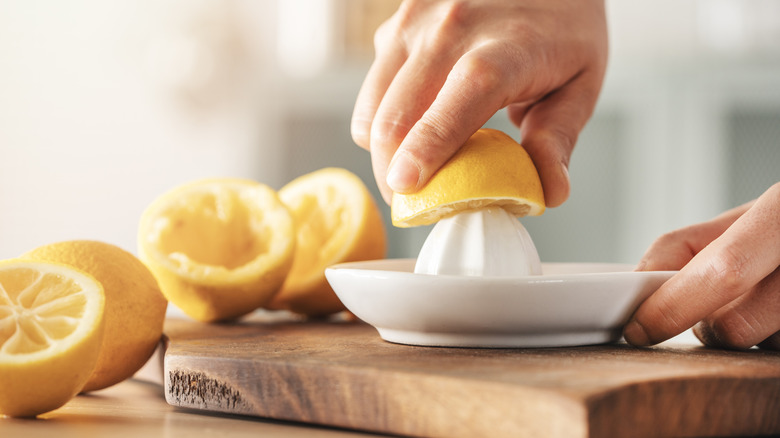
To make your own window cleaning spray, simply mix 1 tablespoon of lemon juice with a quart of water. Use either bottled juice or squeeze your own with fresh lemons — an option that is more potent than the bottled variety and is ideal for using immediately. You can also use lemon juice concentrate, which is typically used in commercial cleaning products, but it would require dilution. Ideally, wait until it's cloudy outside to clean your windows to avoid the lemon juice drying or evaporating before you can finish the task. And then wipe the spray with a natural linen cloth, newspaper, or microfiber towel. Have extra solution? Use it to turn your dirty shower doors squeaky clean.
Another variation of this basic solution is to combine 2 tablespoons of lemon juice with 2 cups of water, plus ¼ cup of rubbing alcohol, which helps to break down oils, adhesives, and grime. However, never mix lemon juice with bleach, ammonia, or hydrogen peroxide — all of which are combinations that could produce toxic fumes or harmful gasses.
When storing your lemon juice window spray, keep it in a glass or high-quality plastic bottle. Avoid cheap plastic bottles and metal containers, which could deteriorate or corrode thanks to the acid in the juice. Keep the unused solution in a dark and cool spot and, ideally, use it within two weeks. Solutions with freshly squeezed lemon juice should be stored in the fridge.