

Not English Ivy: The Flowering, Shrubby Vine That Looks Good On Brick Walls
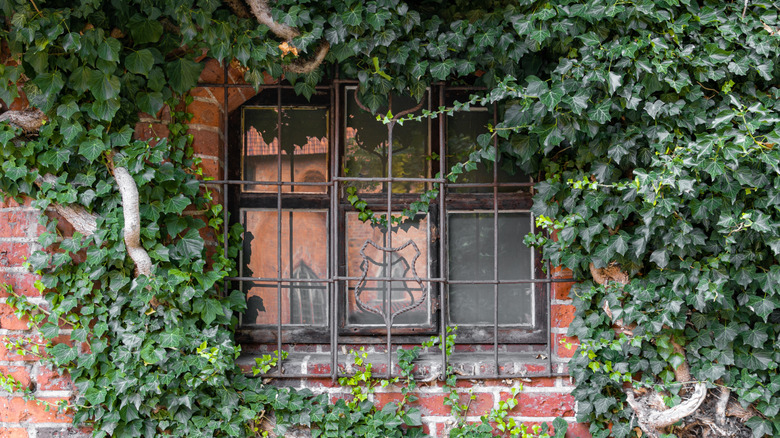
English ivy is an eye-catching plant, no doubt, but if you live in the United States, you likely want to avoid this species due to its invasive status. As a result, you may be on the hunt of an equally charming plant to adorn that empty brick wall in your garden. Fortunately, there are several good alternatives for English ivy, including this flowering vine that offers a pop of color during an otherwise dreary winter.
When grown as a vine (which is what you'll want to help it look good on brick walls), winter jasmine (Jasminum nudiflorum) can grow up to 15 feet tall and 6 feet wide. However, its visual appeal isn't derived from its impressive spread alone. Instead, the real appeal of this plant, and the reason it can stand out so much when grown on a wall, is its showy flowers that bloom in the winter spring. The flowers of the winter jasmine are tubular, growing up to 2 inches long, and bright yellow in color. They typically bloom in winter, with some of the first flowers appearing as early in the year as January.
Although winter jasmine is native to China, it is considered naturalized throughout portions of the United States. However, even though it may not be invasive, it can still spread readily. This is perfect if you're trying to add a splash of colorful coverage to a brick wall, but you may need to prune it to ensure that this plant doesn't extend elsewhere throughout your garden where it isn't wanted.
How to grow winter jasmine
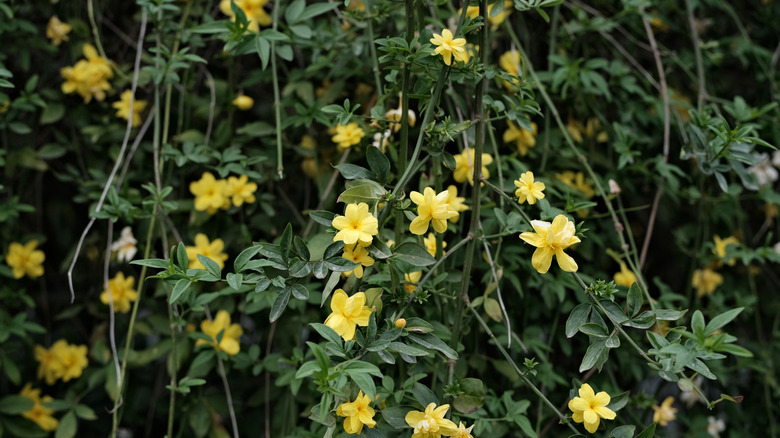
Winter jasmine is overall a low-maintenance flower, which makes it a good plant for beginner gardeners looking to add some winter appeal to their garden. However, while it may not be as finicky as some plants, it does still have its own specific care requirements, including sunlight, soil, and pruning needs. Winter jasmine is a perennial that's hardy in USDA zones 6 to 10. It grows well in a variety of soil textures, and can handle most pH levels, from acidic to alkaline. Just be sure that it receives proper drainage. It prefers soil that's kept moist, but this sturdy plant does tolerate occasional drought conditions.
As far as sunlight goes, winter jasmine can be quite resilient. For the best results, try to grow it in full sun or partial shade. This means opting for a brick wall that's not facing north, with south-facing locations providing full sun and east- and west-facing walls providing shade during a portion of the day. However, while these are the preferred growing conditions of winter jasmine, it can also tolerate heavy shade. It's important to ensure that heavy shade isn't a constant for this plant, however, if you want to see those handsome and bright winter flowers.
When growing winter jasmine on a trailing vine on a brick wall, pruning is essential. One fortunate feature is that this plant doesn't require pruning for health. This means that you'll only need to prune as needed, specifically for keeping its spread in check and creating the appearance that you like. The best time to prune winter jasmine is in the early months of spring, after it's finished blooming for the season.