

Vinegar Vs Hydrogen Peroxide: Which Is The Superior Disinfectant?
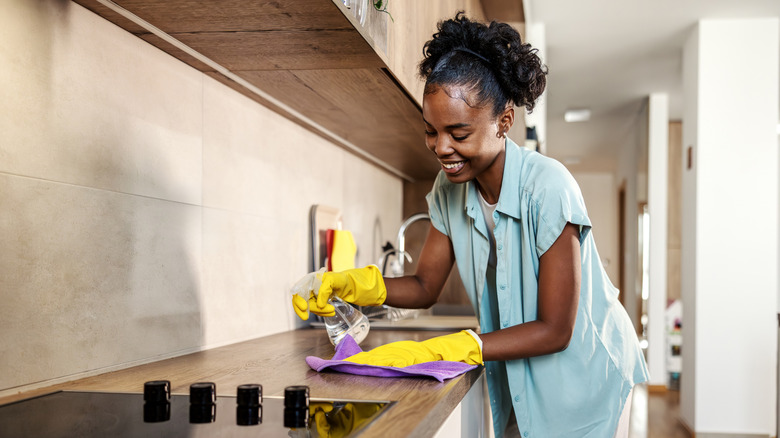
There are many claims online about natural disinfectants, but many do not live up to the hype. Vinegar and hydrogen peroxide, two common household staples, are popular natural cleaning ingredients. They're also often cited for their sanitizing and disinfecting properties. But does the science actually support these claims?
White vinegar contains acetic acid, which is what gives this liquid its distinctive smell. Common household vinegar typically contains around 5% acetic acid (the rest being plain water). At this concentration, acetic acid is strong enough to dissolve stuck-on dirt and grime. It also has some antimicrobial properties and can kill some species of bacteria. However, this is not enough for vinegar to be classified as a disinfectant.
By contrast, hydrogen peroxide is cleared as a high-level disinfectant by the FDA and is even approved for such use in healthcare settings. This is because hydrogen peroxide offers better germicidal, fungicidal, and virucidal capabilities than the acetic acid in vinegar. According to data from the CDC, hydrogen peroxide can kill bacteria and viruses after one minute of contact and thick-walled mycobacteria and fungal spores after five minutes. This means that your plain brown bottle of 3% peroxide is the one to reach for if you need to properly sanitize an area rather than just clean it.
Why hydrogen peroxide is a true disinfectant (and vinegar is not)
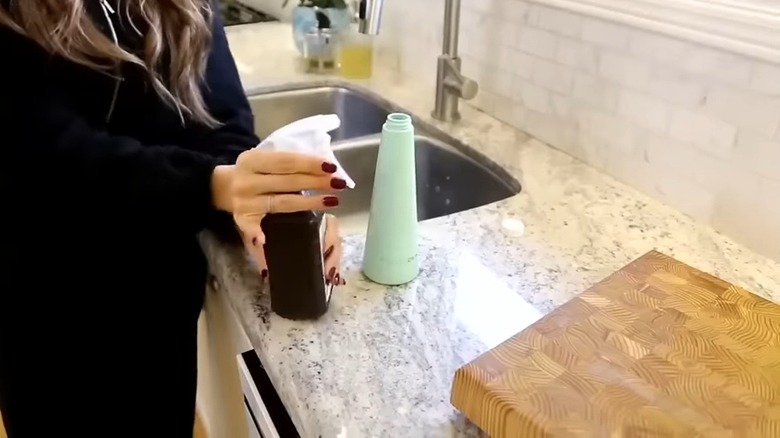
Just because something can kill germs and other microbes doesn't mean it's a disinfectant. To be classified as a true disinfectant, a compound must meet specific antimicrobial criteria when tested in a laboratory. Hydrogen peroxide meets these thresholds. White vinegar, despite its mild germicidal properties, does not.
Hydrogen peroxide kills microbes by breaking down the lipid layers of cell walls, organelles, and/or DNA. In other words, peroxide effectively dissolves germs through direct contact. The key is to let the hydrogen peroxide sit on the surface you're trying to disinfect for roughly five to 10 minutes. Don't just spray it on and immediately wipe it away, as this can negate its effectiveness.
The acetic acid in vinegar is a strong antimicrobial agent at typical household concentrations. While its acidic nature means it can kill some germs and fungus spores, it doesn't degrade microbes as aggressively as hydrogen peroxide. However, this doesn't mean you should toss your vinegar. The acid is still a very versatile cleaning tool. In fact, you can use them together, spraying vinegar to clean and following with peroxide to disinfect — just never mix peroxide with vinegar in the same bottle, which can create dangerous fumes. But when it comes to pure disinfecting power, hydrogen peroxide is the clear winner.