

Not Mums: The Autumnal, Colorful Flower That Belongs In Your Porch Pots
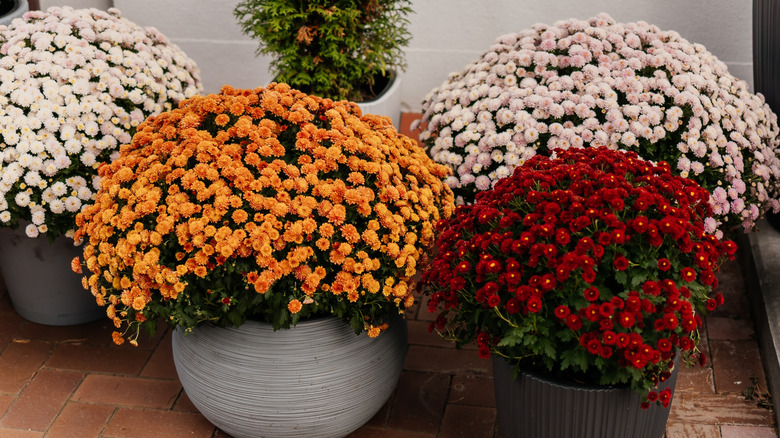
We may receive a commission on purchases made from links.
Imagine sitting on your porch chair, draped in a cozy blanket, contentedly sipping your tea while butterflies and bees gather around pretty, disk-shaped flowers. You can bring this imagined scene to life by planting blanket flowers (Gaillardia spp.). Although it's hard to separate garden mums from autumn (they're so pretty!), the routine can get monotonous year after year. So, if you're on the hunt for gorgeous fall planter flowers that are not mums but similarly love the sun and don't require serious maintenance, you may want to give blanket flowers a try.
Like mums, blanket flowers boast a wide variety. You can find them as single or double multi-toned blooms in warm sunset hues with tubular or curved petals. The species G. aristata survives as a perennial down to USDA Hardiness Zones 3 to 8, while G. pulchella can grow as a perennial in zones 5 to 9. The hybrid (Gaillardia x grandiflora), a cross of these two species, is the most common in gardens and is also hardy to zone 3, but may be grown as an annual.
Blanket flowers are native to North America, so you might find a species well-adapted to your area if you check in with your local nursery. Depending on the climate and species, they typically start blooming by late spring or early summer and may continue into fall until the first frost. So, you'll likely find them in full bloom during autumn, making plant selection easier. Another advantage? This vibrant flower can withstand your local deer, so you can rest assured your front yard display will look spectacular all season.
Growing and caring for blanket flowers in pots
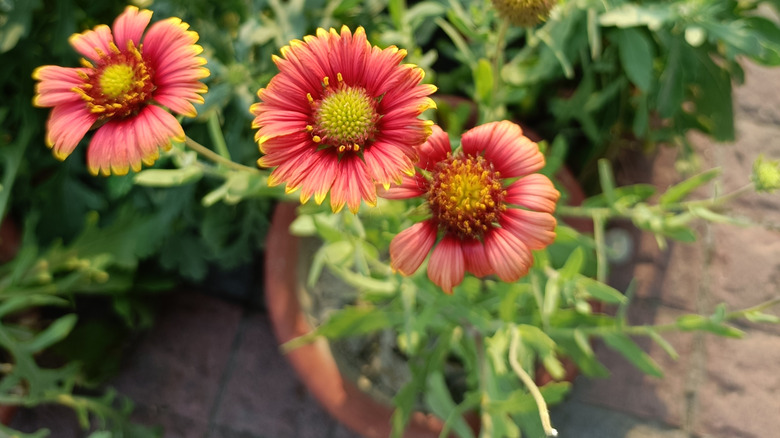
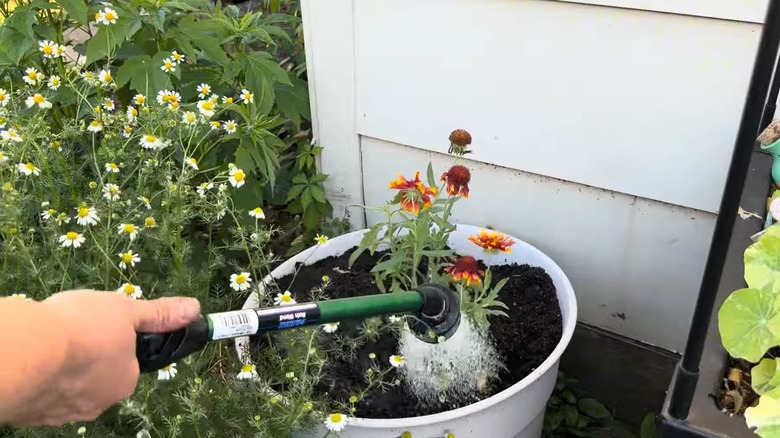
Once your potted blanket flowers are home, place them in a spot on your porch where they'll receive at least six hours of direct sunlight — any less and they won't flower very much. If you happen to live near the beach, it's safe to prop them facing the seaside; they can withstand salt spray. If you're repotting them in a decorative container, ensure it has proper drainage holes, as their roots can rot in standing water. Unlike in the ground, containerized plants dry out relatively quickly. So, even though blanket flowers are drought-tolerant, you'll still need to be mindful of watering them often enough. Check that the soil is dry to a depth of 3 to 4 inches before soaking with water and ensure the excess drains out completely, or switch to a self-watering planter.
To prolong blooms and keep the plant neat, you can deadhead the spent flowers. Gaillardia contains lactones that can irritate the skin, so be sure to don your gardening gloves before handling them. And towards the end of the season, allow the last flush to set seeds. This may encourage goldfinches and other seed-eating birds to drop in.
Blanket flowers can maintain their stunning display sans any fertilizer. In fact, feeding them may encourage foliage growth at the expense of flowering buds. But the downside is that they exhaust themselves fully in a couple of years. Thankfully, by separating their clumps or taking cuttings in spring or fall, you can grow colorful blanket flowers from one plant forever. They may also self-sow, though seeds from hybrids don't retain all of the original plant's traits.
Winterizing potted blanket flowers
Although blanket flowers' hardiness range goes down to zone 3, this applies to in-ground plantings. Potted plants, however, tend to stay colder, so blanket flowers in pots may only survive the winter in zone 5 and up. If winter temperatures get below -20 degrees Fahrenheit, even in-ground blanket flowers may not survive the cold without help. In mild climates, they may remain semi- or fully evergreen and retain some leaves, providing overwintering habitat for insects. In this case, you can push off pruning to early spring. Otherwise, trim them to about 6 inches. In areas where the flowers are only marginally hardy, consider moving the pots indoors to an unheated garage, basement, or a cold frame when it's freezing cold. Check for aphids, thrips, and leafhoppers, and hose them with water or apply insecticidal soap before moving.
If overwintering inside isn't possible, bubble wrap the containers, especially if they're glazed, ceramic, or clay-based, to prevent cracking. You may alternatively wrap them in burlap — Burloptuous's Multipurpose Gardening Burlap Fabric Roll is one such option. Monitor the potting mix regularly, ensuring it doesn't go fully dry. You may lay down mulch, provided it's kept away from the plants' crowns. Alternatively, a snow cover can insulate the roots.
Finally, although blanket flowers look wonderful on their own, if you've grown a more compact variety (think 'Arizona Apricot'), you can complement it with drought-tolerant ornamental grasses or succulents. Purple or blue-hued flowers, like coneflowers or asters, also create a pretty contrast, and they make good companions provided their care requirements are similar.