

Five Disadvantages Of Using WD-40 As A Lubricant
We may receive a commission on purchases made from links.
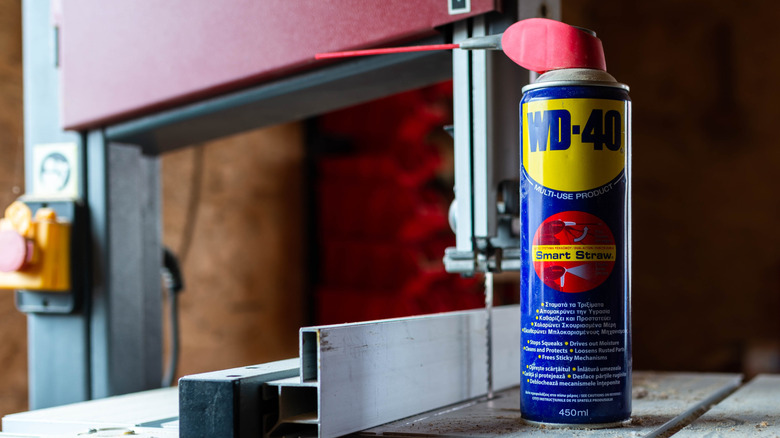
Every time there's a stiff latch or the key won't turn in the shed door, many homeowners instinctively reach for a can of WD-40. After all, the original WD-40 Classic Multi-use Product helps loosen corrosion, displaces moisture, and lightly lubricates moving parts, so it makes sense to keep a can of this in the toolbox. But making something move again isn't really the same as keeping it properly lubricated. A suddenly unstuck mechanism can feel better for a little while, but if it doesn't get the proper lubricant protection that it needs, it can quickly become problematic again or wear down faster than it should.
There's a weirdly persistent internet myth that WD-40 isn't a lubricant at all, but it really is. It contains lubricating ingredients as well as a variety of solvent components that displace water. But assuming it's right for every job is one of the most common mistakes everyone makes with WD-40. Even the manufacturer distinguishes that its a light lubricant; it doesn't offer the longer-lasting protection needed for heavy-duty jobs. For a lightly used metal hinge, a quick spray of WD-40 will probably do exactly what you need. For a hardworking chain, though, or a grease-packed bearing, or a mechanism with plastic or rubber parts, WD-40 may not be effective, and in some instances can cause more problems than it solves.
It doesn't provide the lasting lubrication some parts need
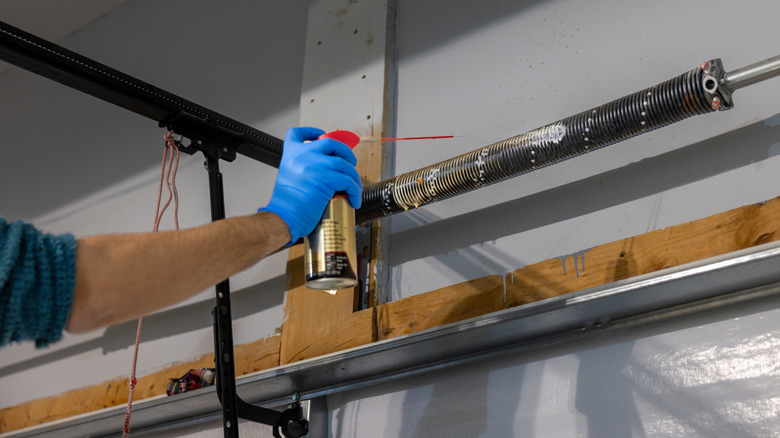
WD-40 may not provide adequate long-lasting lubricating film that will stand up to repeated movement, heavy loads, or exposure to the elements. With WD-40, its solvent components evaporate soon after application and what gets left behind is a light protective film. That's what provides the lubrication, but it's only suitable for light tasks. For anything with greater demand, you'll need an appropriate product, which could be a thicker, more persistent layer of grease or a specialist lubricant.
For example, the heavily used rollers, chains, or bearings on lawn equipment have entirely different needs than a simple cabinet hinge. Yes, WD-40 will loosen the buildup on a gunky chainsaw, for example, but that's about all. It's not thick enough to withstand the amount of friction, wear, and dirt a chainsaw encounters. Similarly, if your garage door mechanism is struggling, it most likely requires grease or another manufacturer-specified lubricant instead of repeated bursts of WD-40. Although the original WD-40 formula may appear to provide immediate relief, for a long-lasting fix you'd need a special lubricant, such as WD-40's White Lithium Grease for garage doors.
The oily residue can hold on to dust and grit
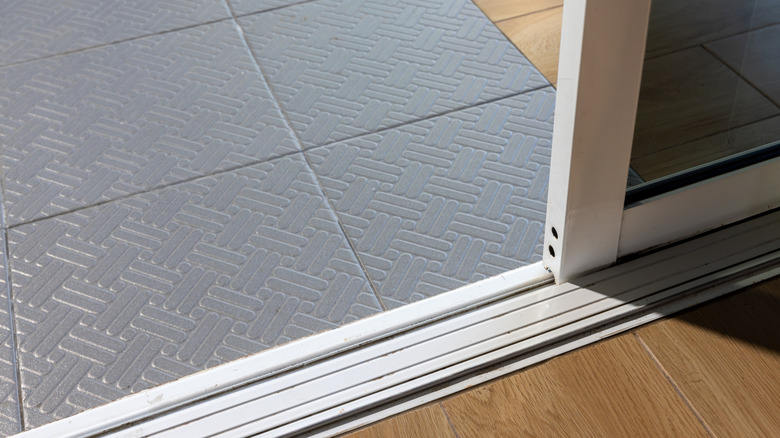
Yes, WD-40's original formula is designed to clean as well as lubricate. However, after application, it can leave behind a light oily coating, and you don't necessarily want that kind of excess lubricant lingering in a place where dirt automatically collects. Take the bottom track of a sliding door as an example. That threshold collects dust, pet hair, and crumbs from the inside, and general dirt and debris from the outside. If you've got a generous coating of oil in there, it gives all that debris a sticky surface to cling to. You can end up with a dark, gritty buildup that makes the door feel stiff, and over time it can cause damage to the track and be difficult to remove if it gets beneath the door itself.
You should also avoid adding lubricant to an object or mechanism that's already dirty. Adding more and more lubricant on top of a buildup of accumulated grit won't remove the underlying problem, and it will make the accumulation much harder to clean. If, for example, you're working with a sticky sliding glass door track, it's crucial to clean the dirt out first. Sometimes that's enough to free up the door, and you won't need to spray anything at all. And, if you still do need some kind of lubrication afterwards, use a product recommended for the track material. Often in areas where a greasy film can be problematic, polytetrafluoroethylene (dry PTFE) or other appropriate dry lubricants make more sense, as they don't leave behind that sticky wet coating.
WD-40 can interfere with grease that's already in place
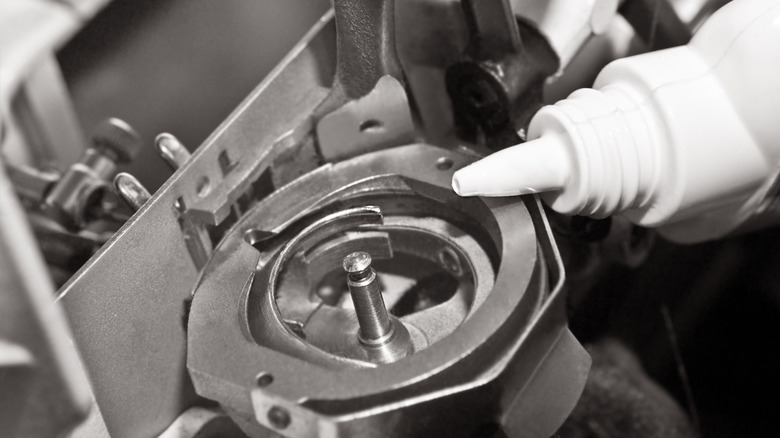
Although WD-40 is not a dedicated degreaser, it does contain solvents that can lift some grease and grime. It's true that this makes it useful when you're trying to clean a dirty metal part, but it is counterproductive when you're spraying into a mechanism that already contained the specific grease it needed. A moving part may already have the exact type of lubricant it needs even if it's tucked away in an area where you can't see it like bearings or sliding mechanisms.
The inner parts of a sewing machine, for example, can rely on a particular type of grease that sits between the working surfaces. If you spray WD-40 into the machine without checking the manufacturer's instructions, you can disturb or cut through that grease. The penetrating nature of WD-40 can mix with and loosen existing greasy residue, particularly if you keep flooding the area with the spray. If the original grease gets washed out or displaced, the light oily film left behind by WD-40 probably won't act as an adequate replacement. Before reaching for the WD-40 because you noticed something squeaking on a complex, pre-greased machine, check first to see if the part is worn, misaligned, or damaged. Then check whether the part needs cleaning, greasing, or lubricating with a special product.
Certain plastics, rubber seals, and finishes can be damaged by WD-40
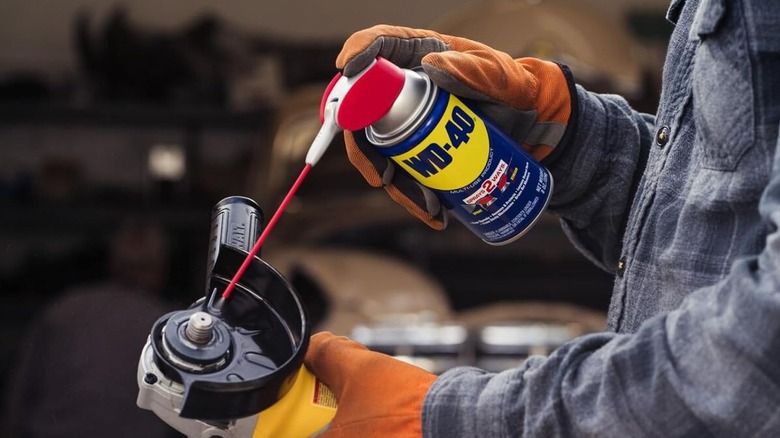
The original formula WD-40 has reasonably wide material compatibility but you can inadvertently get the spray on inappropriate materials while trying to spray it on suitable ones. For example, if you're working on a sliding window, you could have metal hardware, rubber weatherstripping, plastic guides, and a painted or varnished frame, all in a really small area. There's a good chance that even if you aim for the metal hardware, you'll end up getting the WD-40 on at least a couple other surfaces at the same time. That may not be a problem depending on what those surfaces are. However, some rubber compounds can swell after prolonged exposure to WD-40, and certain plastics are particularly vulnerable to solvent damage. If you've got rubber or plastic parts that need lubrication, make sure you use a compatible silicone-based product if this is what the manufacturer's advice recommends.
Wooden furniture and trim present a different problem. WD-40 spray could leave an oily mark that stains bare wood, prevent future finishes from adhering properly, or tamper with existing waxes and coatings. Plus of course, if you have plastic drawer slides inside wooden drawers and they're made of the wrong type of plastic, they can be damaged by WD-40. If you're dealing with wood or wood finishes, before treating, test spray on a hidden spot to see if it causes any discoloration or softening of the wood or its finish.
The aerosol can carries fire and electrical safety risks
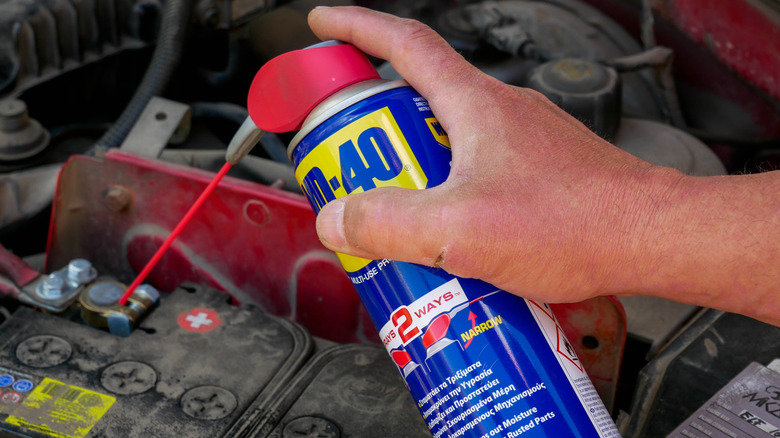
The original WD-40 multi-use product carries a an extremely flammable classification warning. Don't under any circumstances spray it around a lit burner, pilot light, hot appliance, or other potential ignition source. It can very easily burst into flame. That includes avoiding trying to free a stiff control near a gas stove or furnace while the appliance is in use. The flammability risk comes from the spray and its vapors so make sure you follow the can's instructions precisely and work with plenty of good ventilation, as well as keeping the spray and the can away from flames and sparks.
Although WD-40 is non-conductive, you still need to take care with electrical equipment. It's not safe to spray this product or any other into a live switch, outlet, or powered appliance. The manufacturer specifically warns against using the aerosol on energized circuits, partly because the metal can or straw might touch a live contact point. Plus WD-40 is not an electrical contact cleaner. If you have an electrical component that needs attention, shut off all power, use a product specifically designed for that application, and follow the instructions precisely.