

How To Use An Angle Grinder To Remove Old Paint Layers From Concrete
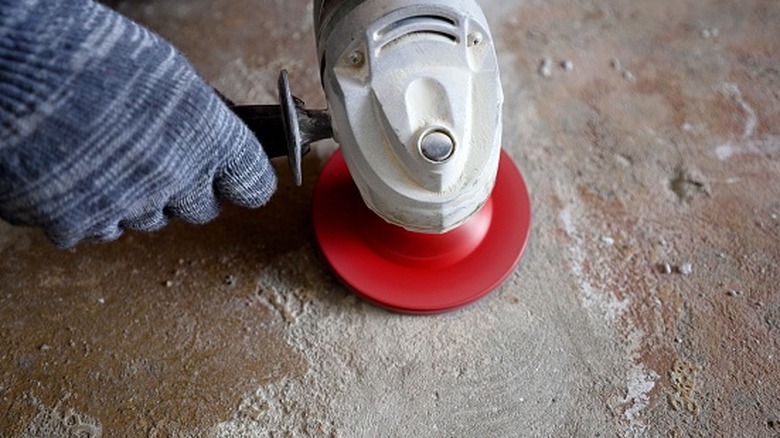
Paint is a common finish for concrete, but let's face it: It doesn't always look great. Painted concrete tends to age poorly, especially on high-wear surfaces like porches and floors. Removing layers of old paint from concrete is a daunting task — especially if you're dealing with a large area, such as concrete flooring in a space like a basement or garage. You can always use a liquid stripping solution, but that can be messy, and you might prefer to avoid using harsh chemicals. If you need to remove old paint from concrete (and don't mind using a little elbow grease), an angle grinder might be a better option.
To remove paint from concrete with an angle grinder, you need a diamond cup wheel. This attachment features rows of "teeth" that have a rough, diamond-based abrasive surface. Removing paint from concrete with an angle grinder requires a bit of manual labor and some safety precautions, but a diamond cup wheel makes the job a lot easier. It also has the benefit of being relatively gentle on the concrete, so you're less likely to gouge the surface underneath the paint. Here's how to do it properly.
How to safely use a diamond cup wheel to remove paint from concrete
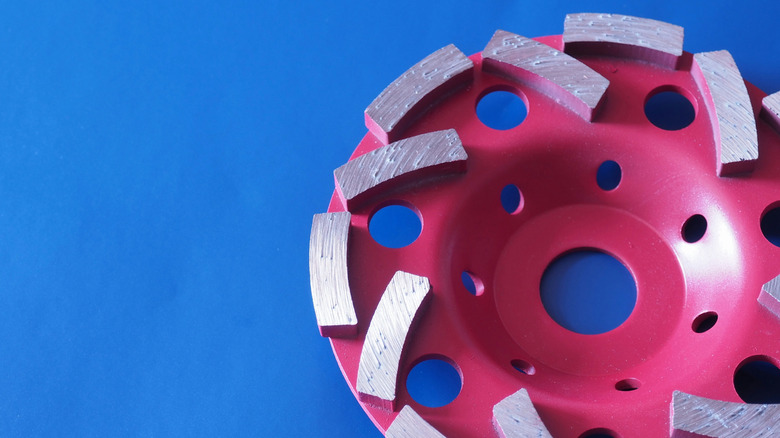
There are typically two ways to remove old paint from concrete: chemical or mechanical. Using an angle grinder falls into the latter category. An angle grinder is a more efficient way to remove paint than other mechanical methods, such as a hand scraper. Simply mount the diamond cup wheel on your angle grinder and run it over the painted concrete. Go back and forth while using light pressure, keeping the grinder moving as you work. The diamond abrasive on the grinder wheel should break up old paint in two or three passes.
There are some important safety precautions to take before you begin. Removing old paint with an angle grinder will kick up a lot of paint dust. Furthermore, decades-old paint may contain lead, so you want to keep it off your skin, out of your eyes, and out of your lungs. Wear goggles, long sleeves, gloves, and a proper respirator. A simple dust mask is not enough here: You should use a respirator with an N95 or P100 rating that filters out fine dust particles. If you're working inside, also consider taping off open doorways with plastic sheeting to prevent the dust from spilling into other areas of your house.