

Everyone Had Them In The '70s — Now These Trinkets And Novelties Are Thrift Store Gems We Want

We may receive a commission on purchases made from links.
Frighteningly, I am old enough to remember mood rings, those ridiculously addictive little handheld water games, and some of the other wonderfully weird novelties that were everywhere in the 1970s. My parents' home was also filled with Lucite: Lucite grapes, Lucite ornaments, Lucite everything. As a longtime thrifter and unashamed nostalgia geek, I love rediscovering things from my childhood, although I freely admit that some '70s trends deserve to stay firmly in the past. Not everything needs another moment in the sun, but there's an awful lot of fun stuff from this decade that's becoming popular again, and rightly so. From quirky ceramic ornaments and handmade macramé to toys that can instantly transport you back to childhood, there's a lot of fantastic '70s nostalgia lurking in thrift stores everywhere, just waiting for someone to find and cherish them.
Thankfully, you don't have to recreate an entire '70s living room with brown, brown, and more brown to enjoy them. There are loads of home decor ideas to bring back the '70s tastefully. And when it comes to nostalgia, just a few carefully chosen pieces can add character, color, and a bit of humor to your home. Some '70s trinkets and novelties are collectible because of their distinctive designs and others are sought after because they're increasingly difficult to find in good condition. Of course, for those of us who remember them the first time around, there's also the comforting pleasure of finding something we loved as children tucked away on a thrift store shelf.
Original Pet Rocks
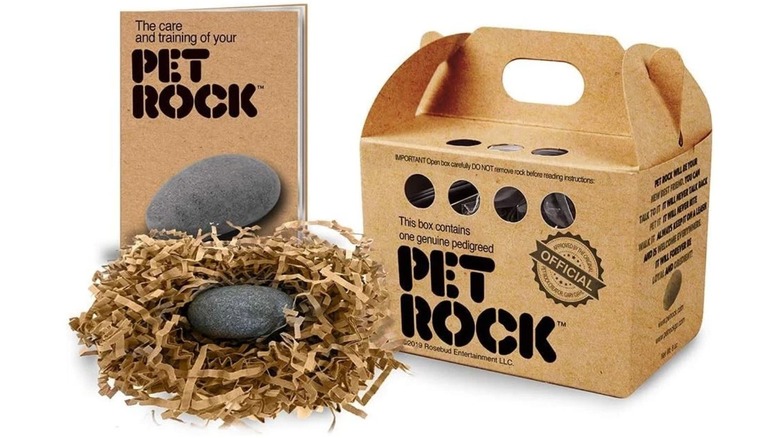
An absolute genius managed to convince people to spend their actual hard-earned money on ordinary rocks back in 1975, and not just a few oddballs, either. Advertising executive Gary Dahl created the original Pet Rock, which became a nationwide sensation and sold over a million units by Christmas 1975. It wasn't a special rock either. It was a smooth stone packaged in a cardboard box designed to look like a pet carrier, complete with little air holes. Inside the box, the Pet Rock rested on wood shavings and came with a wonderfully silly training manual. Teaching your Pet Rock to sit or stay still was unsurprisingly pretty simple. Playing dead was even more so.
Obviously, finding an original Pet Rock on its own isn't particularly special, because who's to say it's an actual pet rock? But if you find one in its clever original packaging with its accompanying booklet, you've got an utterly ridiculous, highly entertaining collectible that's sure to bring a smile. An intact pet carrier with its original bedding and training manual and its original rock (assuming the rock hasn't been garishly painted) gives you a proper piece of highly nostalgic '70s pop culture history. Look for signs of aging on the cardboard and the manual, as modern reproductions do exist. Don't spend a small fortune, either, because, as fun as the sheer absurdity of the concept is, it's still just a rock in a cardboard box.
Vintage mood rings
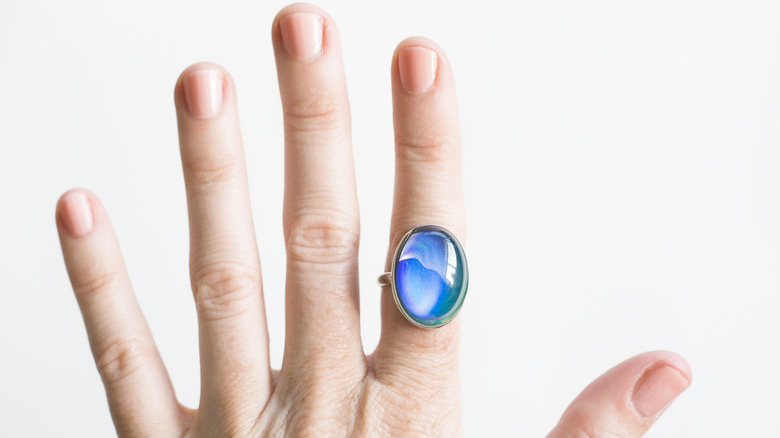
Like so many people, I adored mood rings as a kid. In fact, I'm pretty sure I still have a couple tucked away somewhere. These fascinating little pieces of jewelry became a massive craze in 1975 and they remained popular right through the '90s, and for good reason. They promised to reveal your emotional state through the changing colors of the stone. If your stone was blue, supposedly you were calm, while other colors indicated stress, unhappiness, or joy. Naturally, we spent many hours comparing colors and trying to work out what they meant.
Sadly the reality is slightly less magical, although still fascinating. Mood rings contain temperature-sensitive liquid crystals and they change color in response to heat, rather than your actual feelings. They are still super fun though. You could even get mood T-shirts that changed color in response to your body heat. I had a rather spectacular tie-dye one in the '90s. The original mood rings were usually fairly chunky stones that were set in decorative metal bands. If you spot one in a thrift store jewelry case, see whether the stone still changes color when you warm it up with your hand. Some stones fade or become permanently dark, particularly if they suffer water damage or exposure to too much heat, because, remember, they are filled with temperature-sensitive liquid crystals. Of course, not every ring you find will be an early '70s model, since they remained so popular through the '80s and the '90s. Even if you find a later one though, they are still fabulous, and you still have a piece of vintage pop culture nostalgia in your hand.
Smiley face buttons and pins
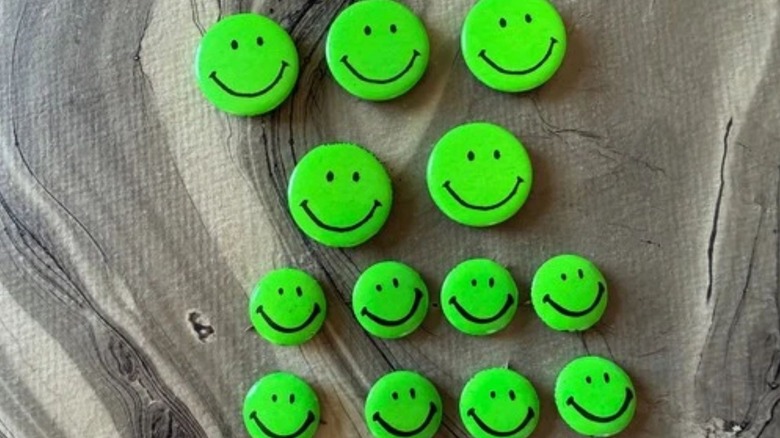
To me, the obnoxiously cheerful yellow face with its enormous grin is more representative of the '90s, but it was born in the early '70s. That iconic, eternally cheery smiley face appeared on everything from T-shirts and keychains to stationery, mugs, and pinback buttons. Early on, accompanied by the words "Have a happy day" or "Have a nice day." Interestingly, although I associate that irritatingly smiley face with the '90s and it became popular in the '70s, it was actually created in 1963 by artist Harvey Ball, who made the smiley face for an insurance company's employee campaign. It wasn't until Bernard and Murray Spain began selling smiley merchandise in the early '70s that the craze really took off.
The original smiley face pinback buttons are a fun, inexpensive bit of nostalgia, but they can easily get lost among the many modern badges you'll see in a thrift store basket. The classic yellow background and simple black smile are immediately recognizable, but because of their longevity and popularity, there are many promotional variations and different slogans, which makes collecting them even more interesting.
Avon novelty perfume and aftershave bottles
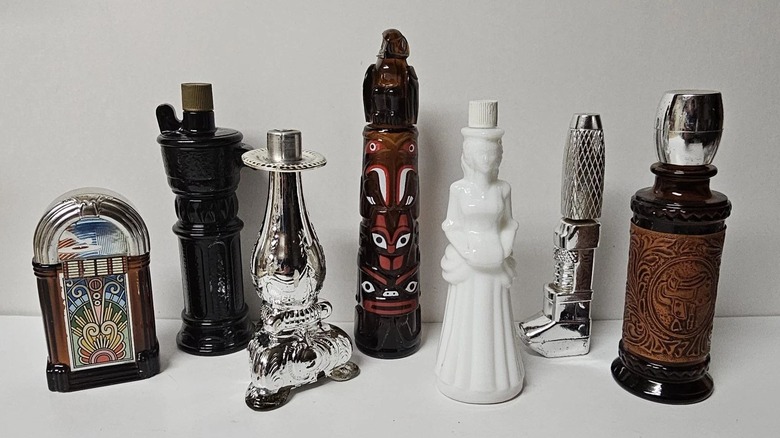
Avon made some undeniably weird perfume and aftershave bottles in the '70s, and they really were incredibly popular. Rather than sticking to conventional glass containers, Avon offered fragrance bottles shaped like cars, animals, trains, and all kinds of random people, as well as many other objects. There were ducks, owls, horses, vintage automobiles, and even presidential busts. It was very strange but they were in nearly everybody's bathroom through the '70s and '80s. While Avon had previously experimented with decorative containers in earlier decades, it was during the late '60s and through the '70s that their novelty decanters became must-haves. They were popular gifts, and many people collected the bottles without ever using the fragrances inside. The molded glass designs are still particularly appealing to many people and some are surprisingly detailed. The 1973 to 1974 Avon Sterling Six II car decanter, for example, has a spare tire that doubles as the bottle's cap.
When thrifting these, make sure you look at the caps carefully, because they're easily lost or damaged, particularly those that are made from plastic rather than glass. In an ideal world, they will still have their original labels and presentation boxes, and some may still have a fragrance inside. Although after this many decades, I wouldn't necessarily recommend you use it. A completely intact and unopened example makes a wonderful display piece. Even the strange presidential ones.
Ceramic mushroom salt and pepper shakers
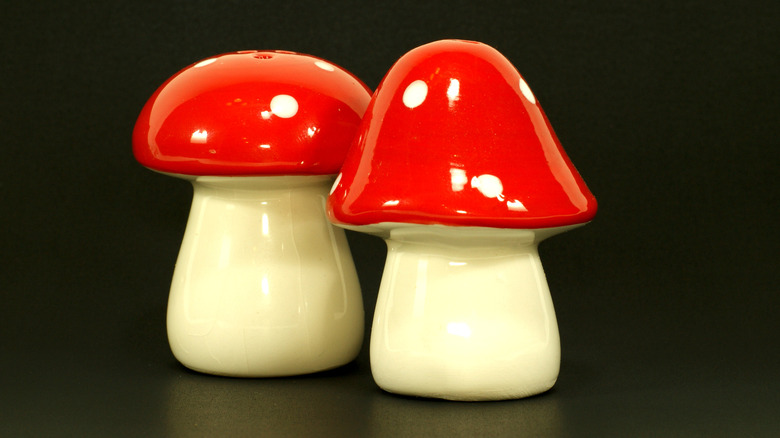
If you were alive in the '70s, I pretty much guarantee there were ceramic mushrooms in your kitchen at some point. They were everywhere: on canisters, cookie jars, wall decorations, salt and pepper shakers, and bakeware, usually in tones of mustard yellow, burnt orange, olive green, or various shades of brown. They are once again incredibly popular, as mushroom decor is having a major resurgence. Salt and pepper shakers were an especially popular way to bring the mushroom craze to the dinner table. Some of the best-known examples came from the Sears Merry Mushroom collection. These nostalgic '70s (and '60s) kitchen accessories are popular again, partly because they're wonderfully playful and don't take up much space.
Sears Merry Mushroom shakers usually feature glossy brown caps and yellowish stems, but there are plenty of color variations, shapes, and styles from other manufacturers of the same period. Enesco, for example, produced some delightful mushroom-themed condiment sets, some of which included matching mustard pots and wooden trays. You'd be extremely lucky to find a complete set of these, but even a simple pair of shakers can make a lovely addition to your kitchen. Make sure the original stoppers are present if you intend to use them, and check for damage around the delicate edges of mushroom caps, which is where you'd be most likely to get chips. Do note, though, due to the risk of contaminants like lead, I wouldn't advise putting old ceramic shakers straight back into food service without having their glazes tested to be sure they're safe. As decorative pieces, though, they are really lovely, especially when used alongside vintage stoneware, wooden utensils, and other earthy kitchen accessories.
HOMCO owl figurines
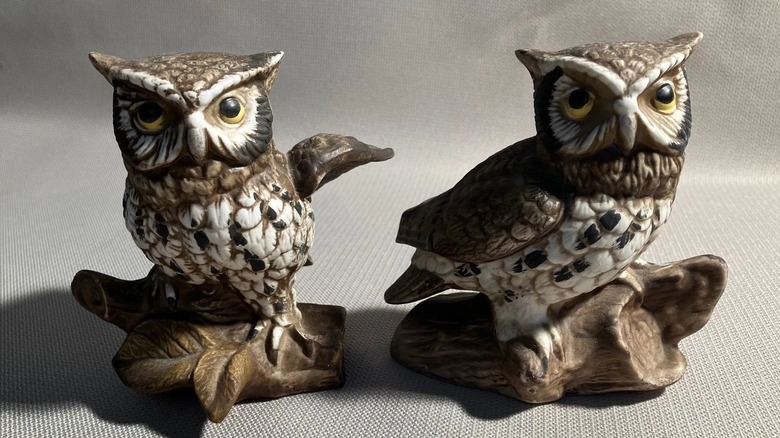
Owls were another huge part of '70s home decor, even though they largely vanished from interior trends. They appeared in wall art, macrame hangings, kitchen accessories, and countless little ornaments. HOMCO, short for Home Interiors and Gifts, produced some particularly recognizable owl figurines, often with the birds perched on realistic-looking branches. These weren't the sleek minimalist ornaments you'll find in many modern homes, and instead were rustic, with textured feathers, enormous eyes, and a weird amount of personality. They were usually earthy shades of brown, cream, and beige, so they were a good fit for the palette of the decade and the decorating styles that were so popular at the time, such as wood-paneled rooms.
Many people favor the matching HOMCO pairs, particularly little birds with contrasting poses. HOMCO used different materials for its decorative products, and the ceramic figurines are more robust than their lightweight molded wall ornament counterparts. If you think you've spotted one at the thrift store, turn it over and see if it's still got its original HOMCO label or model number. Some still have their original gold foil stickers. As with any vintage ceramic thrift store find, make sure you pay attention to the edges and any prominent parts. With owls their beaks, pointed ears, wingtips, and the ends of branches are all where you'll commonly find chips. These can look lovely in an eclectic maximalist living space, perhaps perched on a shelf, nestled between some enthusiastic houseplants.
Colorful Lucite grape clusters
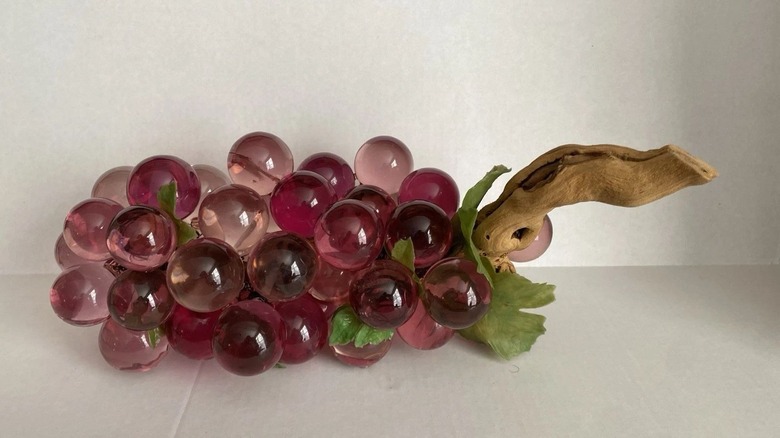
Unfortunately, the house I grew up in was full of Lucite ornaments. I wasn't a fan of them then and I'm not particularly fond of them now. However, there are plenty of people who still love Lucite. Those big glossy bunches of grapes were everywhere during the '60s and '70s, often adorning coffee tables, sideboards, or some other prominent surface where they could be gazed upon admiringly. Each individual grape was made from translucent acrylic, and they were often attached to pieces of natural driftwood with wire. Some clusters even had little decorative leaves, while others were just bare but humungous, oversized bunches of grapes. Amber and orange were commonplace, but you'll also find green, purple, and other shades.
A vintage amber grape cluster mounted on driftwood can be really quite striking when displayed on its own, rather than lost in a sea of other vintage acrylic ornaments. If you're experimenting with vintage decor to elevate your home, then one of these makes a wonderfully bold accessory. With Lucite grapes, the main thing to examine is the condition of the individual fruits and their attachments. While some light surface scratches are to be expected given the age, you don't want anything with too much damage, cloudiness, or cracks near the wire fittings, and obviously avoid anything with missing fruit. Also check that the entire bunch is securely attached to its driftwood base and then look for repairs, as you'll find many clusters have obvious adhesive residue or have replacement grapes that don't quite match the originals.
Lucite paperweights with real flowers
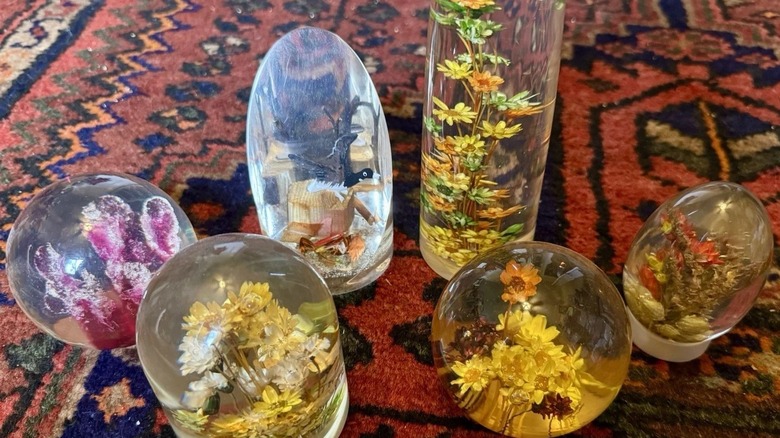
Thankfully, not every Lucite ornament from the '70s was enormous or garish. Some of the prettiest examples were small, clear paperweights containing preserved dried flowers, leaves, and other botanical specimens. The flowers were suspended inside a transparent resin to create the appearance of a tiny, perfectly preserved garden. Some paperweights were shaped like domes or spheres while others had geometric faceted sides that caught and reflected the light.
These little paperweights made popular decorative gifts, with their lovely eternally preserved botanical details. A small arrangement of delicate flowers inside a clear block is sweetly wholesome and a lovely reminder of the wonders of nature that you can look at while you are stuck at your desk working. You'll find plenty of vintage examples with preserved dried flowers, including pieces with white, pink, and yellow blooms. As with other Lucite ornaments, though, hold it up to the light and look for excessive scratches, internal cloudiness, and noticeable discoloration. Some older resin can develop a yellow or amber tint over time and heavy discoloration may obscure the flowers.
Handmade macrame owls
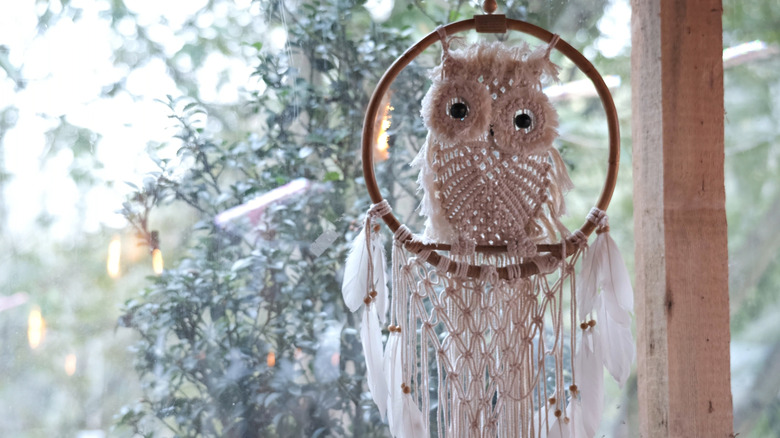
There are few things that say '70s quite as loudly as a big, knotted macrame owl hanging on the wall. These wonderful creations often featured chunky jute or cotton cord, enormous wooden bead eyes, and long fringed tails, as well as fluffy feather effects around the eyes. Some had wooden rings worked into the design, while others had little sticks serving as perches or large pieces of driftwood. The knotting technique itself is ancient, but macrame became a hugely popular craft during the '70s. You could find patterns in magazines and craft books, and people made everything from plant hangers and bells to enormous wall decorations.
I love macrame, and I've actually made these owls myself as gifts quite recently. Even so, I'd happily buy a genuine '70s handmade version if I stumbled across one while thrifting. There's just something extra special about knowing that somebody sat and carefully knotted all that cord for hours on end, decades ago. They put their time, energy, skill, and thought into creating something really beautiful and very skillful. Original examples can have wonderful texture and character, particularly when the maker used different knot patterns to create the feathers and body. While they aren't the most valuable vintage wall art examples, wall hangings like these are once again popular, and an owl is a fun alternative to the more conventional geometric designs. When choosing one, though, make sure you look for broken cords, missing beads, and evidence of damp storage. Duct can become quite brittle with age and old textiles can hold unpleasant musty odors.
TOMY Waterful handheld games
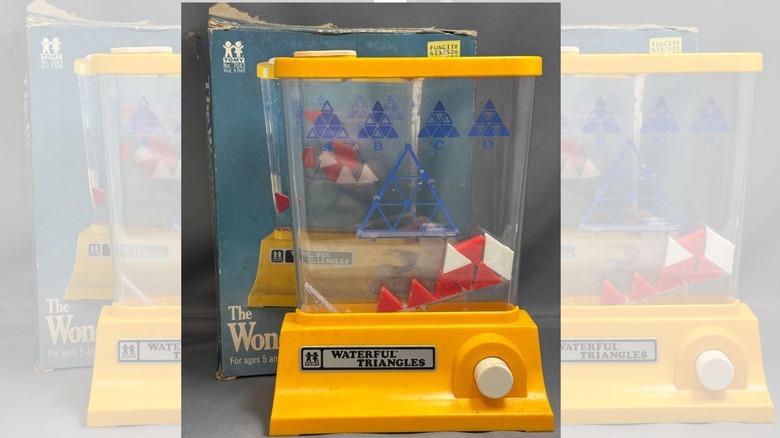
When I was a kid and the weather was bad, so I couldn't be outdoors playing in the dirt and causing chaos, you'd be quite likely to find me absorbed in one of these water-filled handheld games from TOMY. They were ridiculously simple and yet somehow completely addictive. The earliest TOMY water games came along in 1976, with clear plastic chambers containing water, small plastic objects, and a couple of buttons. Pressing the buttons sent bubbles through the water, which moved the rings or balls around inside. There were lots of variations, but depending on the game, you might have to land little rings on pegs or guide balls into tiny baskets.
It sounds really easy, but it wasn't. You could get almost everything into position, press the button one more time, and send the entire lot floating away again. Infuriating, but you'd immediately start over. There were several variations on these games and the original Waterful designs have a distinctive charm that later electronic handheld games never quite replicated. They didn't require batteries or screens and there wasn't much that would break mechanically. However, finding one in good working condition after several decades can definitely be tricky.
Check the plastic chamber for cracks, excessive yellowing, or signs of leakage. The buttons should move freely and produce enough air pressure to shift the objects inside. Many old games will have lost water over time, leaving the chamber partially empty, while others might have developed cloudy or discolored water. Even if you can't find an original 1976 model in good working order, you may be lucky enough to find one from the '80s or even the early '90s that's just as fun and still actually works.
Original Weebles figures
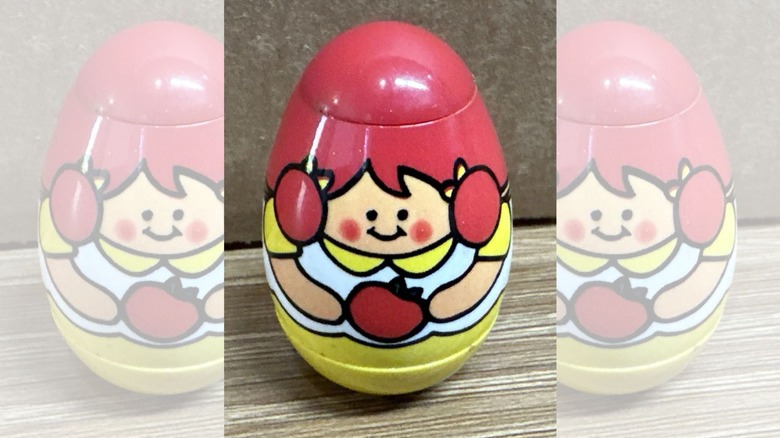
"Weebles wobble, but they don't fall down." If you grew up in the '70s or '80s, there's a very good chance that that Weebles advertising jingle is still firmly lodged deep in your brain. They first appeared in 1971, produced by Hasbro's Romper Room division, and they very quickly became insanely popular. The little egg-shaped figures had weighted bottoms, which meant that they would rock back and forth when pushed, but would always return to their upright position. There were families, animals, and all sorts of characters, along with a growing range of playsets. I had quite a collection, including a playset, and spent hours entertaining myself with them. Looking back, though, the hollow eyes and rather peculiar skin colors of some of the early plastic ones were genuinely a bit terrifying.
Original Weebles are fantastic finds for anyone who remembers playing with them. They immediately transport you right back to when you were little, probably singing the irritating ad jingle. Weebles came in all kinds of designs and the range eventually expanded to include more than 100 different figures. You might come across a single character mixed into a bag of old toys or get lucky and discover a more complete collection. The playsets are particularly entertaining and sought after, especially if you can find one of the original options, which included a tree house, a camper, a circus, and even a haunted house. If you stumble upon these and think about buying them, play with them a little first to make sure they still wobble and right themselves properly.