

How To Determine If You Should Empty Your Outdoor Planters Before Winter
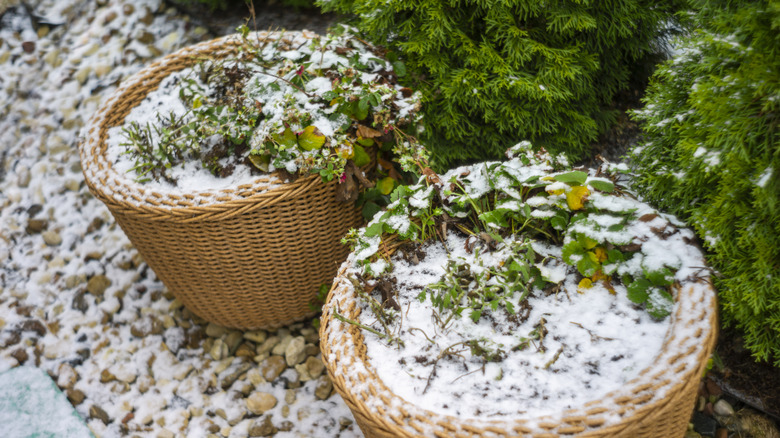
The last bits of garden cleanup before the winter season are different for everyone. In my work as a professional gardener, the chores I do for clients can range from deadheading perennials to raking leaves to mulching beds. One important task not to ignore is dealing with outdoor planters. But depending on what kind of planters you have, and what kind of plants are in them, you may be able to winter them over without emptying them completely. I've gathered some tips for how to prep outdoor planters for winter, including what to do with soil.
If you're only growing annuals in pots, this is a pretty straightforward cleanup. Warm-weather annual flowers like petunias, annual verbena, and marigolds won't survive the winter, so they can be removed and composted. Some annuals produce seeds in the fall, and you can collect these and save them to plant in spring: This includes zinnias, cosmos, calendula, and snapdragons. Some cold-sensitive flowers can be replanted in spring if you store them indoors, especially tuberous plants like dahlias, begonias, and cannas.
Once annuals are removed, whether you leave soil in the pots over the winter depends on the type of material the pot is made from. Ceramic and terracotta pots can break when frozen soil expands. Empty the soil and rinse them out, then dry thoroughly before stacking or storing them to prevent any mold issues. Plastic, metal, or resin containers are not likely to split or break in this way, so you can leave soil in them over the winter — these are also the safest pots for perennials to over-winter.
Caring for winter planters and soil
Once your annuals are removed and composted, the seeds collected, and the tubers put away, you can empty the soil from the pots. Many gardeners like to reuse the potting soil, often by adding it to the vegetable garden or to other planting beds. It can also be added to your compost bins, or spread over your lawn. I also sometimes store the old soil in plastic bags or in old pots, loosely covered, to reuse for spring planting.
You can reuse your potting soil in containers the following year, but you should always add some new soil to it. This helps to increase nutrients, and prevents the spread of any fungus or disease. A good rule of thumb is to use 50% new potting soil and 50% last year's soil. I usually add some amendments to store-bought soil, too, to boost nutrition and improve drainage.
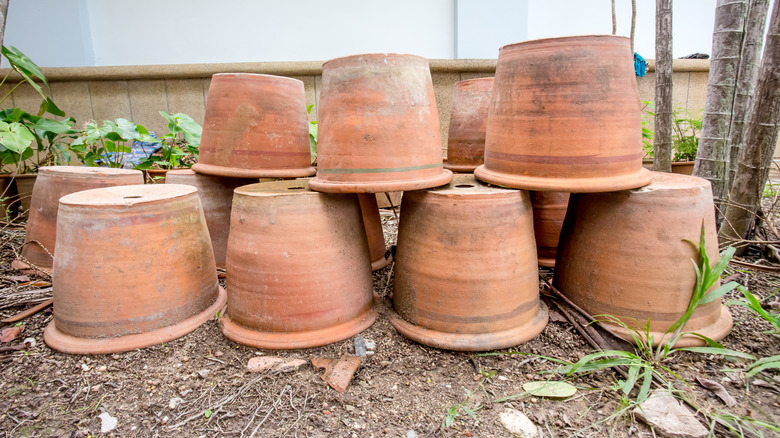
Before you store your empty pots for the winter, clean them well — again, this cuts down on the spread of fungus or bacterial disease. Warm water and mild soap with a sponge works fine. Rinsing or spraying with diluted white vinegar helps prevent mold or mildew buildup. Dry the pots outside, if possible, on a sunny or dry, breezy day to make sure they're dry before storing. If you store them outside, turn them upside down to prevent them filling up with rain, snow, or wet leaves, which might freeze. Remember that stacking terracotta pots can be tricky as they may stick together.
Caring for perennials in outdoor planters before winter
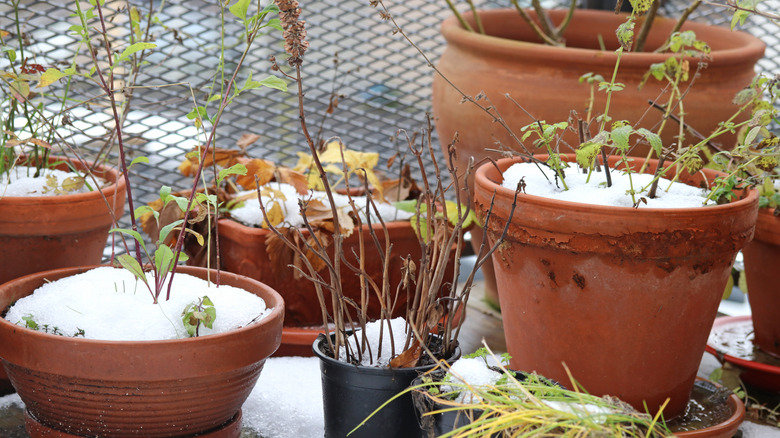
If some of your outdoor containers have perennials, the winter prep can be a bit more complicated. Potted plants don't always die over the winter — many cold-hardy perennials simply go dormant, meaning they're basically sleeping in the soil until spring. Most perennials can be left in pots to overwinter, though plants known to be sensitive to root or tuber rot (like peonies or breaded irises) might be damaged by freezing soil, especially if the pots don't have good drainage.
Many cold-hardy perennials can be divided in spring, but if you're growing them in containers, dividing in the fall can help prevent problems caused by soil freezing. If your perennials have been happily growing in the same container for more than a couple of years, and they still have plenty of room, add a light layer of natural mulch (like pine bark or pine straw) and wait to divide them the following year. If your winters are harsh, some protection from heavy winds is recommended — either move the pots where there is a barrier or wind break, or surround with willow fencing or burlap which can let some sunlight in.
If your autumn mums or asters are still blooming, deadhead them a bit to keep them neat and enjoy them a bit longer if you want. Planting these late bloomers is also an option, especially if you have a week or two before the night time temperatures consistently drop below freezing. I've had good luck with the following perennials overwintering in well-draining pots: hostas, sedums, mums, asters, day lilies, woodland phlox, and cranesbill geraniums.