

Is It Okay To Leave Your Snow Blower Outside In The Winter?
We may receive a commission on purchases made from links.
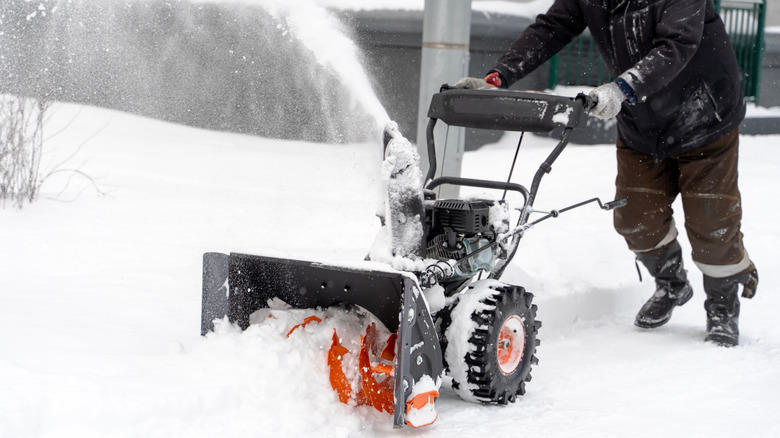
Owning a snow blower can feel like the ultimate winter hack — nothing compares to watching mounds of snow fly out of the way, no hours of shoveling needed. The last thing you want is for such an expensive tool to wear out prematurely, so what should you do after running it? Leave it in the driveway, stow it away in the garage, or park it somewhere else? Well, you can leave it outdoors if you lack storage space indoors, but not without adequate protection.
You might assume that a snow blower should be fine outside in the winter; it deals with flurries, after all! However, like every piece of outdoor equipment, it doesn't handle constant exposure to cold, frost, and moisture well. Metal parts can rust and corrode when water repeatedly freezes and thaws over the season. Plus, melted snow may seep into the machine, causing the chute, controls, or auger to freeze in the cold. Fuel issues aren't unheard of either, since condensation can enter the fuel tank, stalling the unit.
Besides the elements, you must factor in the possibility of theft or rodents who find your snow blower a cozy place to overwinter. To avoid these risks altogether and extend the life of your snow blower, it's best to find a spot in a protected environment, like an outdoor shed or preferably a heated garage, well away from open flames (for gas units). But if not, here's how you can safely leave your snowblower outside in winter.
Cover your snow blower if you plan on leaving it outside
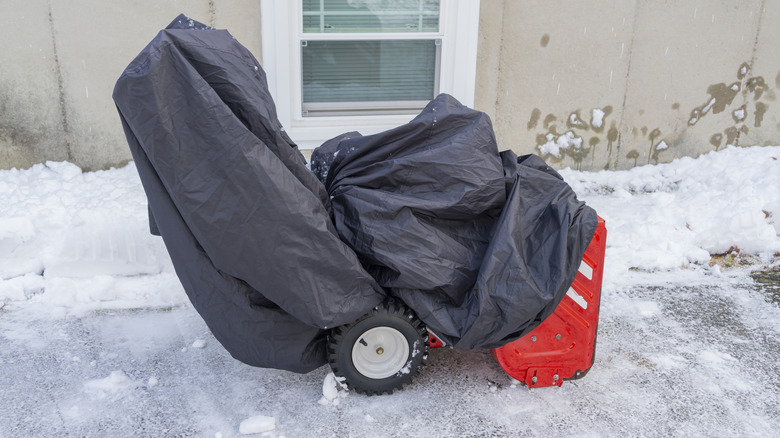
To avoid damage from the elements, including winter precipitation and direct sunlight, and to keep dust and debris from collecting on your snow blower, leave it in a covered area like a patio, deck, or a carport. If a covered spot is hard to come by and you must leave it out in the open, get a breathable cover for your equipment. We recommend something like this WardWolf Waterproof Snow Blower Cover for a single-stage snow thrower, but make sure it completely fits your unit. Whatever you pick, avoid using a plastic or non-porous tarp that can trap moisture against steel and electrical components, damaging them. In areas with strong winds, you may have to tie down the cover with strings.
Another important step is to elevate the blower over a sturdy wooden pallet or a rubber mat to avoid direct contact with frozen ground that may corrode the undercarriage (it's also easier to scoop up remnant ice that way). This is also important for electric models with cords, as they might freeze in cold temperatures. Plus, it prevents the tires from freezing into icy puddles.
Finally, if you're concerned about theft, add GPS tracking devices, such as AirTags, to your snow blower and/or the cover. If it's not in a locked structure, you may also secure your equipment with anti-theft fastening bolts. Confirm they're screwed in properly after every use. Adjustable, weather-resistant cable locks, like these Vascer Commercial Heavy Duty Braided Galvanized Steel Theft Deterrent Security Cable, or padlocks may also help. Be sure to keep the unit fully draped so as not to reveal its position, and train a security camera on it.
How to prepare your snow blower before storing it
Before stowing the snow blower, run it for a minute after every use. This will ensure all the collected snow melts away, minimizing the chances of your tool developing rust, freezing, or malfunctioning. Sweep away any chunks still hanging onto the chute, augers, or mechanical controls. Wait until the machine is dry and cool before putting any cover on top.
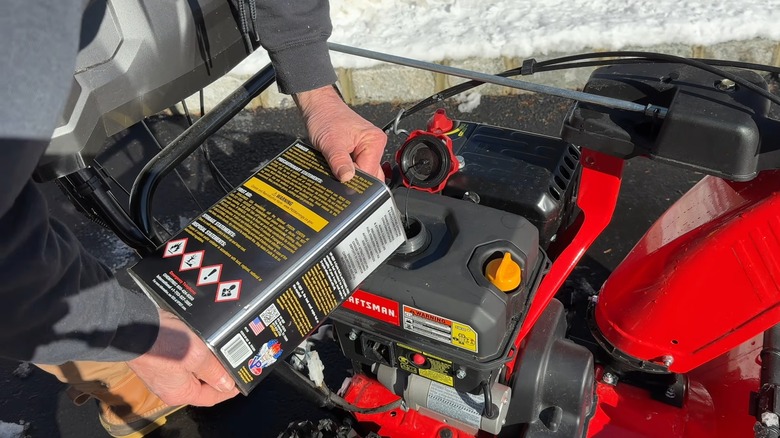
If you use a gas snow blower that doesn't receive much action or sits idle longer than a week, drain the fuel or add a fuel stabilizer to slow down gas degradation. Otherwise, your machine may struggle to start or perform poorly when you run it next. STA-BIL is one popular fuel stabilizer brand. In addition, top it up with fresh fuel, completely filling the tank to avoid condensation issues.
For electric snow blowers, disconnect and remove the battery and store it indoors at room temperature, especially in between snowstorms, or it'll degrade prematurely. Ensure that it has about a 40% to 60% charge, as deep discharges impair battery life. This might also protect against theft, as it's harder to move an inoperable machine. Now that you've got the storage part down, be sure to keep these snow blower safety tips in mind in winter.